

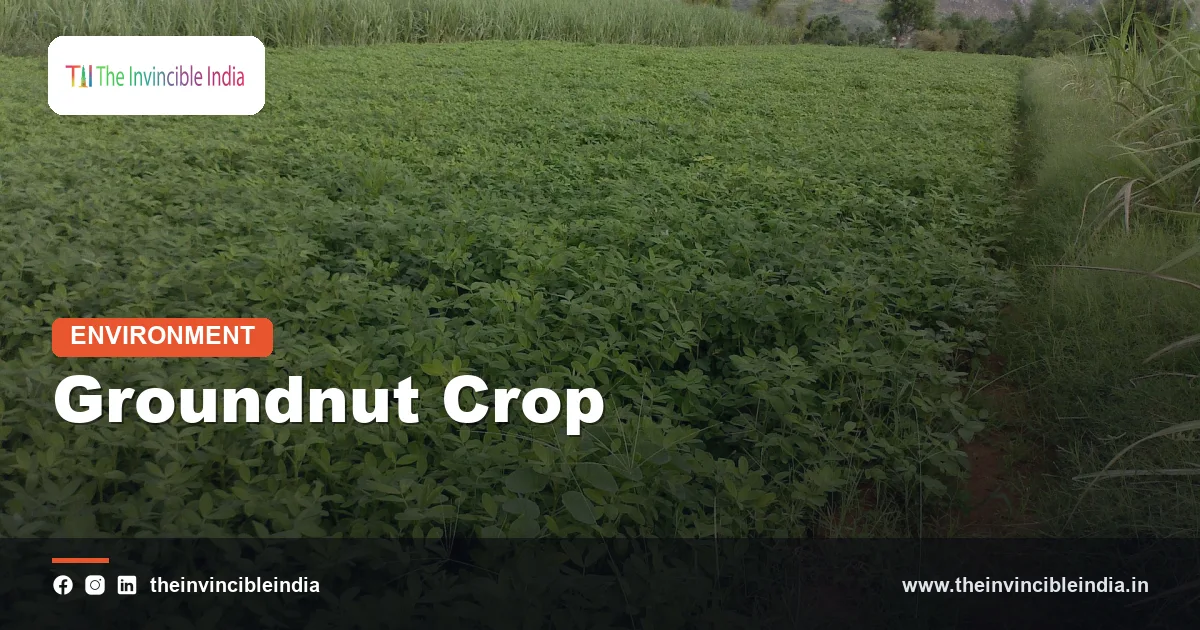
Groundnut, also called peanut or moongphali, is a legume crop whose pods develop underground, and it is one of India’s most important oilseed crops. Grown mainly in Gujarat, Andhra Pradesh, Tamil Nadu, Karnataka and Rajasthan, groundnut supplies cooking oil, a protein-rich oilcake for livestock and a snack and food ingredient eaten across the country.
The crop is unusual because its flowers bend down after pollination and push their young pods into the soil, where the seeds mature out of sight. This explainer covers how groundnut grows, where and when it is farmed in India, its main types, the uses of the oil and kernel, and the common problems growers face.
| Attribute | Details |
|---|---|
| Common names | Groundnut, peanut, moongphali (Hindi), bhuimug (Marathi), verkadalai (Tamil), verusenaga (Telugu), kadalekayi (Kannada) |
| Scientific name | Arachis hypogaea |
| Family | Fabaceae (the legume or pea family) |
| Origin | South America; introduced to India in the colonial period, traditionally credited to Portuguese traders |
| Where grown in India | Gujarat (Saurashtra), Andhra Pradesh, Tamil Nadu, Karnataka, Rajasthan, Maharashtra, Telangana |
| Season | Kharif (sown with the monsoon), with additional rabi and summer crops under irrigation |
| Part used | The seeds (kernels) inside underground pods |
| Oil content | Roughly 45 to 50 per cent of the kernel by weight, varying by variety |
| Main uses | Edible oil, oilcake feed and fertiliser, roasted and boiled snacks, chikki, peanut butter |
Key Takeaways
- Groundnut, Arachis hypogaea, is a legume of the Fabaceae family whose pods ripen underground, and the plant is also known as peanut or moongphali.
- Groundnut is one of India’s major oilseed crops, and Gujarat, especially the Saurashtra region, is generally the leading producing state.
- The kernel of groundnut contains roughly half its weight in oil and a substantial share of protein, which makes it both an oil source and a food.
- Groundnut roots host nitrogen-fixing bacteria, so the crop helps improve soil fertility when grown in rotation with cereals.
- Poorly dried or stored groundnut can develop aflatoxin, a harmful toxin produced by Aspergillus moulds, and groundnut is also a common food allergen.
- Much of India’s groundnut is grown on rain-fed land in the kharif season, so yields vary from year to year with monsoon rainfall.
What is groundnut?
Groundnut is an annual leguminous crop, Arachis hypogaea, grown for its edible, oil-rich seeds that mature inside pods under the soil. Despite its name, groundnut is not a true nut like cashew or almond; botanically it is a legume, closely related to peas, beans and lentils.
The plant is a low herb that grows either as an upright bunch or as a spreading runner, depending on the variety. It has compound leaves with four leaflets and small yellow flowers that appear close to the base of the plant. The scientific name hypogaea means “under the earth”, which describes how the pods develop.
Groundnut originated in South America, where wild relatives of the plant still grow, and it spread across the world after the sixteenth century through Portuguese and Spanish trade. It reached India during the colonial period and quickly found a place in dry and semi-arid farming areas. Today it is among the major oilseed crops of the country, grown alongside mustard, soybean, sesame and sunflower.
How does a groundnut grow underground?
A groundnut grows underground because, after the flower is pollinated, a short stalk called a peg elongates, bends down and pushes the developing ovary into the soil, where the pod forms. This unusual habit is known as geocarpy, meaning “fruiting in the earth”.
The sequence is simple to follow.
- The plant produces small yellow flowers on short stalks near the base, and each flower lasts only a day.
- After self-pollination, the flower withers and a peg grows from the base of the flower stalk.
- The peg turns toward the ground and drives itself a few centimetres into the soil.
- Once in the soil, the tip swells and forms a pod, usually with one to three seeds inside.
The pods need loose, light soil to develop well. In heavy clay, pegs struggle to enter the ground and pods are harder to lift at harvest. This is why groundnut does best in sandy loam and light red soils, and why many of India’s groundnut belts lie in areas with such soils.
Where is groundnut grown in India?
Groundnut is grown mainly in Gujarat, Andhra Pradesh, Tamil Nadu, Karnataka, Rajasthan, Maharashtra and Telangana, with Gujarat being the single largest producer in most years. India is one of the leading groundnut-producing countries in the world, alongside China, and the crop occupies a large share of the area under oilseeds.
- Gujarat: The Saurashtra region, including districts such as Junagadh, Rajkot, Amreli and Jamnagar, is the heartland. Junagadh is also home to ICAR’s groundnut research institute.
- Andhra Pradesh and Telangana: Rain-fed groundnut is important in the dry Rayalaseema region, especially around Anantapur, and in parts of Telangana.
- Tamil Nadu and Karnataka: Groundnut is grown on red soils in several districts, both in the monsoon season and under irrigation.
- Rajasthan and Maharashtra: These states grow the crop in the kharif season in sandy and medium-textured soils.
Groundnut thrives in warm weather with moderate rainfall of roughly 500 to 1,000 millimetres during the growing season. It dislikes waterlogging and prolonged cold, which is why it is a crop of the semi-arid tropics rather than of the cool or very wet regions.
When is groundnut sown and harvested in India?
Groundnut in India is sown mostly in June and July with the onset of the monsoon and harvested in October and November, while irrigated crops are also grown in the rabi and summer seasons. The growing period for most varieties is about 100 to 130 days, depending on the type and the weather.
| Season | Sowing period | Typical conditions |
|---|---|---|
| Kharif | June to July | Rain-fed; the main season in most states |
| Rabi | October to November | Irrigated; grown in parts of south and western India |
| Summer | January to February | Irrigated; grown where water is available |
Because kharif groundnut depends on monsoon rain, a delayed or patchy monsoon can reduce yields noticeably. Irrigated rabi and summer crops tend to give more stable yields, but they need dependable water, which not every area has.
What are the main types of groundnut?
Groundnut varieties are commonly grouped into Spanish, Valencia and Virginia types, based on plant habit, number of seeds per pod and duration of the crop. Each type suits different markets and growing conditions.
| Type | Plant habit | Typical features |
|---|---|---|
| Spanish bunch | Erect, bunch type | Early maturing; usually two seeds per pod; suited to rain-fed conditions and often used for oil |
| Valencia | Erect, bunch type | Three or more small seeds per pod; sweet taste; often sold roasted in the shell |
| Virginia (bunch and runner) | Bunch or spreading | Bigger seeds; longer duration; commonly used for edible kernels and export |
Indian research institutions have released many improved varieties. Public sector institutes such as the ICAR Indian Institute of Groundnut Research at Junagadh and the international centre ICRISAT near Hyderabad have worked on higher yields, disease tolerance, drought hardiness and better oil quality.
How is groundnut farmed?
Groundnut is farmed by preparing a fine, loose seedbed, sowing seed kernels at shallow depth with the first rains or irrigation, and managing weeds, nutrients and moisture until the pods are ready to be lifted. The crop needs relatively little fertiliser, but some inputs, such as calcium, are particularly valuable.
Soil and sowing
Well-drained sandy loam is ideal, and the soil is ploughed to a fine tilth so pegs can penetrate easily. Farmers sow kernels, which are removed from the shells just before sowing, in rows at a spacing suited to the bunch or spreading habit of the variety. Seed treatment with fungicide and with Rhizobium culture is common, helping early growth and nitrogen fixation.
Nutrition and water
Calcium is important for pod filling, so many farmers apply gypsum around the time of flowering and pegging. Light irrigation at flowering and pod development helps in irrigated areas. In rain-fed fields, conserving soil moisture through mulching and timely sowing is key.
Weeds and harvest
Weeds must be controlled in the first six weeks, and earthing up is sometimes done to help the pegs reach the soil. The crop is ready when the leaves yellow and the inner shell of mature pods shows a dark colour. Plants are pulled or dug out, left to dry in the field in rows and then the pods are stripped, either by hand or with threshing machines.
Why is groundnut important as an oilseed?
Groundnut is important as an oilseed because roughly half of the kernel is oil, and the crushed residue called oilcake is a valuable high-protein feed. Groundnut oil has long been a preferred cooking medium in western and southern India, particularly in Gujarat, Maharashtra and parts of the south.
Several products come from the crop.
- Groundnut oil: Pressed or solvent-extracted from the kernels, it has a high smoke point, which makes it suited to deep frying and everyday Indian cooking.
- Oilcake: The solid left after oil extraction is rich in protein and is used as cattle and poultry feed and, in some places, as organic manure.
- Haulms: The dried plant tops after harvest are valued as nutritious fodder for cattle and goats.
India imports a great deal of edible oil, so domestic oilseeds such as groundnut matter for food security and rural income. Government support, including a minimum support price (MSP) announced by the Centre for the crop, is meant to protect farmers when market prices are low.
What are the main uses of groundnut?
Groundnut is used as a snack, a cooking ingredient, a source of oil and a raw material for processed foods. In Indian kitchens, the kernel is eaten roasted, boiled, fried and ground, and in many regions it is a staple of street food and festival sweets.
- Roasted and boiled peanuts: Sold on the street and eaten in winter, often with salt, chaat masala or jaggery.
- Chikki: A brittle sweet of groundnuts and jaggery, associated with Lonavala in Maharashtra and widely made across India.
- Cooking: Crushed groundnuts thicken or flavour curries, chutneys and rice dishes such as poha, upma, vangi bath and the Gujarati farsan.
- Peanut butter and snacks: Processed into spreads, namkeen, masala peanuts and packaged foods.
- Export: India exports groundnut kernels in shell and shelled form, and quality standards are strictly checked.
Groundnut is also nutritionally dense. It is a good source of plant protein, healthy unsaturated fats, vitamin E and several minerals. Like any energy-dense food, it should be eaten in sensible portions, and salted or fried versions add extra salt and fat.
How is groundnut processed, stored and traded?
Groundnut is processed by shelling the dried pods, grading the kernels and then either crushing them for oil or selling them as table-quality kernels. The route taken depends on kernel size, oil content and moisture, and large mandis in Gujarat, Andhra Pradesh and Tamil Nadu handle much of the trade.
After harvest the pods must be dried to a safe moisture level, because damp pods spoil quickly. Dried pods are stored in gunny bags or warehouses and are shelled by hand or by decorticator machines. Bold, uniform kernels are separated for direct eating, export and confectionery, while smaller or broken kernels go to the oil mills.
Oil is extracted either in traditional rotary mills (ghani), in expellers or by solvent extraction. Cold-pressed groundnut oil, often sold under the name “kachi ghani”, has become popular among urban buyers who prefer minimally processed oils. Storage conditions matter at every step, since pods and kernels absorb moisture from humid air and are easily attacked by insects and moulds if stored carelessly.
Is groundnut good for the soil?
Groundnut is good for soil because, as a legume, its roots form nodules with Rhizobium bacteria that convert nitrogen from the air into a form the plant can use. A part of this nitrogen stays in the soil and benefits the crop that follows.
This is why groundnut is a common rotation partner for cereals such as bajra, jowar and wheat, and for cotton in Gujarat and Maharashtra. Rotation breaks pest and disease cycles and reduces dependence on nitrogen fertilisers. However, the crop does remove other nutrients, and repeated groundnut planting on the same plot raises disease pressure, so farmers are advised to rotate and to follow soil-test-based fertiliser recommendations.
What problems do groundnut growers face?
Groundnut growers face rainfall variability, pests, diseases and the risk of aflatoxin contamination after harvest. Because so much of the crop is rain-fed, droughts and dry spells at flowering and pod filling can sharply reduce yields.
- Leaf spot (tikka disease): A fungal disease causing brown spots on leaves and early leaf fall.
- Collar rot and stem rot: Soil-borne fungi that kill seedlings or mature plants in warm, damp conditions.
- Pests: Leaf miner, aphids, thrips and white grubs, which damage leaves or roots.
- Aflatoxin: A toxin produced by Aspergillus flavus and related moulds when pods are damaged, dried slowly or stored in damp conditions. Aflatoxin is a health hazard to humans and animals, and it can lead to export rejections.
Good practice includes using clean seed, timely harvest, quick drying of pods to a safe moisture level, careful storage and removal of damaged or mouldy kernels. Groundnut is also one of the common food allergens, and people with peanut allergy must avoid it entirely, so packaged foods in India carry allergen labelling.
Bottom Line
Groundnut is a hardy, soil-improving legume that gives India oil, protein and a favourite snack, with Gujarat and the southern states anchoring production. Its future depends on better rain-fed yields, disease-tolerant varieties and safe storage to avoid aflatoxin. Information on this page was last reviewed on 23 October 2026.
Frequently Asked Questions
What is groundnut?
Groundnut is a legume crop, Arachis hypogaea, whose seeds develop inside pods underground. It is also called peanut and moongphali. It is grown for edible oil, protein-rich kernels and fodder.
Which state is the largest producer of groundnut in India?
Gujarat is generally the largest producer of groundnut in India, especially in the Saurashtra region. Andhra Pradesh, Tamil Nadu, Karnataka, Rajasthan and Maharashtra are other major states. Rankings can change slightly from year to year depending on rainfall.
Is groundnut a nut or a legume?
Groundnut is a legume, not a true nut. It belongs to the Fabaceae family, along with peas, beans and lentils. Its seeds grow inside pods under the soil, unlike tree nuts such as almonds.
When is groundnut grown in India?
Groundnut is grown mostly in the kharif season, sown in June and July and harvested in October and November. Irrigated crops are also grown in rabi and summer seasons in some states. The crop usually takes about 100 to 130 days to mature.
How does groundnut help the soil?
Groundnut helps the soil by fixing atmospheric nitrogen through root nodules containing Rhizobium bacteria. Part of that nitrogen remains for the next crop. This makes groundnut a useful rotation crop with cereals and cotton.
What is aflatoxin in groundnut?
Aflatoxin is a harmful toxin produced by Aspergillus moulds that can grow on groundnut kernels. It develops mainly when pods are damaged or stored while damp. Proper drying, careful handling and dry storage help prevent contamination.
{“@context”:”https://schema.org”,”@graph”:[{“@type”:”FAQPage”,”mainEntity”:[{“@type”:”Question”,”name”:”What is groundnut?”,”acceptedAnswer”:{“@type”:”Answer”,”text”:”Groundnut is a legume crop, Arachis hypogaea, whose seeds develop inside pods underground. It is also called peanut and moongphali. It is grown for edible oil, protein-rich kernels and fodder.”}},{“@type”:”Question”,”name”:”Which state is the largest producer of groundnut in India?”,”acceptedAnswer”:{“@type”:”Answer”,”text”:”Gujarat is generally the largest producer of groundnut in India, especially in the Saurashtra region. Andhra Pradesh, Tamil Nadu, Karnataka, Rajasthan and Maharashtra are other major states. Rankings can change slightly from year to year depending on rainfall.”}},{“@type”:”Question”,”name”:”Is groundnut a nut or a legume?”,”acceptedAnswer”:{“@type”:”Answer”,”text”:”Groundnut is a legume, not a true nut. It belongs to the Fabaceae family, along with peas, beans and lentils. Its seeds grow inside pods under the soil, unlike tree nuts such as almonds.”}},{“@type”:”Question”,”name”:”When is groundnut grown in India?”,”acceptedAnswer”:{“@type”:”Answer”,”text”:”Groundnut is grown mostly in the kharif season, sown in June and July and harvested in October and November. Irrigated crops are also grown in rabi and summer seasons in some states. The crop usually takes about 100 to 130 days to mature.”}},{“@type”:”Question”,”name”:”How does groundnut help the soil?”,”acceptedAnswer”:{“@type”:”Answer”,”text”:”Groundnut helps the soil by fixing atmospheric nitrogen through root nodules containing Rhizobium bacteria. Part of that nitrogen remains for the next crop. This makes groundnut a useful rotation crop with cereals and cotton.”}},{“@type”:”Question”,”name”:”What is aflatoxin in groundnut?”,”acceptedAnswer”:{“@type”:”Answer”,”text”:”Aflatoxin is a harmful toxin produced by Aspergillus moulds that can grow on groundnut kernels. It develops mainly when pods are damaged or stored while damp. Proper drying, careful handling and dry storage help prevent contamination.”}}]}]}


