

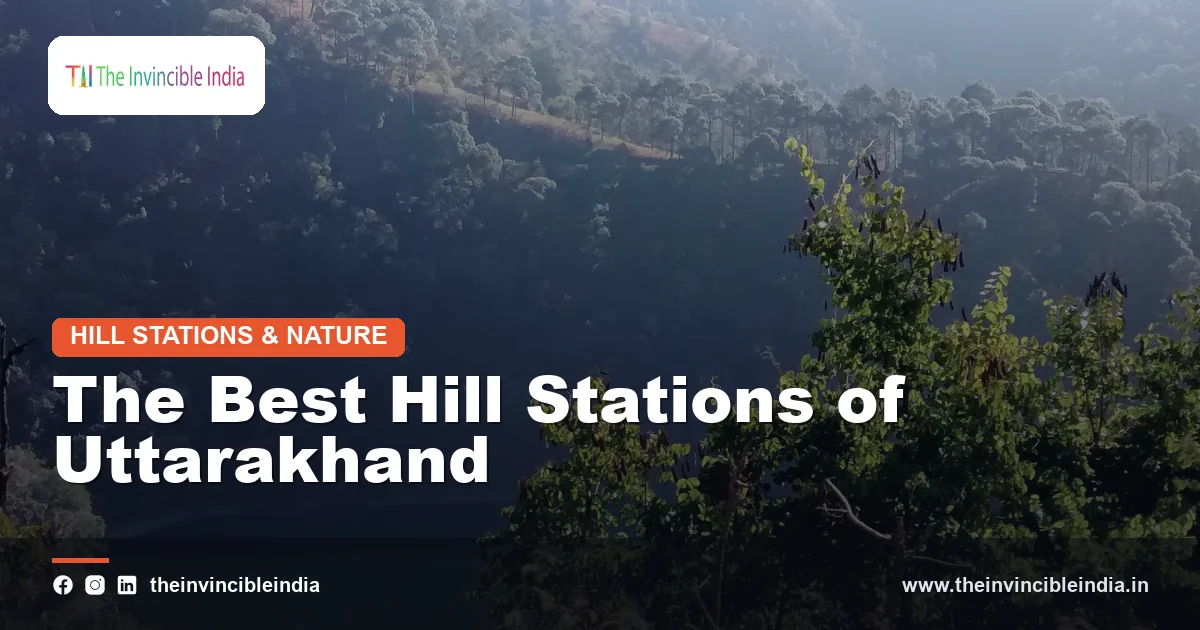
Uttarakhand, known reverently as “Dev Bhoomi” or the Land of the Gods, is blessed with some of the most beautiful hill stations in the Indian Himalayas. From colonial-era towns wrapped in colonial charm to sunrise viewpoints over snow-capped peaks and skiing slopes, the state offers a refreshing escape into cool mountain air and stunning scenery. Alongside its hill stations, Uttarakhand is a land of sacred rivers, revered pilgrimage sites and thrilling adventure. This detailed guide covers the best hill stations of Uttarakhand and how to enjoy them.
Quick Facts
| Nickname | Dev Bhoomi (Land of the Gods) |
| Famous hill stations | Nainital, Mussoorie, Auli |
| Best time to visit | March to June; December to February for snow |
Nainital
Built around the shimmering, eye-shaped Naini Lake, Nainital is one of India’s most popular and picturesque hill stations. Ringed by forested hills and colonial-era buildings, it is perfect for boating on the lake, strolling along the Mall Road, and taking the cable car up to Snow View Point for panoramic Himalayan vistas. Its pleasant climate, lakeside charm and easy accessibility make it a perennial favourite for families and couples alike.
Mussoorie
Fondly called the “Queen of the Hills,” Mussoorie is a charming colonial-era hill station perched on a ridge with commanding views of the Doon Valley and the snow-clad peaks beyond. Its bustling Mall Road, the cascading Kempty Falls, the Camel’s Back Road and the Gun Hill viewpoint reached by cable car are all popular, and its literary associations and old-world charm add to its appeal as a relaxing mountain retreat.
Auli
Auli is Uttarakhand’s premier skiing destination, a high-altitude meadow set amid pine and oak forests with spectacular, close-up views of Nanda Devi, India’s second-highest mountain. In winter it draws skiers to its well-groomed slopes, reached by a long cable car (one of the highest in Asia), while in other seasons its flower-strewn meadows and mountain panoramas make it a stunning place for walks and relaxation.
Ranikhet and Kausani
For those seeking peace and quiet, Ranikhet is a tranquil cantonment town surrounded by pine and oak forests, offering serene walks, a golf course and uninterrupted Himalayan views. Nearby Kausani, which Mahatma Gandhi called the “Switzerland of India,” is famous for its sweeping panoramic sunrises and sunsets over the snow-capped peaks of Trishul, Nanda Devi and Panchachuli, and for its tea gardens and calm atmosphere.
Chopta, Lansdowne and Almora
Uttarakhand offers many more gems. Chopta, the “Mini Switzerland of India,” is a base for the beautiful trek to Tungnath, the highest Shiva temple in the world, and the Chandrashila summit. Lansdowne is a quiet, unspoilt cantonment town ideal for a restful getaway, while Almora, a historic hill town, is known for its culture, temples and stunning Himalayan views, offering a more authentic Kumaoni experience.
Spirituality and the Char Dham
Uttarakhand is one of the holiest regions in India. It is home to the sacred Char Dham pilgrimage — the shrines of Kedarnath, Badrinath, Gangotri and Yamunotri, high in the Himalayas — as well as the spiritual towns of Haridwar and Rishikesh on the Ganges. This deep spiritual heritage, woven together with the natural grandeur of the mountains, gives the state its revered name of Dev Bhoomi.
Adventure and Nature
Beyond its hill stations, Uttarakhand is a haven for adventure and nature lovers. Rishikesh is a world capital of white-water rafting and yoga; the famous Valley of Flowers National Park, a UNESCO World Heritage Site, bursts into bloom in the monsoon; Jim Corbett National Park offers tiger safaris; and trekking routes lead to alpine meadows, glaciers and remote peaks. There is something here for every kind of traveller.
Best Time to Visit and How to Reach
The best time to visit Uttarakhand’s hill stations is from March to June for pleasant summer weather and escaping the plains’ heat, and from December to February for those seeking snow. The monsoon (July to September) brings lush greenery but also the risk of landslides, so travel should be planned carefully. The state is well connected by road and rail, with airports at Dehradun and Pantnagar, and most hill stations are a scenic drive from these hubs.
Rishikesh and Haridwar
No account of Uttarakhand is complete without its spiritual gateway towns on the Ganges. Haridwar, one of the seven holiest cities in Hinduism, is famous for its evening Ganga Aarti at Har Ki Pauri and as a host of the Kumbh Mela, the largest religious gathering on earth. Nearby Rishikesh, the “Yoga Capital of the World,” draws seekers and adventurers alike with its ashrams, iconic suspension bridges and white-water rafting, offering a blend of spirituality and adventure found nowhere else.
The Valley of Flowers
One of Uttarakhand’s most magical destinations is the Valley of Flowers National Park, a UNESCO World Heritage Site high in the Garhwal Himalayas. During the monsoon months, this remote alpine valley bursts into bloom with hundreds of species of wildflowers, creating a carpet of colour framed by snow-capped peaks. Reached by a scenic trek, it is a paradise for nature lovers, botanists and photographers, and lies close to the sacred Sikh shrine of Hemkund Sahib.
Jim Corbett and Wildlife
Uttarakhand is also home to Jim Corbett National Park, India’s oldest national park and a flagship of Project Tiger. Set in the foothills where the plains meet the mountains, it offers jeep safaris in search of tigers, elephants and abundant birdlife amid beautiful sal forests and grasslands. Together with other reserves such as Rajaji National Park, it makes the state a rewarding destination for wildlife enthusiasts as well as mountain lovers.
Kumaon and Garhwal
Uttarakhand is divided into two culturally distinct regions: Kumaon in the east and Garhwal in the west. Kumaon is known for hill stations such as Nainital, Almora, Ranikhet and Kausani, with gentle hills and lovely lake and mountain views. Garhwal, to the west, is the land of the great Char Dham pilgrimage, dramatic high peaks, and adventure hubs like Rishikesh. Understanding this geography helps travellers plan an itinerary that suits their interests.
Local Culture and Cuisine
The mountain culture of Uttarakhand is warm and rooted in tradition. The local Kumaoni and Garhwali cuisine is simple, wholesome and distinctive, featuring dishes such as aloo ke gutke, bhatt ki churkani, kafuli and the millet-based mandua roti, often flavoured with local herbs. Folk music, dance and colourful fairs (melas) reflect the deep connection between the people and their sacred mountain landscape, adding to the richness of a visit.
Adventure and Planning Your Trip
Beyond sightseeing, Uttarakhand is an adventure lover’s paradise, offering white-water rafting and bungee jumping in Rishikesh, skiing in Auli, and countless trekking routes to alpine meadows (bugyals), glaciers and peaks. The best time to visit depends on your goals — spring and summer for hill stations and treks, winter for snow, and the monsoon for the Valley of Flowers (though with landslide risk). The state is well connected by road and rail, with airports at Dehradun and Pantnagar serving as convenient gateways.
Choosing the Right Hill Station
With so many options, choosing the right hill station depends on what you seek. Nainital and Mussoorie suit those wanting lakes, activities and a lively atmosphere; Ranikhet, Almora, Kausani and Lansdowne are ideal for peace, nature and Himalayan views; Auli is the choice for skiing and snow; and Chopta and the Valley of Flowers reward trekkers and nature lovers. Matching the destination to your interests and the season ensures the most rewarding mountain getaway.
Local Cuisine of the Mountains
The food of Uttarakhand is simple, nutritious and deeply tied to the mountains. Made from local ingredients such as millets, lentils and foraged greens, dishes like bhatt ki churkani, aloo ke gutke, kafuli, phaanu and the millet-based mandua roti offer wholesome, warming flavours. Trying this authentic Pahari (mountain) cuisine, especially in a homestay, adds a delicious and memorable dimension to any trip through the state.
Responsible Tourism in the Hills
As Uttarakhand’s hill stations grow in popularity, responsible travel becomes ever more important to protect their fragile environment. Visitors can help by avoiding plastic and littering, respecting the sanctity of pilgrimage sites, sticking to marked trails while trekking, supporting local homestays and businesses, and being mindful of water and resources. Preserving the pristine beauty of these mountains ensures that they can continue to enchant travellers and sustain local communities for generations.
Why Visit Uttarakhand
Uttarakhand offers a rare combination of natural beauty, spiritual depth and adventure. Its hill stations provide cool mountain air and stunning views; its sacred rivers and shrines draw pilgrims and seekers; and its trekking trails, ski slopes and wildlife parks thrill adventurers. Whether you long for a peaceful lakeside retreat, a spiritual journey to the Char Dham, or an adrenaline-filled adventure, the Land of the Gods offers an experience to remember.
Wildlife and National Parks
Beyond its hill stations, Uttarakhand is home to remarkable wildlife. Jim Corbett National Park, India’s oldest, offers the chance to spot tigers, elephants and a wealth of birdlife, while the high-altitude Nanda Devi and Valley of Flowers, both UNESCO World Heritage Sites, protect rare alpine species and stunning scenery. Rajaji National Park near Haridwar is another rich reserve. These protected areas add a thrilling dimension of nature and adventure to any journey through the state, complementing the tranquillity of the hills.
How to Reach the Hills
Uttarakhand’s hill stations are well connected to Delhi and the plains. The nearest major railheads include Kathgodam for the Kumaon hills (Nainital, Almora, Ranikhet) and Dehradun and Haridwar for the Garhwal region (Mussoorie, Auli). Jolly Grant Airport near Dehradun serves the state by air. From these hubs, buses, shared jeeps and taxis wind up into the mountains. Overnight trains and buses from Delhi make weekend getaways easy, though mountain roads call for unhurried, careful travel.
A Land for Every Season
What makes Uttarakhand special is that it rewards visitors in every season, from summer escapes to the cool hills, to autumn treks under clear skies, to winter snowfall in Auli and Nainital, to the spring bloom of rhododendrons across the slopes.
Adventure Activities in the Hills
Uttarakhand’s hills are an adventure lover’s playground. Beyond trekking and skiing at Auli, visitors can enjoy paragliding, rock climbing, mountain biking and camping, while nearby Rishikesh offers world-class white-water rafting and bungee jumping. This wealth of activities, set amid spectacular Himalayan scenery, makes the region a favourite for those seeking excitement alongside the peace and beauty of the mountains.
Frequently Asked Questions
Which is the most popular hill station in Uttarakhand?
Nainital and Mussoorie are the most popular hill stations in Uttarakhand.
Where can you ski in Uttarakhand?
Auli is the premier skiing destination in Uttarakhand, with views of Nanda Devi.
Why is Uttarakhand called Dev Bhoomi?
Uttarakhand is called the “Land of the Gods” for its many sacred temples and pilgrimage sites, including the Char Dham.
When is the best time to visit Uttarakhand hill stations?
March to June for pleasant weather and December to February for snow.
What adventure activities are available in Uttarakhand?
River rafting in Rishikesh, trekking, skiing in Auli and wildlife safaris in Jim Corbett are among the highlights.


