

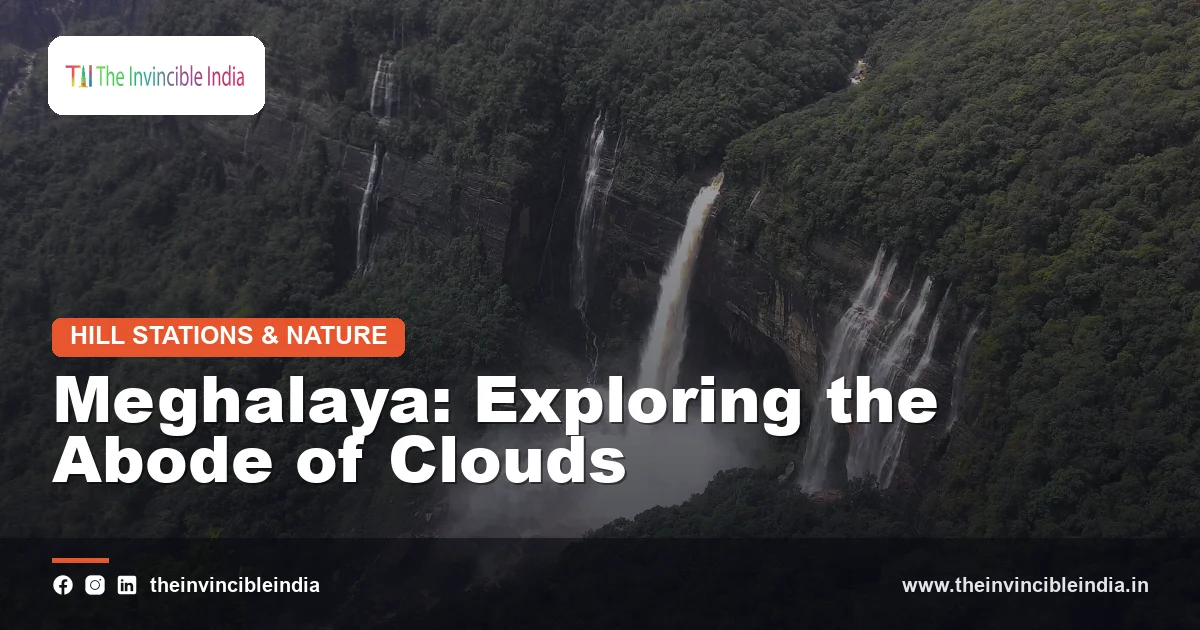
Meghalaya, literally the “Abode of Clouds,” is one of Northeast India’s most enchanting states — a magical land of misty hills, cascading waterfalls, crystal-clear rivers, deep caves and living traditions. Home to the Khasi, Jaintia and Garo peoples, who follow a fascinating matrilineal system in which lineage and property pass through women, Meghalaya offers a unique blend of natural beauty and culture. This detailed guide covers the best of Meghalaya and how to explore it.
Quick Facts
| Capital | Shillong |
| Meaning | “Abode of Clouds” |
| Famous for | Living root bridges, waterfalls, rain, caves |
| Best time to visit | October to April |
The Living Root Bridges
Among Meghalaya’s most extraordinary wonders are its living root bridges. For generations, the indigenous Khasi people have trained the aerial roots of rubber fig trees to grow across streams and rivers, forming natural, living bridges that strengthen over decades and can last for centuries. The famous double-decker root bridge near the village of Nongriat, reached by a steep but rewarding trek, is a marvel of bio-engineering and a symbol of harmony between people and nature.
Cherrapunji and Mawsynram
The neighbouring towns of Cherrapunji (Sohra) and Mawsynram are among the wettest places on Earth, receiving some of the highest annual rainfall in the world. This abundant rain feeds dramatic waterfalls, lush green valleys and mist-shrouded landscapes, and the region is a base for exploring caves, canyons and viewpoints that gaze out towards the plains of Bangladesh.
Shillong
The charming state capital, Shillong, is known as the “Scotland of the East” for its rolling, pine-clad hills and pleasant climate. It offers colonial-era charm, the sparkling Umiam Lake, viewpoints like Shillong Peak, bustling markets, and a lively music scene — Shillong is often called the rock music capital of India. It makes an ideal base for exploring the state.
Dawki and the Umngot River
Near the border with Bangladesh lies Dawki, where the Umngot River flows so astonishingly clear that boats appear to float on air above the riverbed, especially in the drier months. Boating on these transparent waters, framed by hills, is one of the most magical and photographed experiences in Meghalaya.
Waterfalls of Meghalaya
Meghalaya is a land of spectacular waterfalls. Nohkalikai Falls near Cherrapunji, plunging around 340 metres, is one of the tallest plunge waterfalls in India, set amid dramatic green cliffs. Other stunning falls include the Seven Sisters (Nohsngithiang) Falls, Elephant Falls and Krang Suri Falls with its turquoise pool, each a testament to the state’s abundant rainfall.
Mawlynnong: Asia’s Cleanest Village
The village of Mawlynnong, often celebrated as Asia’s cleanest village, is a model of community-led cleanliness and sustainability. Its flower-lined lanes, bamboo dustbins, sky-high living root bridge and a “balancing rock” natural wonder make it a delightful and inspiring place to visit, showcasing the values of the Khasi community.
Caves and Adventure
Meghalaya is a paradise for cavers and adventurers, home to some of the longest and deepest caves in India, such as Mawsmai (easily accessible to visitors) and the vast Krem Liat Prah. Beyond caving, the state offers trekking to root bridges and waterfalls, camping, zip-lining and kayaking, making it a wonderful destination for the outdoors.
Culture and the Matrilineal Society
Meghalaya’s indigenous cultures are a fascinating part of any visit. The Khasi, Jaintia and Garo communities follow a matrilineal system, with property and family name passing through the youngest daughter, a rare tradition in the world. Colourful festivals such as the Khasi Nongkrem dance festival and the Garo Wangala festival celebrate the harvest and honour the deities with music, dance and vibrant costumes.
Best Time to Visit and How to Reach
The best time to visit Meghalaya is between October and April, when the weather is pleasant and the skies clearer, though the monsoon (June to September) showcases the waterfalls in their full, thunderous glory. Meghalaya is usually reached via Guwahati in Assam, which has the nearest major airport and railway station, from where Shillong is about a three-hour scenic drive.
The Jaintia Hills
The Jaintia Hills, in the east of the state, offer some of Meghalaya’s most beautiful and less-crowded attractions. The stunning Krang Suri Falls, with its turquoise plunge pool, is a highlight, as are the sacred monoliths of Nartiang, the mysterious Jaintia caves and the living root bridges of the region. The Jaintia Hills give travellers a chance to experience Meghalaya’s natural beauty and culture away from the busier tourist trails.
The Garo Hills
The Garo Hills, in western Meghalaya, are home to the Garo people and to lush, biodiverse landscapes. Nokrek National Park, a UNESCO Biosphere Reserve, protects rare species including the red panda and is a centre of wild citrus diversity, while Balpakram National Park, known in local legend as the “land of spirits,” offers dramatic canyons and rich wildlife. This region is ideal for those seeking wilderness and an authentic cultural experience.
Sacred Groves and Living Traditions
Meghalaya is famous for its sacred forests, such as the Mawphlang Sacred Grove near Shillong, which have been protected for centuries by local communities according to traditional beliefs. These ancient forests, where nothing may be removed, are treasure troves of biodiversity and a beautiful example of indigenous conservation. Visiting them with a local guide offers insight into the deep bond between the Khasi people and their natural environment.
The Cuisine of Meghalaya
Meghalayan cuisine is simple, flavourful and distinctive. Rice is the staple, accompanied by dishes such as jadoh (rice cooked with meat), dohneiiong (pork with black sesame), and a variety of smoked and fermented preparations. The food reflects the region’s ingredients and traditions, and sampling it — ideally in a local home or eatery — is a memorable part of the journey.
Adventure in Meghalaya
For the adventurous, Meghalaya is a playground. Beyond trekking to root bridges and waterfalls, visitors can go caving in some of the longest cave systems in Asia, kayak and boat on clear rivers, camp under the stars, zip-line across gorges and cliff-jump into natural pools. The combination of dramatic terrain, abundant water and unspoilt nature makes the state one of India’s finest destinations for outdoor enthusiasts.
Responsible Travel and Suggested Itinerary
As tourism grows, travelling responsibly in Meghalaya is important: respect local customs and sacred sites, avoid plastic and litter (many communities take great pride in cleanliness), support homestays and local guides, and tread lightly on the fragile living root bridges. A rewarding week-long itinerary might combine Shillong, Cherrapunji and its waterfalls, the double-decker root bridge at Nongriat, Mawlynnong and Dawki, with time added for the Jaintia or Garo Hills for a deeper experience of this magical state.
Weather and What to Pack
Meghalaya’s weather is famously changeable, living up to its name as the abode of clouds. Even outside the monsoon, sudden showers and mist are common, so it is wise to pack a light raincoat or umbrella, quick-drying clothes and sturdy, non-slip footwear for the often wet and steep trails. Warm layers are useful for the cool evenings, especially in Shillong and the higher areas. Being prepared for rain ensures you can enjoy the state’s natural beauty whatever the skies decide to do.
A Photographer’s Dream
Meghalaya is a paradise for photographers. The living root bridges draped in green, the crystal waters of Dawki, the plunging waterfalls, the mist rolling over the hills, and the tidy, flower-filled villages all offer stunning images. The interplay of cloud, light and water creates ever-changing scenes, and the warmth of the local people makes for wonderful portraits (always with their permission). Early mornings, when the mist lifts, are especially magical for capturing the landscape.
Music and Modern Culture
Shillong is renowned as one of India’s great music cities, with a deep love of Western rock, blues and gospel alongside indigenous traditions. Live music fills its cafes and venues, and the state has produced many talented musicians. This vibrant contemporary culture, combined with the region’s deep-rooted traditions, gives Meghalaya a character that feels both timeless and refreshingly modern.
The Warmth of the People
Travellers to Meghalaya often remark most on the friendliness and dignity of its people. The Khasi, Jaintia and Garo communities are known for their hospitality, their strong sense of community, and their pride in keeping their villages clean and their traditions alive. Their matrilineal society, in which women hold a central place, adds a fascinating dimension, and interacting respectfully with local people is one of the most rewarding parts of any visit.
Why Meghalaya Stays With You
Meghalaya lingers in the memory long after the journey ends. It is a place where nature and human ingenuity live in rare harmony — in bridges grown from living roots, villages that are models of cleanliness, and forests protected for centuries by faith. Its waterfalls, caves and clear rivers offer adventure and wonder, while its gentle, welcoming culture offers warmth. For those seeking a destination that is both breathtakingly beautiful and quietly inspiring, Meghalaya is truly unforgettable.
Planning Your Meghalaya Trip
Planning a trip to Meghalaya is refreshingly straightforward, as Indian travellers do not need any special permit to visit. Most journeys begin in Guwahati, Assam, the nearest major air and rail hub, from where Shillong is about a three-hour drive. A week allows you to comfortably cover Shillong, Cherrapunji and the root bridges, along with Dawki and Mawlynnong, while a longer stay lets you explore the Jaintia and Garo Hills. Hiring a local driver is the most convenient way to navigate the winding hill roads and reach the remoter attractions.
An Unforgettable Corner of India
Meghalaya offers a travel experience unlike anywhere else in the country — a place where clouds drift through green hills, rivers run clear as glass, bridges are grown from living roots, and communities take genuine pride in the cleanliness and beauty of their surroundings. Combining spectacular natural wonders, thrilling adventure and warm, welcoming cultures, this small northeastern state rewards every traveller who ventures to the abode of clouds with memories and impressions that last a lifetime.
Discover the Abode of Clouds
For travellers seeking a destination that is at once breathtaking, adventurous and deeply peaceful, Meghalaya is a revelation. Its living root bridges, thundering waterfalls, crystal rivers and mist-covered hills, combined with the warmth and pride of its people, make it one of the most special corners of India. A journey to the abode of clouds is not just a holiday but an experience of nature and culture in rare harmony — one that will linger in your memory for years to come.
Frequently Asked Questions
Why is Meghalaya called the Abode of Clouds?
Its high, mist-covered hills and exceptionally heavy rainfall earn Meghalaya the name “Abode of Clouds.”
What are living root bridges?
They are natural bridges formed by training the roots of rubber fig trees across streams, made by the Khasi people over many years.
Which is the wettest place on Earth?
Mawsynram and Cherrapunji in Meghalaya are among the wettest places on Earth.
When is the best time to visit Meghalaya?
October to April for pleasant weather, and the monsoon for the waterfalls at their fullest.
How do you reach Meghalaya?
Meghalaya is usually reached via Guwahati in Assam, about a three-hour drive from Shillong.


