

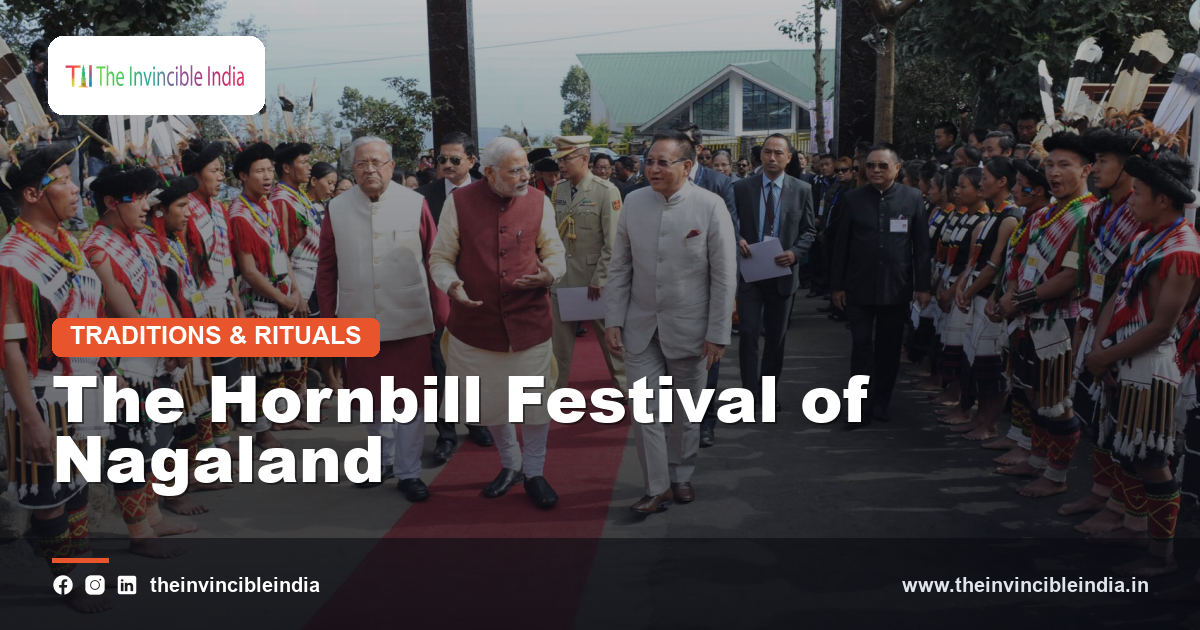
Every December, the state of Nagaland comes alive with the Hornbill Festival, a large-scale celebration of tribal heritage held at Kisama Heritage Village near Kohima. Named after a bird long revered in Naga folklore, the festival brings together the state’s many tribes to share traditional dance, music, cuisine, crafts and games under one roof. It stands alongside other prominent regional celebrations, such as the Bihu festival of Assam, as a major showcase of Northeast Indian culture. Conceived as a platform for cultural preservation and tourism alike, the Hornbill Festival has grown into one of the most recognized events in the region, offering visitors a comprehensive introduction to the diversity and richness of Naga tribal traditions.
Quick Facts
| Detail | Information |
|---|---|
| Location | Kisama Heritage Village, near Kohima, Nagaland |
| Named After | The hornbill bird, revered in Naga folklore |
| Duration | About ten days, typically in early December |
| Organized By | Government of Nagaland, showcasing all major Naga tribes |
| Highlights | Tribal dances, traditional games, music and crafts |
| Also Known As | Festival of Festivals |
Origins and Purpose of the Hornbill Festival
The Hornbill Festival was established by the Government of Nagaland as an initiative to bring together the state’s numerous tribes under a single, shared platform of celebration. Nagaland is home to a large number of recognized tribes, each with its own distinct language, attire, customs and festivals traditionally observed separately through the year. The Hornbill Festival was conceived as a way to showcase this diversity collectively, offering both local communities and visitors a comprehensive view of Naga culture in one setting. Since its inception, the festival has grown into one of the most prominent cultural events in Northeast India, drawing attention to traditions that might otherwise remain known mainly within individual communities. Its founding purpose combined cultural preservation with an effort to promote greater understanding of Naga heritage beyond the region. Over time, the event has also become an occasion for tribes to reconnect with practices that risked fading amid modernization, giving the festival a role that extends well beyond simple entertainment.
Why the Hornbill Bird Was Chosen
The festival takes its name from the hornbill, a large and distinctive bird that holds deep symbolic significance in the folklore and oral traditions of many Naga tribes. The bird has traditionally been associated with qualities such as strength, alertness and grace, and its feathers have historically featured in the ceremonial headgear worn by tribal elders and warriors during important occasions. By naming the festival after this culturally significant bird, organizers sought to root the event firmly within indigenous symbolism rather than borrowing imagery from outside the region. The hornbill’s presence in Naga oral tradition reflects a broader relationship between Naga communities and the natural world, in which animals and their attributes are woven into stories, songs and ceremonial practice. Awareness generated by the festival has also contributed to greater public attention on the conservation of hornbill populations in the region. The choice of name therefore carries both cultural and ecological resonance for the state.
Kisama Heritage Village as the Venue
The Hornbill Festival is held at Kisama Heritage Village, a purpose-built venue located a short distance from Kohima, the capital of Nagaland. The site was developed specifically to host the festival and features traditional Naga architecture, including replica morungs, or tribal youth dormitories, representing different tribes of the state. Each participating tribe maintains its own designated hut or pavilion within the village, allowing visitors to move between them and experience distinct customs, crafts and hospitality side by side. This physical layout allows the festival to function almost like a living museum for the duration of the event, with structures designed to reflect traditional building styles and materials. The choice of a dedicated heritage village, rather than a generic event ground, reflects the emphasis placed on authentic cultural representation. Kisama’s design has made it an important venue not only for the Hornbill Festival but for other cultural events held in Nagaland throughout the year.
Nagaland's Many Tribes and Their Traditions
Nagaland is home to a substantial number of major tribes, each historically distinguished by its own language, dress, customs and social organization. The Hornbill Festival provides a rare occasion for representatives of these diverse communities to gather together and present their traditions in a shared public space. Visitors to the festival can observe differences in traditional attire, ornamentation, dance styles and craft techniques across tribes, gaining a sense of the cultural range that exists within a single state. At the same time, the festival highlights certain shared values and historical experiences that connect these communities, such as close relationships with the land and strong oral storytelling traditions. This combination of diversity and shared heritage is central to the festival’s identity, reflecting Nagaland’s broader character as a state defined by both plurality and connection. The event has become an important reference point for understanding the range of indigenous cultures present in Northeast India.
Traditional Morungs and Tribal Huts
Traditional morungs, historically used as communal dormitories for unmarried young men in many Naga tribal societies, are recreated at the Hornbill Festival as part of the tribal representation at Kisama. In their original context, morungs served important social functions, acting as centers for education in tribal customs, oral history, crafts and communal discipline. At the festival, these structures are adapted to serve as exhibition spaces, where tribal representatives display artifacts, clothing and handicrafts while sharing information about their community’s history and way of life. The presence of morung-style structures allows the festival to convey a sense of traditional community organization alongside the more performative elements such as dance and music. For younger visitors and researchers alike, these spaces offer insight into aspects of Naga social structure that have changed considerably in recent generations. Their inclusion underscores the festival’s broader aim of preserving and explaining traditional institutions, not merely displaying decorative culture.
Tribal Dance Performances
Tribal dance performances form one of the central attractions of the Hornbill Festival, with groups from different communities presenting choreography rooted in their specific customs and historical experiences. These performances often depict themes such as agricultural cycles, hunting traditions, festivals, or historical events significant to a particular tribe, conveyed through coordinated movement, rhythm and traditional costume. Group dances typically involve elaborate formations, and performers wear traditional attire that itself carries symbolic meaning tied to status, achievement or community identity. Music accompanying the dances is usually provided by traditional instruments and vocal chants specific to each tribe, reinforcing the authenticity of the performance. Watching multiple tribal dance forms in succession allows festival visitors to appreciate both the diversity and the shared performative traditions found across Naga communities. These performances are widely regarded as among the most visually striking elements of the festival, and they continue to serve an important role in keeping traditional dance forms actively practiced.
Traditional Naga Attire and Ornaments
Traditional Naga attire, prominently displayed throughout the Hornbill Festival, varies significantly between tribes yet shares certain common features, including the use of woven shawls, beadwork and ornamentation crafted from natural materials. Colors, patterns and specific items of jewelry or headgear often carry meanings related to social status, achievement or clan identity within a given tribe, making dress an important marker of tradition rather than simple decoration. Warrior attire, in particular, may include ceremonial items historically associated with honors earned through community-recognized achievements. The festival gives visitors an opportunity to see this range of traditional clothing displayed together, highlighting both the craftsmanship involved and the cultural significance embedded in specific garments and accessories. Local artisans and weavers are often present to demonstrate techniques used in producing these textiles, adding an educational dimension to the visual spectacle. The prominence given to traditional attire at the festival reflects its broader role in cultural preservation and public education.
Music, Chants and Folk Instruments
Music plays a vital role at the Hornbill Festival, with different tribes presenting traditional songs, chants and instrumental performances that have been passed down through generations. Instruments featured at the event often include various types of drums, gongs, string instruments and wind instruments crafted from natural materials such as bamboo and wood. Vocal traditions, including call-and-response chants and choral singing, frequently accompany dance performances or stand as independent showcases of a tribe’s musical heritage. These musical forms are often connected to specific occasions in traditional community life, such as harvests, hunting expeditions or communal gatherings, giving performances historical and social context beyond entertainment value. The festival provides a rare platform for these traditional musical practices to be heard by wider audiences, including younger generations of Naga communities themselves. In doing so, it contributes to the continued transmission of musical traditions that might otherwise see reduced practice amid changing lifestyles and entertainment habits.
Traditional Naga Cuisine at the Festival
Traditional Naga cuisine is prominently featured at the Hornbill Festival, offering visitors an opportunity to sample dishes prepared according to tribal recipes and cooking methods. Naga food is generally known for its distinctive use of local herbs, smoked meats, fermented ingredients and a range of chili varieties, reflecting the agricultural and culinary practices developed across the region’s varied terrain. Food stalls representing different tribes allow visitors to compare regional variations in taste and preparation style within a single visit. For many attendees, the culinary offerings serve as an accessible entry point into Naga culture, complementing the more visual experiences of dance and costume with direct sensory engagement. The festival’s food section has also helped raise wider awareness of Naga cuisine beyond the region, contributing to growing interest in Northeast Indian food traditions more broadly. This culinary showcase reflects the festival’s broader effort to present Naga culture as a complete lived experience rather than a series of isolated performances.
Crafts, Weaving and Handloom Displays
Handicrafts and weaving traditions occupy a significant place at the Hornbill Festival, with artisans from different tribes displaying and selling items such as shawls, baskets, wood carvings and metalwork. Naga weaving traditions are particularly notable for their distinctive patterns and color combinations, which often carry specific meanings tied to tribal identity or social status. Demonstrations of traditional techniques, including handloom weaving and basket making, allow visitors to observe the skill and time involved in producing these items firsthand. The festival provides artisans with a valuable platform to reach buyers and collectors from beyond their local communities, supporting the continued practice of traditional crafts as a livelihood. This economic dimension complements the cultural significance of the crafts themselves, helping ensure that skills passed down through generations remain viable in a changing economy. The prominence given to craft traditions at the festival underscores their importance as both cultural heritage and practical skill.
Indigenous Games and Sporting Contests
Traditional games and sporting contests form part of the broader program at the Hornbill Festival, showcasing physical skills historically valued within Naga tribal communities. These contests may include activities such as traditional wrestling, log-pulling, archery and other tests of strength or precision that have long-standing roots in tribal life. Such games often originated as practical training for hunting, defense or agricultural work, later evolving into recognized competitive and recreational activities within communities. Their inclusion at the festival allows visitors to see aspects of traditional Naga life connected to physical culture and community bonding, alongside the more visually prominent dance and music performances. Participation in these games also provides an opportunity for tribal communities to demonstrate skills passed down through generations, reinforcing intergenerational connections. The presence of indigenous sporting traditions within the festival program reflects its broader aim of representing Naga heritage in its full range, extending beyond the performing and decorative arts.
The Hornbill International Rock Festival
In more recent years, the Hornbill Festival has expanded to include contemporary elements alongside its traditional program, most notably the Hornbill International Rock Festival, a music event held as part of the broader celebrations. This addition reflects Nagaland’s notable enthusiasm for rock and contemporary music, drawing bands and audiences from within the region and beyond to participate in performances held during the festival period. The inclusion of a modern music event alongside traditional tribal showcases illustrates the festival’s willingness to accommodate contemporary cultural expression without displacing its core focus on indigenous heritage. For younger audiences in particular, this addition has helped broaden the appeal of the overall festival, encouraging attendance from demographics that might not otherwise engage with traditional cultural events. The coexistence of ancient tribal customs and modern musical performance within a single festival reflects a broader pattern seen in many contemporary cultural celebrations, where tradition and modernity are presented side by side rather than in opposition.
Naga Warrior Traditions and War Dances
Naga tribal history includes strong traditions associated with warriorhood, and elements of this heritage are represented at the Hornbill Festival through displays of traditional weaponry, ceremonial attire and reenacted dance forms. Items such as spears, shields and traditional headgear associated with historical warrior status are displayed as part of tribal exhibits, offering insight into aspects of social organization tied to community defense and honor in earlier periods. War dances performed at the festival typically involve coordinated, rhythmic movement intended to convey strength, discipline and unity, drawing on choreography developed within specific tribal traditions. These presentations are offered in a respectful, educational context, aimed at preserving and explaining historical practices rather than glorifying conflict. For many visitors, this aspect of the festival offers a deeper understanding of the values historically associated with courage, community protection and social status within Naga tribal life, complementing the festival’s broader cultural presentations.
Promotion of Tourism Through the Festival
The Hornbill Festival has become an important driver of tourism for Nagaland, attracting visitors from across India and abroad during the festival period each year. State authorities have actively promoted the event as a flagship attraction, positioning it as a comprehensive introduction to Naga culture for those unfamiliar with the region. The festival’s timing and format have been structured in part with tourism development in mind, encouraging extended stays and repeat visits to Nagaland and the wider Northeast. Local businesses, including hospitality providers, transport services and craft vendors, often see increased activity during the festival period, contributing to the regional economy. This tourism dimension operates alongside the festival’s cultural and preservation goals, illustrating how heritage celebration and economic development can be pursued together. The Hornbill Festival’s growing profile has also helped raise broader awareness of Nagaland and Northeast India as destinations rich in indigenous culture and natural landscape.
Role in Preserving Naga Heritage
Beyond its role as a tourist attraction, the Hornbill Festival serves an important function in preserving and transmitting Naga cultural heritage to younger generations. By providing a regular, high-profile platform for traditional dance, music, craft and oral history, the festival encourages continued practice of customs that might otherwise decline amid broader social and economic change. Tribal elders and cultural custodians often play an active role in organizing and participating in the festival, helping ensure that presentations remain rooted in authentic practice rather than simplified performance. For many young people from Naga communities, the festival offers a structured opportunity to learn and engage with their own tribal traditions, sometimes for the first time in a formal setting. This preservation function has become an increasingly recognized aspect of the festival’s significance, positioned alongside its more visible roles in tourism and entertainment as a genuine contribution to cultural continuity.
Contemporary Additions to the Festival Program
Over the years, the Hornbill Festival’s program has expanded beyond traditional tribal showcases to include a range of contemporary cultural and recreational activities. These have included fashion shows, culinary competitions, motor rallies and other modern events that run alongside the more traditional elements of the festival. Such additions are typically designed to broaden the festival’s appeal to diverse audiences, including younger visitors and those less familiar with tribal customs, while maintaining traditional programming as the central focus. Organizers have generally approached these contemporary elements as complements to, rather than replacements for, the festival’s cultural core, seeking a balance between innovation and heritage preservation. This evolving structure reflects the practical challenges faced by many long-running cultural festivals in maintaining relevance across changing audience expectations. The continued popularity of the Hornbill Festival, despite these additions, suggests that its traditional programming remains its primary draw for most attendees.
The Hornbill Festival Today
Today, the Hornbill Festival stands as one of the most significant cultural events in Northeast India, recognized for its comprehensive representation of Naga tribal heritage alongside contemporary additions that keep it relevant to changing audiences. It continues to serve multiple purposes at once, functioning as a celebration of tradition, a platform for tourism, and a mechanism for cultural preservation among Nagaland’s diverse tribes. The festival’s structure, bringing together dance, music, cuisine, crafts and sport within a single dedicated venue, reflects a deliberate effort to present Naga culture in its full complexity rather than through isolated highlights. As Nagaland continues to navigate the balance between modernization and cultural continuity, the Hornbill Festival remains a central occasion through which this balance is publicly enacted and celebrated. Its continued growth in scale and recognition reflects both sustained local commitment and increasing wider interest in the rich cultural heritage of India’s Northeast.
Sources & Further Reading
- Ministry of Tourism, Government of India (tourism.gov.in).
- Ministry of Development of North Eastern Region, Government of India (mdoner.gov.in).
Frequently Asked Questions
Where is the Hornbill Festival held?
The festival takes place at Kisama Heritage Village, located a short distance from Kohima, the capital of Nagaland, in a venue built specifically to host tribal exhibits and performances.
Why is it called the Hornbill Festival?
It is named after the hornbill bird, which holds strong symbolic significance in Naga folklore and has traditionally featured in ceremonial tribal headgear and oral traditions.
What can visitors see at the Hornbill Festival?
Visitors can experience tribal dances, traditional music, indigenous games, craft demonstrations, and Naga cuisine, along with contemporary additions such as the Hornbill International Rock Festival.
When does the Hornbill Festival take place?
The festival is held annually in early December, over a period of about ten days, as organized by the Government of Nagaland.
How many tribes participate in the festival?
The festival brings together representatives from all the major recognized tribes of Nagaland, each presenting distinct customs, attire and traditions at Kisama Heritage Village.


