

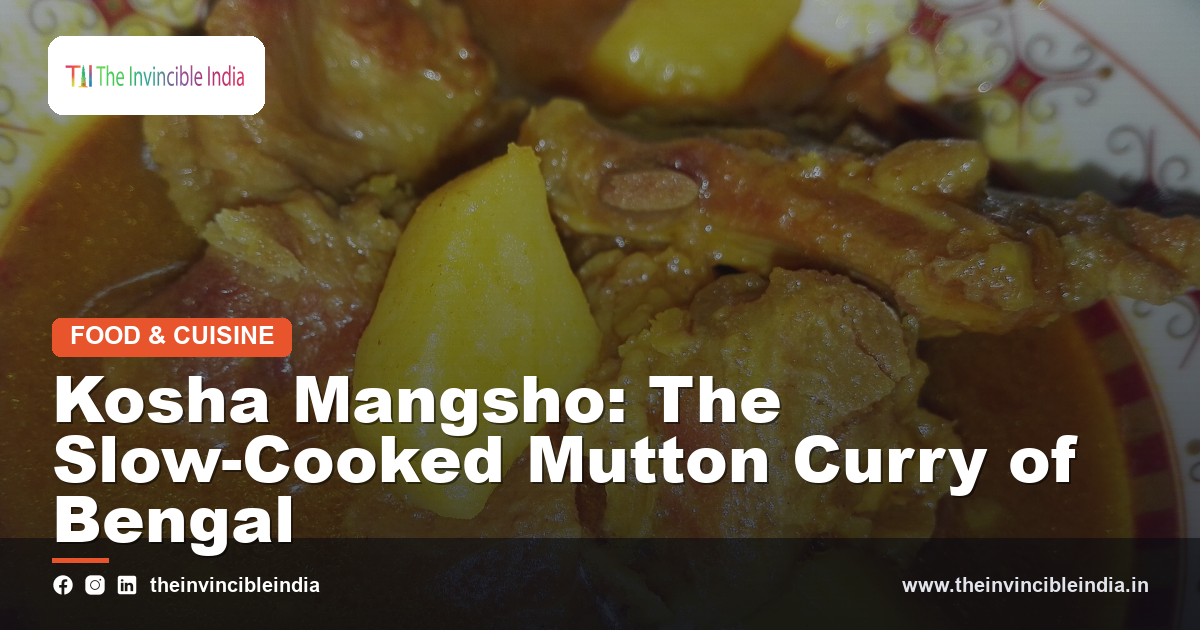
Kosha mangsho is the great mutton curry of Bengal, a dark and glossy dish in which pieces of meat are cooked slowly in a thick masala of onions, spices and mustard oil until the gravy has reduced to a rich coating that clings to every piece. The word kosha refers to this patient, repeated stirring and frying, while mangsho simply means meat. Traditionally associated with Sunday lunches and special gatherings, the dish is eaten with luchi, rice or pulao and is regarded as one of the high points of the cuisine described in the guide to Bengali cuisine. It rewards time, attention and a very steady hand.
Quick Facts
| Detail | Information |
|---|---|
| Type | Slow-cooked dry-style mutton curry |
| Region | Bengal |
| Key ingredients | Mutton, onions, mustard oil, yogurt and spices |
| Technique | Kosha, or slow frying and reducing of the masala |
| Appearance | Dark, thick and glossy gravy |
| Served with | Luchi, rice, pulao or paratha |
What Kosha Mangsho Is
Kosha mangsho is a Bengali preparation of mutton cooked slowly with onions, ginger, garlic, spices and mustard oil until the meat is tender and enveloped in a thick, deeply coloured masala. Unlike a thin, soupy curry, it has little free liquid, and the gravy is reduced so far that it forms a concentrated coating around each piece. The flavour is robust and layered, with the sweetness of caramelised onion, the pungency of mustard oil and the warmth of whole and ground spices all contributing. The dish is considered a classic of the Bengali kitchen and is closely tied to its festive and weekend traditions. Kosha mangsho is therefore best understood as a dish of patience, in which the cooking technique matters as much as the ingredients.
The Meaning of Kosha
The word kosha in Bengali refers to the process of cooking a masala slowly, with continuous stirring, until it darkens, thickens and releases its oil. It is comparable to the bhuna technique found in other parts of India, in which spices and the main ingredient are fried repeatedly in a small amount of liquid until the flavours become concentrated. In Bengali cooking, kosha is a deliberate stage that cannot be rushed, and cooks watch for the colour, aroma and texture of the masala to judge when it is ready. Mastering the technique is regarded as a mark of skill in the kitchen. The very name of the dish thus describes the method on which its character depends.
Mutton in Bengali Cooking
In Bengal the word mutton commonly refers to goat meat, which has long been the favoured red meat for festive and special-occasion cooking, valued for its flavour and its ability to absorb spices during slow cooking. Cooks typically choose pieces on the bone, since bone-in meat contributes depth of flavour and richness to the gravy. Mutton occupies an important place in Bengal’s culinary identity alongside fish, which is the staple of everyday meals, and it is the centrepiece of many weekend and celebratory menus. The preference for tender, flavourful meat explains the emphasis on long, gentle cooking. Mutton, in this tradition, is a meat treated with respect and given the time it needs to reach its best.
The Marinade
Preparation of kosha mangsho commonly begins with marinating the meat, often with yogurt, turmeric, ginger and garlic paste, salt and sometimes a little mustard oil. The acidity of the yogurt helps to tenderise the meat, while the aromatics begin to infuse it with flavour well before cooking starts. The marinade is typically left to work for a period, ranging from a couple of hours to overnight in some households, depending on the cook’s preference. This stage is simple but important, laying the groundwork for the depth and tenderness of the finished dish. A well-marinated piece of meat takes on the spices more thoroughly and cooks more evenly. The marinade thus prepares the ground on which the long cooking process will build.
Mustard Oil and Its Pungent Warmth
Mustard oil is the characteristic cooking medium of Bengal, and its sharp, pungent aroma defines much of the region’s food. In kosha mangsho the oil is usually heated until it smokes slightly, which mellows its raw edge, before whole spices and onions are added. The oil contributes a distinct flavour that cannot be replicated by other fats, giving the curry a slightly sharp, earthy backbone that balances the sweetness of the onions. Its use reflects the widespread cultivation of mustard in the eastern plains and its deep integration into Bengali kitchens. Without mustard oil the dish would lose a great part of its regional identity. The oil, in short, is the signature note that marks the curry as unmistakably Bengali.
Onions, Ginger and Garlic
The base of kosha mangsho is built on generous quantities of onions, together with ginger and garlic, which are cooked down slowly until they turn deep golden and then brown. The onions are often both sliced and ground, giving the gravy body as well as sweetness, and their careful caramelisation is one of the most important steps in the recipe. Ginger and garlic add sharpness and fragrance, rounding out the flavour of the masala. The colour that develops at this stage helps to determine the final shade of the curry. Skilled cooks are patient at this stage, knowing that rushing it results in a pale, shallow flavour. A good foundation of onion, ginger and garlic is therefore the quiet source of the dish’s richness.
Spices and the Whole Spice Tempering
Bengali kosha mangsho typically begins with a tempering of whole spices such as bay leaf, cinnamon, green cardamom and cloves in hot mustard oil, which release their fragrance and perfume the oil. Ground spices, including turmeric, red chilli, cumin and coriander, are added later and cooked into the onion base. A pinch of garam masala may be added near the end for aroma. The spice level is generally moderate rather than ferociously hot, with an emphasis on aromatic depth. This approach to spice is typical of Bengali cooking, which favours balance over heat, and it is a theme explored more widely in the guide to Indian spices. The careful handling of spices gives the curry its warm, rounded character.
The Slow Cooking Process
Once the marinated meat is added to the fried masala, it is cooked over a medium to low flame, with frequent stirring, so that the pieces sear and absorb the spices. Little or no extra water is added at first, allowing the meat to release its own juices and cook in a concentrated environment. As the moisture evaporates, the masala deepens in colour and the oil begins to separate at the edges, a visual signal that the kosha is progressing well. Later a small amount of hot water may be added and the pot covered to complete the tenderising. The whole process can take a considerable time, and cooks typically stay close to the pot. The slow cooking is the real secret of the dish, converting simple ingredients into something deep and luxurious.
The Role of Potatoes and Sugar
Two small details often distinguish a Bengali preparation of mutton curry from those of other regions. One is the frequent addition of potatoes, which are fried until golden and cooked in the gravy, absorbing its flavours and giving the dish a heartier character. The other is a small pinch of sugar, sometimes added to balance the spices and to enhance the colour of the onions, in keeping with the Bengali liking for a subtle sweetness within savoury dishes. Not every household uses both, and kosha mangsho can be prepared with or without potato. These small touches reveal how regional taste shapes even a widely loved dish. Such details are part of what makes the Bengali version recognisably its own.
Eating It with Luchi
One of the most beloved ways of eating kosha mangsho is with luchi, small, puffed, deep-fried breads made from refined flour, which are soft, light and slightly crisp at the edges. The luchi is torn into pieces and used to scoop up the thick gravy and meat, and the mild, buttery flavour of the bread provides a gentle contrast to the intensity of the curry. This pairing is closely associated with Bengali celebrations and weekend breakfasts or lunches, and many people regard it as the ideal way of enjoying the dish. The combination of rich curry and soft bread is deeply comforting. Luchi and kosha mangsho together form one of the classic partnerships of Bengali food.
Rice, Pulao and Paratha
Kosha mangsho is equally at home with other accompaniments, and it is frequently served with plain steamed rice, with fragrant ghee-laced basanti pulao or with parathas. Rice allows the intense flavour of the gravy to be appreciated in a more neutral setting, while pulao, with its light spicing and sweet aroma, creates a more festive combination. Parathas offer a flaky, substantial alternative that is popular in many households and restaurants. A simple salad of sliced onion, cucumber and green chilli, with a wedge of lemon, often completes the plate. The versatility of the dish with different breads and grains shows how adaptable a well-made curry can be. Whatever the accompaniment, the mutton remains the centre of the meal.
The Sunday Lunch Tradition
For many Bengali families, kosha mangsho is closely associated with the Sunday lunch, a weekly occasion when relatives gather and the pace of the day slows. The dish is cooked at leisure, its aroma filling the house for hours, and is followed by a long meal and a rest. This tradition has become a cherished part of Bengali domestic culture, so much so that the phrase Sunday mutton evokes nostalgia for countless people. The ritual shows how food structures the rhythm of family life, turning an ordinary weekend into an occasion. Kosha mangsho, in this setting, is much more than a recipe, since it is a symbol of togetherness and unhurried enjoyment.
Festivals and Celebrations
Beyond Sunday lunches, mutton curry in the kosha style features prominently in Bengal’s festive calendar, especially during Durga Puja and other celebrations when families host guests and cook elaborate spreads. In a region where fish is the daily staple, mutton marks an occasion as special, and its appearance on the table signals generosity. Restaurants and caterers across Kolkata also prepare the dish for weddings and large gatherings, often vying for a reputation based on the quality of their kosha. Such associations strengthen the identity of the dish as one of celebration. At such times, kosha mangsho brings together flavour, hospitality and cultural pride in a single bowl.
Kolkata's Restaurants and Eateries
Kolkata has a long tradition of restaurants and old eateries that have become known for their mutton preparations, among them cabins, dhabas and long-established family-run establishments where kosha mangsho is a signature item. In these places the dish is often served in a small bowl with a luchi or paratha, and diners judge the cook’s skill by the depth of colour, the tenderness of the meat and the balance of spicing. The city’s food culture, with its fondness for lengthy discussions over meals, gives the dish a social dimension as well as a culinary one. For visitors, ordering a plate of kosha mangsho is often a way of tasting the city’s character. The eateries of Kolkata have thus helped to keep the dish at the centre of the city’s identity.
Regional Variations and Related Curries
Though kosha mangsho follows a recognisable pattern, individual cooks and households have their own variations, adjusting the amount of onion, the spices used or the presence of potato. Related Bengali preparations include the lighter, soupy mangsher jhol, a thinner curry often made for everyday meals and eaten with rice, and various chicken and duck dishes cooked in similar styles. Muslim and Hindu traditions in Bengal have also contributed distinct approaches to mutton cooking, enriching the overall repertoire. The differences between these dishes illustrate the diversity of Bengali home cooking. Kosha mangsho stands out among them as the richest and most concentrated, the version made when time and care are available.
Tips of the Trade
Cooks who prepare kosha mangsho often stress a few guiding principles that have been passed down through families. The meat should be bone-in and not too lean, the onions must be browned slowly and without burning, the heat should remain steady and the masala must be allowed to release its oil before water is added. Patience is regarded as the single most important ingredient, and attempts to shorten the process generally show in the result. Many also advise letting the cooked dish rest for a while before serving, so the flavours can settle and deepen. These pieces of kitchen wisdom reflect long experience rather than precise measurement. Following them helps to ensure that the curry achieves its full, glossy richness.
Kosha Mangsho Today
Today kosha mangsho remains one of the most cherished dishes in Bengali cuisine, cooked in homes on weekends and served in restaurants across India and the world wherever Bengali communities have settled. It has inspired countless family recipes, each with its own nuances, and continues to be a benchmark by which Bengali cooks are measured. Even as modern lifestyles leave less time for long cooking, the dish endures as a treat reserved for moments of leisure and celebration. Its dark, aromatic gravy, its tender meat and its association with family gatherings give it an emotional pull that few other dishes can match. Kosha mangsho today remains a delicious reminder that the best food is often the food that takes its time.
Sources & Further Reading
- Ministry of Tourism, Government of India, on the cuisines of India (tourism.gov.in).
- Ministry of Culture, Government of India (indiaculture.gov.in).
Frequently Asked Questions
What is kosha mangsho?
Kosha mangsho is a Bengali mutton curry in which bone-in meat is cooked slowly in a thick masala of onions, spices and mustard oil until the gravy reduces and coats each piece. The name combines kosha, meaning slow frying and reducing, with mangsho, meaning meat.
What does kosha mean in Bengali cooking?
Kosha refers to the technique of cooking a masala slowly with continuous stirring until it darkens, thickens and releases its oil. It is similar to the bhuna method used in other regions of India.
What is kosha mangsho eaten with?
It is traditionally eaten with luchi, but it also pairs well with steamed rice, pulao or paratha. A simple salad of onion, cucumber and lemon often accompanies it.
Why is mustard oil used in kosha mangsho?
Mustard oil is the traditional cooking medium of Bengal and gives the curry its pungent, earthy flavour. Heating it until it smokes slightly mellows its sharpness before the spices and onions are added.
Is kosha mangsho a Sunday dish?
Yes, for many Bengali families it is closely associated with the Sunday lunch and with festive gatherings. It is also served at weddings and during celebrations such as Durga Puja.


