

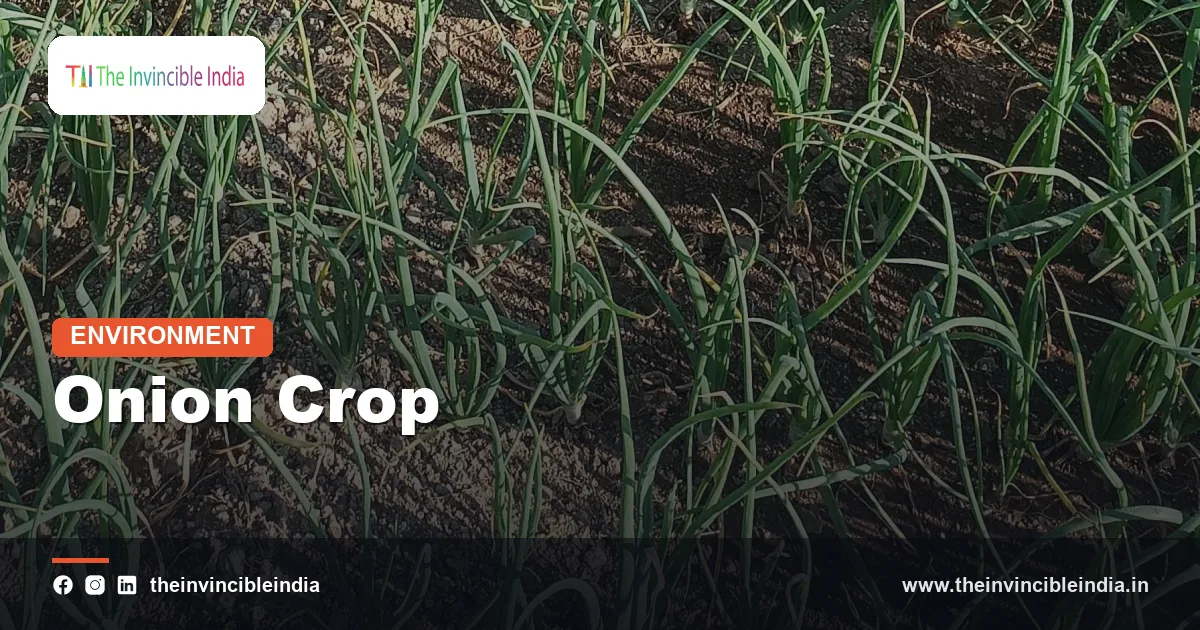
The onion crop (Allium cepa) is the bulb vegetable that India grows in vast quantities, ranking among the world’s two largest producers and cultivated mainly in Maharashtra, Karnataka, Madhya Pradesh and Gujarat. Onions are an everyday staple in Indian kitchens, used raw, fried, ground into gravies and pickled, and their price is watched so closely that it has become a recurring public and political issue.
This explainer sets out what the onion crop is, where and when it is grown, how it is harvested and stored, why prices swing and what role government policy plays. Production and price figures change from year to year, so the article uses stable, widely reported patterns rather than current statistics. Facts were last reviewed on 23 October 2026.
| Quick Fact | Detail |
|---|---|
| Scientific name | Allium cepa |
| Family | Amaryllidaceae (subfamily Allioideae), the onion and garlic group |
| Native range | Believed to originate in Central and South-West Asia, with cultivation dating back thousands of years |
| Where grown in India | Maharashtra (the leading producer), Karnataka, Madhya Pradesh, Gujarat, Bihar, Rajasthan, Andhra Pradesh and Haryana |
| Season | Three crops a year: kharif (monsoon), late kharif and rabi (winter-spring); the rabi crop is the largest and stores best |
| Uses | Culinary staple, dehydrated onion flakes and powder, pickles, export commodity and traditional medicine |
| Research body | ICAR-Directorate of Onion and Garlic Research, Rajgurunagar, Pune, Maharashtra |
| Notable facts | Perishable, price-sensitive staple; governments have used export curbs, stock limits and buffer stocks to manage prices |
Key Takeaways
- The onion crop (Allium cepa) is a biennial plant grown as an annual for its bulb, and India is one of the two largest onion producers in the world, alongside China.
- Maharashtra is India’s leading onion-growing state, and the Nashik region is the best-known centre of production and trade.
- India grows onions in three seasons, kharif, late kharif and rabi, and the rabi crop harvested in spring is the main source of stored onions for the rest of the year.
- Onions are stored after curing in ventilated structures, but rot, sprouting and weight loss can destroy a considerable share of the stored crop.
- Onion prices are volatile because the crop is perishable, weather-sensitive and produced in seasonal waves, which is why governments have often intervened through export restrictions and buffer stocks.
- The ICAR-Directorate of Onion and Garlic Research at Rajgurunagar near Pune is India’s main research institute for onion and garlic.
What is the onion crop?
The onion crop is the cultivated form of Allium cepa, a bulb-forming vegetable in the Amaryllidaceae family that is grown for its pungent, layered underground bulb. The plant is botanically a biennial, producing leaves and a bulb in the first year and flowers and seed in the second, but farmers treat it as an annual because the bulb is harvested at the end of the first growing cycle.
The onion belongs to the same genus as garlic, leeks, chives and shallots. The edible bulb is formed from the swollen bases of the leaves, which store food and water. Colours range from red and pink to yellow, brown and white, and sizes range from the small shallot-like sambar onion of the south to the large red bulbs of the Deccan plateau.
The onion is believed to have been domesticated in Central and South-West Asia and has been cultivated in India for a very long time. It appears in classical Indian food and medical traditions, although some communities, including strict Jain households and many sattvic diets, avoid it for religious or dietary reasons.
Where is the onion crop grown in India?
The onion crop is grown in India mainly in Maharashtra, Karnataka, Madhya Pradesh and Gujarat, with significant production also in Bihar, Rajasthan, Andhra Pradesh and Haryana. Maharashtra has long been the single largest producing state, with the districts around Nashik, Pune, Ahmednagar (Ahilyanagar), Solapur and Dhule among the leading growing areas.
The Deccan plateau suits the crop well because of its moderate rainfall, fertile black and red soils and the availability of irrigation from canals, wells and reservoirs. Lasalgaon in Nashik district hosts an agricultural produce market that is widely described as one of the largest onion markets in Asia, and its auction prices are closely watched across the country.
Regional specialisation is clear:
- Maharashtra: large red onions across all three seasons, with the Nashik belt as the commercial hub.
- Karnataka: kharif and late kharif crops, including large bulbs from areas around Bellary and Chitradurga.
- Madhya Pradesh and Gujarat: large rabi plantings; Gujarat’s Saurashtra region, around Mahuva, also supplies onions for dehydration.
- Tamil Nadu and Andhra Pradesh: small onions, locally called sambar onions, and some large onion crops.
- Bihar and Rajasthan: significant winter crops serving northern and eastern markets.
When is the onion crop grown in India?
The onion crop is grown in India in three overlapping seasons: kharif, late kharif and rabi, and the rabi crop, harvested in spring, is the largest and the one that can be stored for months. Because different states plant at different times, some fresh onions reach the market in nearly every month of the year, though supply is thinnest between the end of stored rabi stock and the arrival of the new kharif crop.
| Crop season | Nursery sowing | Transplanting | Harvest | Storage quality |
|---|---|---|---|---|
| Kharif (monsoon) | May to June | July to August | October to December | Poor; usually sold fresh |
| Late kharif | August to September | October to November | January to March | Moderate |
| Rabi (winter-spring) | October to December | December to January | March to May | Good; main stored crop |
Exact dates vary with region and local weather, and farmers adjust planting to the arrival of the monsoon and the availability of irrigation. The rabi crop dominates storage because its bulbs mature in dry, warm weather, develop thicker outer scales and dry well in the field.
How is the onion crop cultivated?
The onion crop is cultivated by raising seedlings in a nursery for six to eight weeks and then transplanting them into prepared, well-drained fields, followed by regular but controlled irrigation until the tops start to fall. Direct seeding is used in a few areas, but transplanting gives a more uniform stand and larger bulbs under Indian conditions.
Soil, climate and day length
Onions prefer well-drained loamy soil with a neutral to slightly acidic reaction and do poorly in waterlogged ground. Bulb formation depends on day length, and varieties are classed as short-day, intermediate-day or long-day types. Most Indian varieties are short-day or intermediate types, which suits the tropical latitudes of the country.
Water and nutrition
The crop has shallow roots and needs frequent light irrigation, particularly during early growth and bulb development. Drip and sprinkler systems are promoted in dry regions to save water and improve uniformity. Irrigation is stopped a couple of weeks before harvest so the bulbs mature and cure properly. Balanced nutrition, especially sulphur, adds to bulb quality and pungency.
Common pests and diseases
Thrips are a widespread pest, and purple blotch, Stemphylium blight, basal rot and downy mildew are common diseases, especially in humid kharif conditions. Integrated pest management, crop rotation with non-allium crops and healthy seedlings help reduce losses.
Varieties
Popular improved varieties include selections released by ICAR institutes and state agricultural universities, such as Bhima Super, Bhima Kiran, Agrifound Dark Red and Pusa Red. Farmers also grow hybrids and local landraces. Seed quality is a persistent challenge because the onion is a biennial that needs a second year to produce seed.
How are onions harvested and stored?
Onions are harvested when about half to three-quarters of the tops have fallen over, then cured in the field and shade for several days and stored in ventilated structures that keep the bulbs dry and aerated. Proper curing dries the neck and outer scales, which seals the bulb against disease and moisture loss.
Traditional Indian onion storage uses raised, well-ventilated structures made of bamboo, wood and tin or tile roofing, with air passing through the sides and floor. The ICAR-DOGR and other research bodies have promoted designs that improve air flow and reduce losses. Storage losses can still be heavy, caused mainly by three factors:
- Rotting: fungal and bacterial infection spreads in damp, poorly ventilated heaps.
- Sprouting: bulbs shoot when temperature and humidity are high after dormancy ends.
- Physiological weight loss: bulbs lose water over time and shrink.
Cold storage is used for seed bulbs and for some high-value onions, but it is expensive for the huge bulk of the commercial crop, and bulbs removed from cold storage can sprout quickly. Other approaches include onion-specific warehouses, irradiation of bulbs to inhibit sprouting, and processing into flakes or powder. Better storage is regarded as one of the most important ways to stabilise supply and prices.
Why are onion prices so volatile?
Onion prices are volatile because the crop is perishable, weather-sensitive and grown in seasonal pulses, so a small shortfall or delay can lift retail prices sharply while a glut can push farm-gate prices below the cost of production. Demand is steady and inelastic, since households use onions daily and rarely cut back much when prices rise, which means supply shocks translate directly into price swings.
Several recurring factors influence prices:
- Weather: unseasonal rain or drought during the kharif season can damage crops and delay arrivals.
- Storage losses: wet weather and heat can spoil stored rabi onions before the new crop arrives.
- Sowing decisions: farmers who received poor prices in one year often plant less in the next, which can create shortages.
- Transport and trading: a concentrated production base means regional disruptions can affect distant cities.
- Exports and imports: trade policy can quickly change the domestic supply.
Price spikes are painful for consumers, but price crashes are equally damaging for farmers, who sometimes sell below cost or leave unsold produce in the field. The onion crop therefore sits between consumer and producer interests more sharply than most other vegetables.
Why is the onion crop a political issue in India?
The onion crop is a political issue in India because the onion is a daily kitchen necessity whose price is highly visible to urban households, while its growers are an organised and vocal farming lobby. Onion prices have become a symbol of the cost of living, and governments have often acted quickly when prices rose sharply.
Policy tools that have been used over the years include:
- Export restrictions: bans, minimum export prices or export duties to keep more onions at home.
- Stock limits: caps on how much traders can hold, intended to deter hoarding.
- Buffer stocks: government agencies such as NAFED procure onions in surplus periods and release them when prices rise.
- Imports: allowing duty-reduced imports to ease shortages.
- Support during gluts: occasional price support or transport help for farmers.
Export curbs, in particular, are contested. Consumers benefit from lower domestic prices, but farmers and export traders argue that sudden bans hurt incomes and damage India’s reputation as a reliable supplier to buyers such as Bangladesh, Sri Lanka, Nepal, Malaysia and the Gulf. These policy cycles have happened more than once in recent decades, and debate continues over whether storage, processing and stable trade rules would be a better long-term approach than ad hoc interventions.
What are the nutritional and culinary roles of the onion?
The onion plays a central culinary role as the base of most Indian curries and also supplies small amounts of vitamin C, fibre and plant compounds such as quercetin and organosulphur compounds. Raw onions are low in calories and add flavour with little fat or sugar.
The familiar sting in the eyes comes from a gas, a lachrymatory compound, released when cutting breaks the cells and sulphur compounds react with an enzyme. Chilling the onion beforehand, using a sharp knife and working near ventilation can reduce the effect.
Indian cooking uses onion in many ways:
- Fried or browned onion (birista) as a base and garnish for biryani and gravies.
- Sliced raw onion with lemon as a salad accompaniment.
- Onion paste for thickening curries.
- Pakoras, bhajis and kanda bhaji as snacks.
- Pickled or fermented onion in condiments and chutneys.
Dehydrated onion flakes and powder are an important processed product, with much of the drying industry located in Gujarat, particularly around Mahuva, and the product is exported to food manufacturers abroad.
What does the future hold for the onion crop?
The future of the onion crop in India depends on better storage, processing, climate-resilient varieties and more predictable trade policy, because these changes can reduce the swings that hurt both farmers and consumers. Scientists and policymakers regularly discuss the same set of improvements.
- Climate resilience: varieties that tolerate heat, irregular rain and diseases.
- Storage infrastructure: modern ventilated stores and scientific warehouses in producing districts.
- Processing: expanding dehydration, paste and ready-to-cook products to absorb surplus.
- Market reform: electronic trading platforms and farmer producer organisations to improve price discovery.
- Water efficiency: drip irrigation and fertigation to save water and improve yield.
- Seed systems: wider availability of quality seed for kharif and late kharif crops.
Because the crop is spread across several states and seasons, regional coordination of planting and advance estimates of acreage are widely discussed as ways to give early warning of shortages and gluts.
Bottom Line
The onion crop is a modest bulb that carries large weight in Indian farming, food and politics. Maharashtra and the Deccan supply a large part of the national crop, but the economics of storage, seasonality and trade policy decide whether the humble onion brings stability or stress to households and farms.
Frequently Asked Questions
Which state is the largest producer of onions in India?
Maharashtra is the largest onion-producing state in India, with the Nashik region as its commercial centre. Karnataka, Madhya Pradesh and Gujarat are also major producers. The ranking can shift slightly from year to year with weather and acreage.
How many onion crops are grown in India each year?
India grows three onion crops each year: kharif, late kharif and rabi. The rabi crop, harvested in spring, is the largest and stores best. Different states plant at different times, so fresh onions reach the market in most months.
Why do onion prices rise so sharply?
Onion prices rise sharply because the crop is perishable and seasonal, and demand barely falls when supply is short. Unseasonal rain, storage losses and delayed harvests can cut arrivals quickly. Trade policy and trader behaviour can then amplify the price rise.
How are onions stored in India?
Onions are stored after curing in ventilated structures made of bamboo, wood and metal sheets that allow air to circulate. Good curing and dry conditions reduce rotting and sprouting. Cold storage is used mainly for seed bulbs and small quantities of premium onions.
What is the best time to plant onions in India?
The best planting time depends on the season and region: rabi onions are usually transplanted in December and January, while kharif onions are transplanted in July and August. Nursery seedlings are raised six to eight weeks earlier. Farmers should follow local advice from agricultural universities and krishi vigyan kendras.
Why does cutting an onion make you cry?
Cutting an onion makes people cry because broken cells release a sulphur compound that irritates the eyes and triggers tears. The reaction involves an enzyme and a compound stored in the onion. Chilling the onion or using a sharp knife can reduce the effect.
{“@context”:”https://schema.org”,”@graph”:[{“@type”:”FAQPage”,”mainEntity”:[{“@type”:”Question”,”name”:”Which state is the largest producer of onions in India?”,”acceptedAnswer”:{“@type”:”Answer”,”text”:”Maharashtra is the largest onion-producing state in India, with the Nashik region as its commercial centre. Karnataka, Madhya Pradesh and Gujarat are also major producers. The ranking can shift slightly from year to year with weather and acreage.”}},{“@type”:”Question”,”name”:”How many onion crops are grown in India each year?”,”acceptedAnswer”:{“@type”:”Answer”,”text”:”India grows three onion crops each year: kharif, late kharif and rabi. The rabi crop, harvested in spring, is the largest and stores best. Different states plant at different times, so fresh onions reach the market in most months.”}},{“@type”:”Question”,”name”:”Why do onion prices rise so sharply?”,”acceptedAnswer”:{“@type”:”Answer”,”text”:”Onion prices rise sharply because the crop is perishable and seasonal, and demand barely falls when supply is short. Unseasonal rain, storage losses and delayed harvests can cut arrivals quickly. Trade policy and trader behaviour can then amplify the price rise.”}},{“@type”:”Question”,”name”:”How are onions stored in India?”,”acceptedAnswer”:{“@type”:”Answer”,”text”:”Onions are stored after curing in ventilated structures made of bamboo, wood and metal sheets that allow air to circulate. Good curing and dry conditions reduce rotting and sprouting. Cold storage is used mainly for seed bulbs and small quantities of premium onions.”}},{“@type”:”Question”,”name”:”What is the best time to plant onions in India?”,”acceptedAnswer”:{“@type”:”Answer”,”text”:”The best planting time depends on the season and region: rabi onions are usually transplanted in December and January, while kharif onions are transplanted in July and August. Nursery seedlings are raised six to eight weeks earlier. Farmers should follow local advice from agricultural universities and krishi vigyan kendras.”}},{“@type”:”Question”,”name”:”Why does cutting an onion make you cry?”,”acceptedAnswer”:{“@type”:”Answer”,”text”:”Cutting an onion makes people cry because broken cells release a sulphur compound that irritates the eyes and triggers tears. The reaction involves an enzyme and a compound stored in the onion. Chilling the onion or using a sharp knife can reduce the effect.”}}]}]}


