

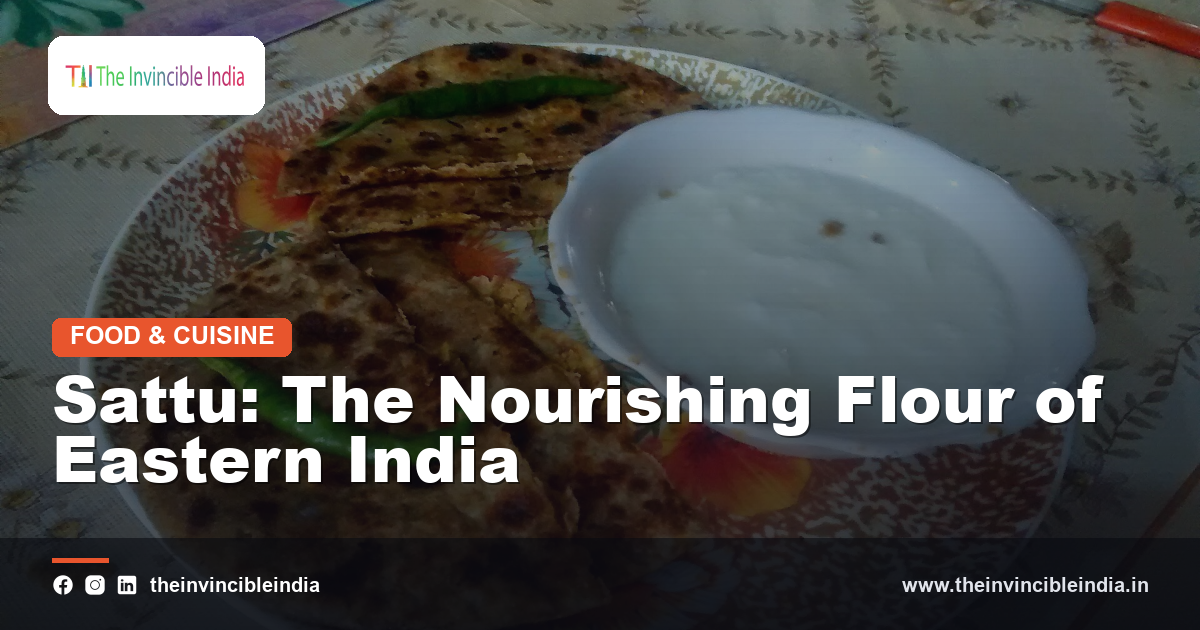
Sattu is a fine flour made from roasted gram and, in some regions, other roasted grains, and it has been a dependable everyday food across Bihar, Jharkhand and eastern Uttar Pradesh for generations. Mixed with water and salt or jaggery it becomes a cooling drink, kneaded into dough it becomes a stuffing for litti, and stirred into simple preparations it becomes a quick, filling meal. Much as the wider Bihari cuisine is defined by resourceful, earthy cooking, sattu shows how a single roasted flour can serve farmers, travellers and families alike. This guide explores sattu, its preparation, its uses and its enduring cultural place.
Quick Facts
| Detail | Information |
|---|---|
| Type | Roasted flour used as food and drink base |
| Region | Bihar, Jharkhand and eastern Uttar Pradesh |
| Main ingredient | Roasted Bengal gram (chana), sometimes with barley |
| Famous uses | Sattu sharbat and stuffed litti |
| Character | Nutty, earthy and cooling |
| Traditional role | Affordable, energising food for workers and travellers |
What Sattu Is
Sattu is a flour made by roasting grains or pulses, most commonly Bengal gram, and grinding them into a fine, pale golden powder with a distinctive nutty aroma. Because the raw material is roasted before milling, sattu is ready to eat without further cooking, which is one of its greatest practical advantages. It can be mixed with water into a drink, shaped with a little liquid into a dough or added to other foods for body and flavour. Sattu is closely tied to the food culture of eastern India, especially Bihar. As a simple, ready-to-use roasted flour, sattu stands as one of the most versatile and characteristic staples of the region.
Origins and Historical Roots
Roasted grain flours have a very long history in the Indian subcontinent, and sattu is often described as one of the oldest prepared foods of the region, referred to in some traditional texts and folk memory. Its appeal for farmers, soldiers, pilgrims and travellers was practical, since a roasted flour is light, keeps well and needs no fire to prepare. Precise dates and details of its earliest use are not documented, so they are best left aside. What is clear is that sattu has sustained working communities of the Gangetic plains for many generations. As a food born of practicality, sattu carries a long heritage that has been passed down through everyday household use.
Grains Used and Preparation
The most common base for sattu is roasted Bengal gram, known as chana, which is dry-roasted, husked and ground into flour. In some places barley is roasted and milled to make a lighter, cooler sattu, and mixtures of gram, barley and other grains are also used. The roasting is done in a hot pan or sand until the grain turns fragrant and slightly darker, developing the toasty flavour that defines the flour. After grinding, the flour is sieved for smoothness. Roasting both cooks and preserves the grain, and this careful preparation gives sattu its characteristic taste. It is this simple process that transforms plain pulses into a durable, ready-to-eat food.
Sattu Sharbat, the Summer Cooler
The best-known use of sattu is as a drink called sattu sharbat, made by stirring the flour into cold water and flavouring it either sweet, with jaggery or sugar, or savoury, with salt, roasted cumin, lemon juice, green chilli and chopped mint. Its texture is slightly thick and it leaves a pleasant, nutty finish. In the heat of summer across Bihar and Uttar Pradesh, sattu drink is sold by street vendors and prepared at home as a refreshing and filling cooler. It is widely regarded as a cooling food that helps the body cope with hot weather. This drink, simple yet satisfying, has become the most recognisable face of sattu across the country.
Litti and the Sattu Stuffing
Sattu is the traditional filling for litti, a round wheat dough ball baked over coals or an open fire and served with ghee. The stuffing is prepared by mixing sattu with chopped onion, garlic, green chilli, ginger, ajwain, lemon juice, mustard oil and salt, creating a spiced, crumbly mixture that bursts with flavour when the litti is broken open. Litti chokha, in which the bread is served with a mashed smoky vegetable preparation, is regarded as one of the signature dishes of Bihar and neighbouring Jharkhand. The sattu filling provides both savour and substance. Through litti, this humble flour has become associated with a celebrated regional meal that many people consider the taste of Bihar itself.
Sattu Paratha and Other Everyday Uses
Beyond drink and litti, sattu appears in many other household preparations. Sattu paratha is a flatbread stuffed with a spiced sattu mixture and cooked on a griddle, a popular breakfast or packed meal. Sattu can also be kneaded into small balls or ladoos with jaggery and ghee, added to dough for extra protein, or simply eaten as a porridge-like mixture with water, salt and onion. Some families sprinkle it over rice or mix it with curd. This range of uses reflects the adaptability of the flour and the creativity of home cooks. Sattu proves itself not a single dish but an ingredient of many forms, useful in almost every part of the day.
Sattu as Food of Workers and Travellers
Sattu has long been associated with people who work outdoors, including farmers, labourers, boatmen and travellers on long journeys, because it is inexpensive, portable and immediately edible. A pouch of sattu and a little water could provide a full meal in the field without cooking or utensils. Its ability to sustain energy for hours made it valuable to those with demanding physical work. Even today, it is spoken of as the food of the common person, honest and unpretentious. This connection to labour and endurance gives sattu a dignity beyond its simple look, presenting it as a food that has quietly fed generations of hard-working communities across eastern India.
Nutrition and Everyday Value
Sattu is valued as a nourishing food, since Bengal gram is a source of plant protein and fibre, and the roasted flour is easy to digest and quick to prepare. It is widely regarded as an energising food that keeps people satisfied for longer, which is one reason it appeals to workers and to those looking for wholesome vegetarian options. Its popularity has grown among health-conscious consumers in recent years. As with any traditional food, precise nutritional content depends on the grains used and the way it is prepared, so specific figures are best avoided. In general, sattu enjoys a strong reputation as a simple, protein-rich and sustaining food.
Cooling Properties in Folk Belief
In traditional Indian understanding of food, certain ingredients are regarded as cooling and others as warming, and sattu, particularly the barley variety, is commonly placed among the cooling foods. This belief explains why it is so popular in summer, when families prepare sattu drinks to protect against the heat. Elders often recommend a glass in the afternoon or before travel during hot months. Such ideas are part of folk knowledge rather than laboratory measurement, and they are best understood as cultural wisdom passed down through generations. The seasonal use of sattu is a good example of how food traditions in India are woven into the rhythm of climate and everyday household habit.
Sattu in Bihar and Jharkhand
Bihar and Jharkhand are the states most closely identified with sattu, and it appears in daily life there in many forms. Street stalls sell sattu sharbat on hot afternoons, households prepare litti and sattu paratha for gatherings, and the flour is sold in every local market. Certain festivals, including Sattuani, a spring observance in parts of Bihar, involve sattu in a symbolic way. Regional folk songs and sayings also mention it. This deep presence in food, festival and speech shows that sattu is more than an ingredient in these states. It is a cultural marker, closely tied to local identity, and a source of shared pride among the people of the region.
Regional Variations Across Eastern India
Although Bihar is its heartland, sattu is eaten in neighbouring regions with local variations. In eastern Uttar Pradesh it is a common summer drink and litti filling, while in parts of West Bengal and Odisha roasted gram flour appears in sweets and snacks under related names. Some communities mix gram with barley or maize, and others add spices such as black salt or carom seeds. Sweet versions often use jaggery, while savoury ones lean on lemon, chilli and herbs. These variations show how a shared foundation of roasted flour has adapted to different tastes and climates. The diversity of forms confirms sattu as a genuinely pan-regional food of the eastern plains.
Storage and Practical Advantages
One reason for sattu’s long popularity is its excellent keeping quality. Because it is dry, roasted flour with very little moisture, it can be stored for a good period in an airtight container away from damp, making it useful in the days before refrigeration. It is light to carry and requires no cooking, so it suited travel, pilgrimage and work far from home. A few spoonfuls can be turned into a meal in minutes with water and a pinch of salt. These practical virtues remain valuable today for busy families and travellers alike. The convenience of sattu explains why it has survived changing eating habits, continuing to earn a place in modern kitchens.
Making Sattu Drink at Home
Preparing sattu drink at home is simple and requires very little equipment. The flour is whisked into cold water until smooth, then seasoned according to preference, with salt, roasted cumin powder, lemon juice and a little chopped mint for the savoury version, or with jaggery or sugar for the sweet one. It should be served fresh, because the flour settles quickly. Some cooks add a pinch of black salt or chopped onion for extra character. The proportions are adjusted to taste and thickness. Because it needs no cooking and takes only a few minutes, the sattu drink has become a favourite quick refreshment, easy for even beginners to prepare with confidence.
Sattu in Modern Kitchens
In recent years sattu has attracted fresh attention from urban consumers, nutritionists and chefs interested in traditional whole foods. Packaged sattu powders, ready-to-mix drinks and sattu-based snacks are now sold in cities, and restaurants have begun to feature sattu sharbat and litti on their menus. Home cooks add it to smoothies, pancakes and energy bars, while others blend it into dough for extra protein. These new uses respect the flour’s original character while introducing it to a wider audience. The modern revival of sattu shows how a traditional rural food can find new relevance, adapting to contemporary tastes without losing its identity or its long-established virtues.
Cultural Meaning of a Humble Flour
Sattu carries cultural meaning that goes well beyond its simple appearance. It stands for resourcefulness, self-reliance and the dignity of ordinary food, qualities that people of eastern India readily associate with themselves. For many families, the taste of sattu recalls childhood summers, village fairs and the cooking of elders. It has also become a symbol of regional pride, particularly for Bihar, whose people often present it as an emblem of authentic local food. This emotional and symbolic weight explains why sattu is discussed with affection and why it continues to be celebrated in conversation, festivals and popular culture as a genuine treasure of the region.
Sattu Today
Today sattu is enjoying a renewed reputation as a wholesome, plant-based and affordable food, valued at once by rural households that have always used it and by city dwellers discovering its benefits. Its drink is sold on street corners and in cafes, its flour fills shelves in supermarkets and its litti is celebrated in food festivals across the country. Growing interest in traditional grains and simple nutrition has reinforced its appeal. Even so, its essential character remains unchanged, a roasted flour that is nutty, cooling and sustaining. As eastern Indian cuisine gains wider recognition, sattu stands as one of its most humble yet distinguished representatives, carrying the region’s culinary heritage into the future.
Sources & Further Reading
- Ministry of Culture, Government of India (indiaculture.gov.in).
- Food Safety and Standards Authority of India (fssai.gov.in).
Frequently Asked Questions
What is sattu made of?
Sattu is made from roasted grains or pulses ground into a fine flour, most commonly Bengal gram, known as chana. In some regions barley or a mixture of grains is used. The roasting gives it a nutty flavour and lets it be eaten without further cooking.
How is sattu drink made?
Sattu drink, or sharbat, is made by whisking the flour into cold water and seasoning it. The savoury version uses salt, roasted cumin, lemon juice and mint, while the sweet version uses jaggery or sugar. It is best served fresh, as the flour settles quickly.
What is sattu used for in litti?
In litti, sattu is mixed with onion, garlic, ginger, green chilli, ajwain, lemon juice, mustard oil and salt to form a spiced stuffing. This filling is enclosed in wheat dough and the balls are baked over coals or fire. Litti is typically served with ghee and a mashed vegetable dish called chokha.
Is sattu healthy?
Sattu is widely regarded as a nourishing food because roasted gram provides plant protein and fibre, and it is easy to digest. It is popular as a filling, energising and inexpensive option. Exact nutritional content depends on the grains used and how it is prepared.
Where is sattu most popular?
Sattu is most closely associated with Bihar and Jharkhand, and it is also common in eastern Uttar Pradesh. Related roasted flours are used in other parts of eastern India. It is now sold in cities across the country and abroad.


