

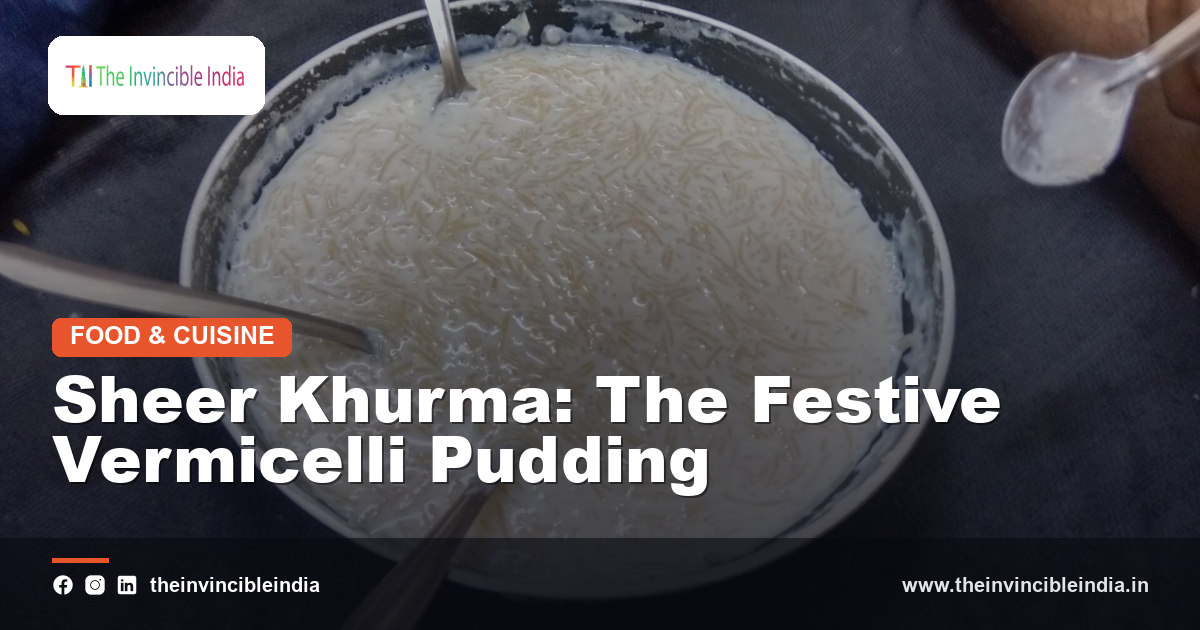
Sheer khurma is a rich, fragrant pudding of fine vermicelli simmered in sweetened milk with dates, nuts and cardamom, and it is closely tied to the joy of Eid. Across India, and especially in communities that celebrate Eid-ul-Fitr, it is the dish that greets the festival morning, offered to family, neighbours and guests alike. Like the sweets described in our guide to famous sweets of India, it carries meaning far beyond its taste. This guide explores the name, ingredients and preparation of sheer khurma, its regional variations and the role it plays in festive hospitality and shared celebration.
Quick Facts
| Detail | Information |
|---|---|
| Dish type | Festive milk and vermicelli pudding |
| Main ingredients | Fine vermicelli, milk, dates, dry fruits |
| Name meaning | Milk (sheer) and dates (khurma) |
| Key flavours | Cardamom, saffron, rose water, ghee |
| Occasion | Eid-ul-Fitr and other celebrations |
| Served | Warm or chilled in small bowls |
What Is Sheer Khurma?
Sheer khurma is a creamy dessert made by cooking fine vermicelli in milk that has been simmered and sweetened, then enriched with dates, nuts and fragrant spices. The vermicelli is usually fried lightly in ghee before it is added to the milk, which gives the pudding a nutty aroma and a slightly golden colour. The finished dish is thick, aromatic and luxurious, and it is decorated with sliced almonds, pistachios and sometimes saffron strands.
It is a dish of celebration rather than everyday eating, and its richness marks it as something special. For many families, its aroma filling the house on Eid morning is as much a sign of the festival as new clothes and prayers. Sheer khurma is thus both a dessert and a symbol of festive joy and generosity.
The Meaning of the Name
The name sheer khurma comes from the Persian language. Sheer means milk, and khurma means dates, so the name literally describes the two defining ingredients of the dish. The use of Persian vocabulary reflects the long cultural exchange between Persianate courts and the Indian subcontinent, which left a deep mark on the region’s language, poetry and food.
This linguistic heritage is visible in many Indian dishes that carry Persian names and techniques. Sheer khurma belongs to that shared culinary tradition, which blended Central Asian, Persian and Indian ingredients into distinctive festive dishes. The name therefore serves as a small reminder of how food carries history, preserving in a single phrase the memory of cultural encounters across centuries.
Cultural Roots
Milk-based puddings and vermicelli sweets are found across South Asia, the Middle East and Central Asia, and sheer khurma is one of their best known Indian expressions. Its combination of dates, nuts and milk reflects ingredients associated with festive and ceremonial foods in many Muslim communities, where dates hold special significance.
It is difficult to state precisely when or where the dish first took its present form, and it is best described in general terms as a product of the blended food traditions of the region. What is certain is that it has long been prepared in Indian households for Eid, and that its recipe has been handed down from one generation to the next. The dish stands as a living link between history, faith and family cooking.
The Essential Ingredients
The base of sheer khurma is thin vermicelli, known in India as seviyan, which is often a fine, roasted variety sold specially for desserts. Full-cream milk is the second pillar, simmered until it is slightly reduced and rich. Sugar sweetens the milk, while ghee is used to fry the vermicelli and the nuts.
Dates, either whole, chopped or sliced, give the pudding its characteristic fruity sweetness and its name. Almonds, pistachios, cashews and raisins add texture, and some recipes include dried coconut or chironji seeds. Cardamom provides the classic fragrance, with saffron and rose or kewra water as optional luxuries. Each ingredient contributes colour, texture or aroma, and their combination explains the generous, layered taste that makes the pudding so memorable.
Preparing the Pudding
Preparation begins with frying the vermicelli in ghee over a gentle flame until it turns a light golden brown, taking care not to burn it. In a separate pan, milk is brought to a boil and allowed to simmer until it thickens slightly. The fried nuts and dates are added to the milk, followed by the vermicelli.
The mixture is cooked slowly so that the vermicelli softens and absorbs the flavour of the milk. Sugar is stirred in towards the end, along with cardamom, and saffron soaked in warm milk may be added for colour. The pudding is ready when it has reached a creamy, flowing consistency, for it will thicken further as it cools. The process demands patience more than skill, and unhurried cooking is what produces a smooth, fragrant finish.
Role of Dates and Dry Fruits
Dates occupy a special position in sheer khurma, as the ingredient that gives the dish its name and much of its natural sweetness. In Islamic tradition dates are a cherished food, commonly used to break the fast during Ramadan, which adds to the dish’s festive and spiritual associations. Their soft, caramel-like flavour blends beautifully with the milk.
Dry fruits add contrast and richness. Almonds and pistachios provide a gentle crunch, while raisins give pockets of tangy sweetness. Some cooks fry the nuts in ghee until they are lightly golden to bring out their aroma before scattering them over the dish. The interplay of soft, chewy and crisp textures makes every spoonful interesting. Together the dates and dry fruits turn a simple milk pudding into a dish of lavish, celebratory character.
Sheer Khurma and Eid
Sheer khurma is most closely associated with Eid-ul-Fitr, the festival that marks the end of the month of fasting. On the morning of Eid, after prayers, many households begin the day by sharing a bowl of the pudding, often alongside dates. The sweet taste is intended to mark the joy of the occasion and the end of the fast.
The dish is prepared in large quantities so that it can be shared with relatives, friends and neighbours, regardless of their own background. Visitors who come to exchange Eid greetings are traditionally welcomed with a bowl of sheer khurma. In this way the pudding becomes a vehicle for hospitality and goodwill, and it expresses the festival’s spirit of gratitude, generosity and community in a form that everyone can taste.
Hospitality and Sharing
Indian culture places great emphasis on welcoming guests, and festive foods are at the heart of that custom. Sheer khurma is often served in small bowls or glasses with a spoon, a modest measure that allows a host to offer it to many visitors in a single day. Friends of all communities frequently look forward to tasting it during Eid visits.
Neighbours also exchange plates of the pudding, continuing a tradition of sharing food that strengthens social ties. In cities with mixed communities, this practice has long been a point of warm contact between households. The exchange of sheer khurma shows how a single dish can build bridges of friendship, turning a family celebration into a shared occasion for the wider neighbourhood.
Regional Styles Across India
Sheer khurma is prepared in many parts of India, and each region adds its own touches. In Hyderabad the pudding is known for its rich, aromatic character, often with generous quantities of nuts and dates. In Lucknow and other parts of Uttar Pradesh it may be made with a thicker milk base, and in cities such as Delhi, Bhopal and Kolkata local cooks bring their own preferences for sweetness and spice.
Some versions are thick and almost spoonable, while others are thinner and more like a drink. A few families use condensed milk or khoya to add richness, and others include a touch of rose water. These differences do not change the heart of the dish, but they illustrate how a common recipe can acquire local identity. Regional variety is one of the enduring strengths of Indian festive cooking.
Relatives of Sheer Khurma
Sheer khurma belongs to a wider family of vermicelli and milk desserts found across India. Seviyan kheer is a simpler cousin, made with vermicelli and milk without the emphasis on dates, and it is enjoyed at many festivals. Kheer made with rice, payasam from the south and phirni, the ground rice pudding set in clay bowls, are other members of the broader tradition.
What distinguishes sheer khurma is its combination of dates, dry fruits and fried vermicelli in a generous milk base, and its strong association with Eid. The similarity among these desserts shows a shared love of slow-cooked, milk-based sweets in Indian cuisine. Understanding the relatives helps place sheer khurma within a larger culture of dessert making that prizes richness, aroma and festive meaning.
Serving and Presentation
Sheer khurma is commonly served warm in small bowls, garnished with slivers of almond and pistachio and a few strands of saffron. Some families prefer it chilled, particularly in warm weather, when the pudding thickens further and develops a cool, creamy consistency. A sprinkle of dried rose petals or a little silver leaf is sometimes added for a festive look.
Presentation often reflects the spirit of the occasion. The dish may be brought out in decorated dishes, set on a tray with dates, dried fruits and other sweets, or served in clay cups in some regions. Whether it is presented simply or elaborately, sheer khurma is meant to look generous and inviting. The care taken in serving it expresses the respect a host feels for guests and for the festival itself.
Tips for a Rich Sheer Khurma
Home cooks offer several practical tips for a successful sheer khurma. Roasting the vermicelli slowly in ghee until it is pale gold adds flavour, but it must be watched closely as it darkens quickly. Using full-cream milk and simmering it gently gives the pudding a smooth, rich body without the need for extra thickeners.
Adding the sugar near the end prevents the milk from curdling and lets the cook judge the sweetness accurately, especially since the dates already contribute natural sugar. Cardamom should be freshly crushed for the best aroma. Finally, because the pudding thickens as it cools, it is wise to leave it slightly looser than the desired final consistency. Patience and gentle heat are the real secrets behind this dish.
Nutrition and Indulgence
Sheer khurma is undeniably a rich dessert, containing milk, ghee, sugar and dry fruits. It provides energy, some protein from milk and nuts, and natural sugars from dates, and in festive contexts it is enjoyed in moderation as a treat rather than a regular meal. Its ingredients are traditionally considered nourishing and warming.
Modern cooks who wish to lighten the dish sometimes reduce the sugar, rely more on dates for sweetness or use a little less ghee. Such adjustments are a matter of personal preference and should not alter the character of the pudding. The essential point is that sheer khurma is a dish of celebration, meant to be savoured slowly and shared generously, and its richness is part of its purpose as a festive offering.
Sheer Khurma in Community Life
Beyond the household, sheer khurma features in community gatherings, mosque events and neighbourhood celebrations during Eid. Volunteers often prepare it in large vessels to be distributed to visitors, including the less fortunate, in keeping with the festival’s emphasis on charity and togetherness.
It also appears at weddings and other happy occasions in some communities, and in recent years interfaith festivals and food events have included it as an example of Indian hospitality. The dish has become a cultural ambassador, introducing many people to the flavours and customs of Eid. Through these shared tables, sheer khurma contributes to the composite culture of India, where festivals are frequently enjoyed across community lines.
Sheer Khurma Today
Today sheer khurma continues to be prepared with pride in kitchens across India and in the wider diaspora. Home cooks treasure family recipes, while sweet shops and restaurants offer it during Ramadan and Eid, and ready-to-cook vermicelli mixes help busy households carry on the tradition. Food writers and social media cooks have also brought the dish to new audiences.
Through every change, the pudding remains what it has always been: a fragrant bowl of milk, vermicelli, dates and nuts that signals celebration. Its enduring popularity shows how closely food and festival are bound together in Indian life. Sheer khurma still tastes of generosity and gathering, and each spoonful carries forward a tradition of sharing sweetness with those one loves.
Sources & Further Reading
- Ministry of Culture, Government of India (indiaculture.gov.in).
- Indian Council of Cultural Relations (iccr.gov.in).
Frequently Asked Questions
What does sheer khurma mean?
The name comes from Persian, where sheer means milk and khurma means dates. It therefore describes a pudding of milk and dates, the two ingredients at the core of the dish.
When is sheer khurma eaten?
Sheer khurma is most closely associated with Eid-ul-Fitr, when it is served on the morning of the festival and offered to visiting family, friends and neighbours. It is also made during Ramadan and for other celebrations.
What is sheer khurma made of?
It is made from fine vermicelli fried in ghee and cooked in sweetened milk with dates, almonds, pistachios, raisins and cardamom. Saffron, rose water and other flavourings are added in some recipes.
How is sheer khurma different from seviyan kheer?
Seviyan kheer is a simpler vermicelli and milk pudding, while sheer khurma is richer and features dates, a variety of dry fruits and ghee-fried vermicelli. The two dishes are closely related and are sometimes confused.
Is sheer khurma served hot or cold?
It can be served either way. Many families prefer it warm on Eid morning, while others chill it so that it thickens into a cool, creamy dessert, particularly in warm weather.


