

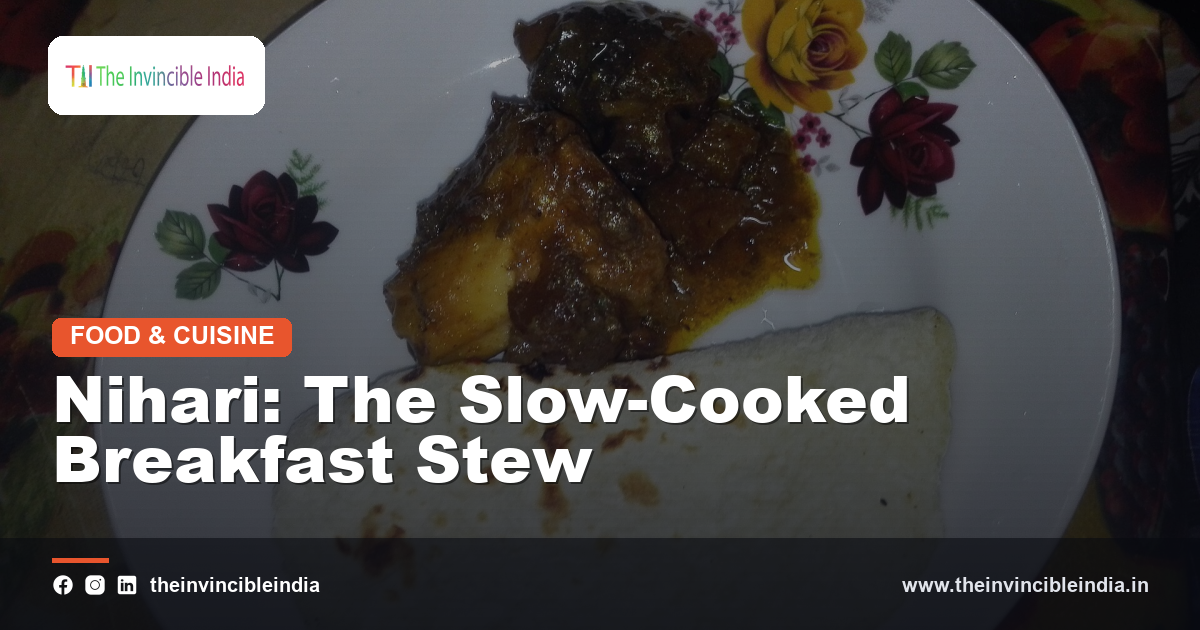
Nihari is a deeply savoury stew of meat cooked slowly in a thick, spiced gravy until it becomes tender enough to fall from the bone. Rooted in the Mughlai culinary tradition of northern India, it was historically prepared overnight and served in the early hours of the morning, which gave the dish its name and its reputation as a restorative breakfast. Today it remains a treasured speciality of old city kitchens and festive tables. Like the many dishes surveyed in the guide to regional cuisines of India, nihari shows how patience, spice and shared meals shape a cuisine. This guide explores its meaning, method, accompaniments and heritage.
Quick Facts
| Detail | Information |
|---|---|
| Dish type | Slow-cooked meat stew |
| Culinary tradition | Mughlai, northern India |
| Name meaning | Linked to the Arabic word for morning |
| Traditionally eaten | Early morning, as a breakfast |
| Typical garnishes | Ginger, green chilli, coriander, lemon |
| Usual accompaniment | Naan, kulcha or other flatbreads |
What Is Nihari?
Nihari is a rich stew in which pieces of meat are simmered for many hours in a thick, aromatic gravy. The long, gentle cooking breaks down tough fibres until the meat becomes soft and succulent, while the sauce turns glossy, deep in colour and full of flavour. It is served piping hot, usually in a bowl with a generous topping of fresh garnishes.
The dish belongs to the Mughlai family of cuisines, which are known for their layered spicing, use of slow cooking and attention to texture. Nihari is not a quick meal; it is a dish of patience, in which time itself is the most important ingredient. This unhurried character is central to its identity and to the affection in which it is held.
The Meaning of the Name
The name nihari is commonly traced to an Arabic word connected with morning or daybreak. The connection reflects the dish’s traditional role as an early meal, eaten soon after dawn. The name therefore describes not an ingredient or a technique but a moment in the day, which is somewhat unusual among dishes of the subcontinent.
This link between food and time of day shows how closely cuisine can be tied to daily rhythm and custom. In many households and eateries, nihari was prepared through the night so that it would be ready as the day began. The name has endured as a reminder of this practice, even in places where the stew is now eaten at other hours, including lunch and dinner.
Roots in Mughlai Kitchens
Nihari is generally associated with the culinary culture that flourished in the cities of the Mughal era, particularly in the old quarters of northern India. Mughlai cooking combined influences from Persian, Central Asian and Indian traditions, producing dishes that balanced fragrant spices, dairy, nuts and slow-cooked meats.
Within this tradition, nihari is regarded as a hearty, nourishing preparation suited to cold mornings and physical work. Accounts of its exact origin vary, and it is wise to treat any precise claim cautiously. What is widely agreed is its strong link with the old cities and their communal food culture. The dish endures as a living inheritance of the courtly and everyday kitchens of that world.
A Breakfast Tradition
Unlike most stews, nihari is traditionally a breakfast dish. Its rich, warming character made it a satisfying start to the day, and it was often eaten before a long day of labour or travel. In the old city lanes, small eateries would begin serving at sunrise, with steaming pots ready for waiting customers.
The idea of a heavy, spiced breakfast may seem unusual to some, but it is part of a wider pattern in the subcontinent, where substantial morning meals are common. Nihari is often enjoyed with a hot drink and fresh bread, and the experience is as social as it is nourishing. This tradition continues in many cities, where early-morning nihari remains a cherished ritual.
Choosing and Preparing the Meat
Nihari is traditionally made with cuts of meat that benefit from long cooking, such as shank and other pieces with connective tissue and bone. Mutton and lamb are common choices, and other meats are used in different communities and regions according to custom and preference. The bone is valued because it enriches the gravy as it cooks.
The meat is usually cleaned and marinated or browned before the slow simmer begins, which builds depth of flavour. Marrow, where present, is considered a delicacy and adds richness to the stew. The careful selection and preparation of the meat is the first step toward a good nihari, since the finished dish depends on the quality of its main ingredient.
The Spice Blend and Aromatics
The flavour of nihari comes from a blend of ground and whole spices, often prepared specially for the dish. Commonly used ingredients include ginger, garlic, black pepper, cardamom, cloves, cinnamon, fennel, coriander and dried red chilli. Some cooks add a distinctive spice mix known by the name of the dish itself, which they guard as a family secret.
The aim is a warm, deep and layered taste rather than sharp, fiery heat. Spices are added at different stages to build complexity, and their aroma fills the kitchen during the long cooking. The careful balance of these aromatics is what separates a memorable nihari from an ordinary stew, and it reflects the broader skill of Indian cooks in handling spices, as explored in the guide to Indian spices.
The Slow-Cooking Method
The defining feature of nihari is its extended, gentle cooking. The meat and spices are placed in a heavy pot, covered with water and simmered on very low heat for many hours. Traditionally the pot was sealed and left to cook overnight over a low fire, so that the stew was ready at dawn.
This slow method allows the meat to soften completely and the flavours to merge into a unified whole. Stirring is kept to a minimum, and the heat is carefully managed to avoid scorching. Modern cooks may use heavy-bottomed vessels or pressure cookers to shorten the process, but many believe that the finest results still come from patient, unhurried simmering that honours the traditional approach.
Thickening and the Texture of the Gravy
Nihari has a distinctive gravy that is thick, silky and slightly glossy, quite different from thin, brothy stews. The texture is commonly achieved by stirring a mixture of wheat flour, or a similar thickener, with water and adding it to the pot towards the later stages of cooking. This binds the liquid and gives the sauce body.
Fat that rises to the surface is also an important feature, and it carries the flavour of the spices. A spoonful of this flavoured oil is often drizzled over the finished bowl. The gravy should coat the meat and cling to the bread rather than run away from it. Getting this consistency right is a mark of skill, and it contributes greatly to the comforting character of the dish.
Garnishes That Complete the Bowl
A serving of nihari is rarely complete without its fresh toppings. Thin strips of raw ginger, chopped green chilli, fresh coriander leaves and a squeeze of lemon are the most common additions. Some serve it with slices of onion or a sprinkle of crisp fried onion as well.
These garnishes are more than decoration. The sharpness of ginger and chilli cuts through the richness of the gravy, the lemon adds brightness, and the fresh herbs lend colour and aroma. Diners often adjust the toppings to taste, adding more ginger or lemon as they eat. This interplay between a deep, heavy stew and clean, sharp accents is one of the great pleasures of the dish.
Breads Served with Nihari
Nihari is almost always eaten with bread, which serves as both utensil and companion. Naan, a soft leavened flatbread baked in the tandoor, is a traditional choice, as are kulcha, sheermal and other oven-baked breads. Their soft, absorbent interiors soak up the gravy beautifully.
Diners tear off a piece of bread, scoop up some meat and sauce, and eat it with their fingers. The bread provides a neutral, comforting contrast to the intensity of the stew, and the pairing is considered inseparable. Those who enjoy the dish know that fresh, hot bread makes a noticeable difference. A related Punjabi favourite, described in the guide to Amritsari kulcha, shows how well stuffed and baked breads suit such hearty accompaniments.
Regional Styles and Variations
Nihari is prepared in several regions, and each locality gives it a subtle character of its own. Some versions are richer and darker, with a heavier hand with oil, while others are lighter and more delicately spiced. The choice of meat, the thickness of the gravy and the combination of spices all vary from kitchen to kitchen.
The dish is also known in communities beyond India, particularly in neighbouring countries, where it has been embraced as a celebrated speciality. These variations are part of the natural evolution of a shared tradition and do not diminish the original. Each style reflects local taste and history, and together they show how a single idea can flourish in many forms across a wide cultural landscape.
Nihari and Communal Eating
Nihari is often associated with gathering and sharing. Large pots are prepared to serve many people, and the dish features prominently at family gatherings, celebrations and religious festivals. Eating it at an early hour with friends or relatives has long been a social custom in many old cities.
Small, traditional eateries that specialise in the dish often become landmarks in their neighbourhoods, known for generations of loyal customers. The shared bowl, the common table and the warm bread create an atmosphere of closeness. This communal dimension is as much a part of the dish as its ingredients, and it reflects the deep value Indian culture places on hospitality and on food as a bond between people.
Nihari Among Mughlai Classics
Nihari takes its place alongside other celebrated Mughlai dishes, such as korma, biryani and kebabs, which share a love of slow cooking and aromatic spice. Yet it stands apart for its breakfast tradition and its humble, robust character. It was not designed as a royal showpiece but as a nourishing and satisfying meal for everyday life.
This combination of richness and simplicity helps explain its wide appeal. The dish connects the grandeur of courtly cuisine with the practical needs of ordinary people. In doing so, it reminds us that great food traditions are built as much in busy lanes and family kitchens as in palaces, and that heritage lives wherever recipes are cooked, shared and handed on.
Cooking Nihari at Home
Home cooks can prepare nihari with a heavy pot, a good spice blend and plenty of time. The meat is browned lightly, the spices are added, and the stew is simmered gently until very tender. The thickener is stirred in near the end, and the dish is finished with a drizzle of spiced oil and fresh garnishes.
Many families prepare it for weekends or special occasions, since it needs unhurried attention. Using bone-in meat improves the flavour, and resting the stew before serving allows it to deepen further. Although the process is long, the actual work is modest, and the reward is a dish of considerable depth. Cooking nihari at home is a satisfying way to connect with an old tradition of patient, generous cooking.
Nourishment and Seasonal Appeal
Nihari is valued as a warming and energising dish, which explains its popularity during the cooler months. The combination of protein, fat and spice provides sustained energy, and the ginger and pepper are traditionally considered comforting in cold weather. In earlier times, it was a practical meal for people beginning a demanding day.
Because it is rich and filling, it is usually eaten in moderate portions and balanced with fresh garnishes, such as ginger and lemon. As with all traditional dishes, it is best understood as part of a varied diet rather than a daily habit. Its seasonal appeal remains strong, and many people look forward to nihari as one of the special pleasures of winter mornings.
Nihari Today
Today, nihari continues to thrive in old city eateries, upscale restaurants and home kitchens. It is served at celebrations, enjoyed on weekend mornings and sought out by food lovers who wish to experience a classic of northern Indian cuisine. Some chefs offer modern interpretations, but the essential character remains: slow cooking, deep spice and a thick, glossy gravy.
The dish has also travelled widely with communities across the world, carrying the memory of home and tradition. Its lasting appeal rests on its honesty and warmth, as well as on the skill that goes into every pot. Nihari endures as a flavourful expression of Indian culinary heritage, reminding diners that some of the best food is simply a matter of time, care and shared enjoyment.
Sources & Further Reading
- Ministry of Culture, Government of India (indiaculture.gov.in).
- Ministry of Tourism, Government of India (incredibleindia.org).
Frequently Asked Questions
What is nihari?
Nihari is a slow-cooked meat stew in a thick, spiced gravy, belonging to the Mughlai culinary tradition. It is cooked for many hours until the meat is very tender and is usually served with bread and fresh garnishes.
Why is nihari eaten for breakfast?
The dish was traditionally cooked overnight so that it would be ready at dawn, and its name is linked to the Arabic word for morning. Its rich, warming character made it a nourishing start to the day, especially in cold weather.
What is nihari usually served with?
It is commonly served with naan, kulcha or other flatbreads, which are used to scoop up the gravy. Toppings such as ginger strips, green chilli, coriander and lemon are added to balance the richness.
What gives nihari its thick gravy?
The gravy is traditionally thickened with a paste of wheat flour and water added during cooking. The bones and the spiced fat that rise to the surface also contribute to its glossy, silky texture.
Can nihari be made at home?
Yes, it can be made with a heavy pot, bone-in meat and a well-balanced spice blend, simmered slowly until tender. Many home cooks prepare it for weekends and special occasions, since it needs patience rather than complicated technique.


