

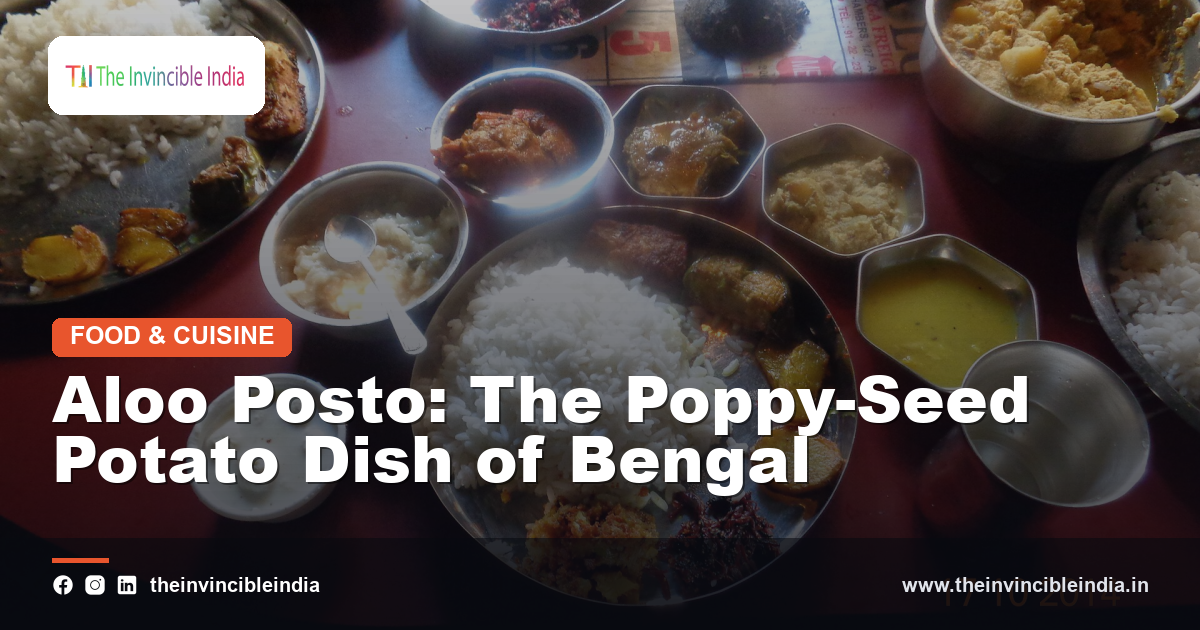
Aloo posto, also written alu posto or alur posto, is a much-loved Bengali dish of diced potatoes cooked in a thick, nutty paste of ground white poppy seeds. Posto is the Bengali word for poppy seed, and it is one of the most characteristic ingredients in the cuisine of Bengal, where it appears in everything from vegetable dishes to fritters. Cooked with mustard oil, green chillies and nigella seeds, aloo posto is mild, creamy and deeply comforting. It is often eaten with plain rice and dal as part of an everyday meal, a pattern explained in the guide to Indian spices in terms of how a single seed can shape a regional cuisine. This guide explores the dish, its ingredients, its method and its cultural place.
Quick answer: Aloo posto is a Bengali dish of potatoes cooked in a paste of ground white poppy seeds (posto), mustard oil and green chillies, usually tempered with nigella seeds. It is also written alu posto or alur posto and is a staple of everyday vegetarian Bengali meals. The dish is creamy, nutty and mild, and it is traditionally eaten with rice and dal.
Key Takeaways
- Aloo posto is a traditional Bengali potato dish made with a paste of white poppy seeds called posto.
- It is also spelled alu posto or alur posto, with aloo or alu meaning potato.
- Mustard oil, green chillies and kalo jeere (nigella seeds) are the classic seasonings.
- The dish is mild, creamy and nutty, and is usually served with plain rice and dal.
- It is a vegetarian preparation made without onion or garlic in many traditional households.
- Posto is also used in other Bengali dishes, including fritters, bhaja and curries made with other vegetables.
Read on for the ingredients, method, serving customs, and cultural role in detail.
Quick Facts
| Detail | Information |
|---|---|
| Dish | Aloo posto (alu posto, alur posto) |
| Type | Dry-to-semi-dry vegetable curry |
| Region | West Bengal and Bengali-speaking regions |
| Main ingredients | Potatoes, white poppy seed paste (posto) |
| Key seasonings | Mustard oil, green chilli, nigella seeds |
| Usually served with | Steamed rice and dal |
What is aloo posto?
Aloo posto is a Bengali preparation of potatoes coated in a smooth, pale paste of ground white poppy seeds. It is usually cooked as a semi-dry curry in which the paste clings to the potato pieces rather than forming a thin gravy. The taste is subtly nutty and creamy, with a gentle heat from green chillies and a sharp, aromatic note from raw mustard oil. The dish is vegetarian, simple to prepare and prized for its comfort. It is a regular item in Bengali homes and at humble eateries, and it is also served in celebrated restaurants that focus on traditional food. Aloo posto is thus a typical example of how Bengali cooking turns a plain vegetable and one distinctive seed into a dish with character.
What does posto mean?
Posto is the Bengali word for poppy seeds, and in cooking it refers specifically to the small white poppy seeds that are ground into a paste. These seeds come from the opium poppy plant, Papaver somniferum, but the culinary seeds are used purely as a food and are valued for their mild, nutty flavour and thickening quality. The word posto is used in many Bengali dishes, such as posto bata, which means ground poppy seed, and posto bora, which refers to poppy seed fritters. The seeds are usually soaked and ground with green chilli and a little salt to make a smooth paste. Posto therefore names both an ingredient and a whole family of dishes, and understanding the word helps explain the importance of aloo posto in the cuisine.
Where does aloo posto come from?
Aloo posto comes from Bengal, the region of eastern South Asia that includes the Indian state of West Bengal and the country of Bangladesh. The dish belongs to the long tradition of Bengali home cooking, where poppy seeds have been used for generations as a thickener and flavouring. Its exact origin, including when and where it was first cooked, is not firmly documented, so it is best described as a dish that evolved in everyday kitchens. The use of poppy seeds in Bengal is part of a wider pattern in eastern India, where seeds and pastes provide richness without heavy gravies. Aloo posto is a signature of this tradition. Its roots lie in the delta’s farming culture, in which the potato and the poppy seed became household staples.
What are the main ingredients of aloo posto?
The main ingredients of aloo posto are potatoes, white poppy seeds, mustard oil, green chillies, nigella seeds and salt. The potatoes are peeled and cut into small cubes or thin batons so they cook quickly and absorb the paste. Poppy seeds are soaked and ground to a fine paste, often with a green chilli. Mustard oil is the traditional cooking medium and gives the dish a sharp, pungent aroma that is typical of Bengali food. Nigella seeds, called kalo jeere, are tempered in the oil at the start for a gentle, slightly bitter fragrance. A pinch of sugar and sometimes a spoon of ghee at the end may round off the flavour. The short ingredient list means that quality, especially of the poppy seeds and oil, is very important.
How is aloo posto made?
Aloo posto is made by tempering nigella seeds in hot mustard oil, adding the potatoes, cooking them partly, and then stirring in the poppy seed paste. The potatoes may first be lightly fried until the edges turn golden, which gives better flavour and prevents them from breaking. The ground paste is mixed with water and a little salt, added to the pan and cooked on low heat while being stirred so it does not stick. Slit green chillies are added for aroma, and the dish is cooked until the potatoes are tender and the paste has thickened into a creamy coating. A final drizzle of raw mustard oil is sometimes added off the heat. The method is simple but requires attention, because poppy seed paste can easily catch and burn if left unstirred.
Why is mustard oil used in aloo posto?
Mustard oil is used in aloo posto because it is the traditional cooking fat of Bengal and gives the dish its characteristic sharp, pungent aroma. When heated until it smokes slightly, the oil loses some of its raw bite and develops a mellower, nutty flavour, which pairs well with the soft sweetness of potatoes and poppy seeds. Many cooks add a few drops of fresh, uncooked mustard oil at the end to heighten the fragrance. The oil also has a long history in the cooking of eastern India, where mustard is widely grown. Substituting another oil is possible, but the dish then loses part of its recognisable identity. Mustard oil therefore plays a central cultural and flavour role, not merely a practical one, in the cooking of this humble but beloved dish.
What does aloo posto taste like?
Aloo posto tastes mild, nutty and creamy, with a gentle heat and a pungent note from mustard oil. The poppy seed paste has a subtle, sweet richness that resembles ground almonds or sesame in some respects, though the flavour is distinct and delicate. The potatoes provide a soft, starchy base that balances the richness, and the green chillies add a fresh, sharp accent. Nigella seeds contribute a faint, aromatic bitterness. Because the dish is lightly spiced and contains no heavy masala, the individual ingredients remain clear on the palate. Many diners describe it as comforting and homely rather than dramatic. This restrained, balanced profile is one reason aloo posto appeals to a wide range of people, including children and visitors new to Bengali food.
What is aloo posto served with?
Aloo posto is served with plain steamed rice and dal, often as one of several dishes in a Bengali meal. Typical companions include moong or masoor dal, fried vegetables such as begun bhaja, and a simple fish curry for those who eat fish. It also pairs well with luchi, the puffed deep-fried bread, in festive meals and Sunday breakfasts. A wedge of lemon and a green chilli on the side are common additions. The cooling element of plain rice and dal balances the pungent mustard oil. In vegetarian settings, aloo posto often takes the central place on the plate, supported by a bitter dish and a chutney. These pairings show how the dish fits into the structured courses of Bengali dining, as the guide to Bengali cuisine describes in detail.
Why is aloo posto considered a comfort food?
Aloo posto is considered a comfort food because it is soft, creamy, mildly flavoured and strongly linked with home cooking and family meals. For many Bengalis, the dish recalls childhood lunches, Sunday afternoons and the simple pleasures of rice with something familiar. Its texture is gentle and its flavour is not aggressive, which makes it suitable for all ages. It is also economical, since potatoes and poppy seeds are affordable and easy to find in most kitchens. Because it can be cooked quickly, it is a reliable choice when no elaborate meal is planned. Writers and diners often describe it with fondness, and expatriate Bengalis frequently name it among the dishes they miss most. Aloo posto thus carries emotional meaning that goes beyond the plate.
How is posto used in other Bengali dishes?
Posto is used in many other Bengali dishes, including posto bata, posto bora, jhinge posto, begun posto and fish preparations such as ilish or chingri cooked with a poppy seed paste. In jhinge posto, ridge gourd is cooked with poppy seeds, and in posto bora the paste is shaped into small fritters and fried. Posto bata, simply ground seeds with salt, chilli and mustard oil, is eaten with hot rice as a quick side. Each dish uses the same basic ingredient in a different form, demonstrating its versatility. The seed acts as a thickener, a flavour base and a source of richness. Comparing these dishes shows that aloo posto is one member of a large family, and that posto is a thread running through the whole of Bengali cooking.
How does aloo posto differ from other potato dishes of India?
Aloo posto differs from other Indian potato dishes in its use of poppy seed paste, mustard oil and minimal spicing, whereas many northern potato dishes rely on onion, tomato and a strong masala. Dishes such as aloo gobi, jeera aloo or dum aloo have a tomato or yoghurt base and a more pronounced spice profile. Even within Bengal, aloo bhaja is simply fried and aloo dum is richer and spicier. Aloo posto stands out for its pale colour, creamy texture and gentle nutty taste. This contrast reveals how regional ingredients, here poppy seeds and mustard oil, create a distinct identity even for something as common as the potato. The dish is therefore a good example of how local pantries shape cuisine across the diversity of Indian food.
Is aloo posto vegetarian and traditional in temple or fasting meals?
Aloo posto is a vegetarian dish, made without meat or fish, and it is frequently cooked without onion and garlic in traditional households. This makes it suitable for those who follow a vegetarian diet and for meals prepared for religious occasions in some families. It is commonly associated in popular memory with simple vegetarian cooking in Bengali homes, though the dish is enjoyed by everyone, including those who eat fish. It should not be treated as a ritual food with strict rules, since practices vary widely between families and communities. What can be said is that the dish fits well into the Bengali tradition of vegetarian preparations that are rich in flavour but light in spice. Its simple composition makes it flexible for many dietary customs.
Are there any cautions about cooking with poppy seeds?
Poppy seeds used in cooking are a common spice in many countries, but rules on their sale and carriage differ, so travellers should check local regulations before carrying them across borders. Because the seeds come from the opium poppy plant, some countries restrict or regulate their import, and in India the cultivation of the plant is controlled by law. Culinary poppy seeds sold in shops are intended for food use only. Cooks also take care that the seeds are fresh, since old seeds can taste bitter and slightly rancid. These points are practical notes and do not change the cultural importance of posto in Bengali cooking. Awareness of the rules simply allows enthusiasts to enjoy aloo posto and related dishes responsibly in different places.
How can you cook better aloo posto at home?
A better aloo posto depends on grinding the poppy seeds finely, cooking the paste on low heat and using good mustard oil. Soaking the seeds for a short while softens them and makes a smoother paste. Cutting the potatoes into even pieces ensures even cooking, and a gentle fry before adding the paste gives a better flavour. Stirring regularly prevents the paste from sticking or turning bitter. A pinch of sugar and a few drops of raw mustard oil at the end improve the aroma. Salt should be added with care, since the paste thickens and concentrates as it cooks. These simple habits help preserve the delicate nutty flavour. With some practice, home cooks can produce a plate that matches the quality of a traditional Bengali kitchen.
Aloo Posto Today
Aloo posto today remains a firm favourite in Bengali homes and a popular dish on the menus of Bengali restaurants in India and abroad. Food writers often cite it as a classic example of the region’s ability to create richness from simple ingredients, and it is regularly included in thali and festival menus. Modern cooks sometimes add small variations, such as using baby potatoes, adding a little coconut or serving the dish with millets, yet the core method of poppy seed paste, mustard oil and green chilli remains unchanged. The dish is also part of the cultural memory of Bengali communities worldwide, who recreate it wherever they settle. Aloo posto continues to stand for the comfort, thrift and flavour of everyday Bengali cooking.
Sources & Further Reading
- Ministry of Culture, Government of India (indiaculture.gov.in).
- Ministry of Tourism, Government of India (tourism.gov.in).
Frequently Asked Questions
What is aloo posto?
Aloo posto is a Bengali dish of potatoes cooked in a paste of ground white poppy seeds, mustard oil and green chillies. It is mild, creamy and nutty, and is usually eaten with rice and dal.
What does posto mean in Bengali?
Posto means poppy seeds in Bengali, specifically the white seeds that are ground into a paste for cooking. The word names the ingredient and a family of dishes such as posto bata and posto bora.
Which oil is used in aloo posto?
Aloo posto is traditionally cooked in mustard oil, which gives the dish its characteristic sharp aroma. Many cooks add a few drops of raw mustard oil at the end for extra fragrance.
Is aloo posto vegetarian?
Yes, aloo posto is a vegetarian dish made with potatoes, poppy seed paste and seasonings. It is often cooked without onion and garlic in traditional households.
What is aloo posto served with?
Aloo posto is served with steamed rice and dal, and sometimes with luchi or fried vegetables. A lemon wedge and green chilli are common side items.
How is aloo posto different from regular aloo sabzi?
Aloo posto differs from regular aloo sabzi because it uses a creamy poppy seed paste and mustard oil instead of a tomato-onion masala. Its flavour is mild, nutty and pungent, not heavily spiced.


