

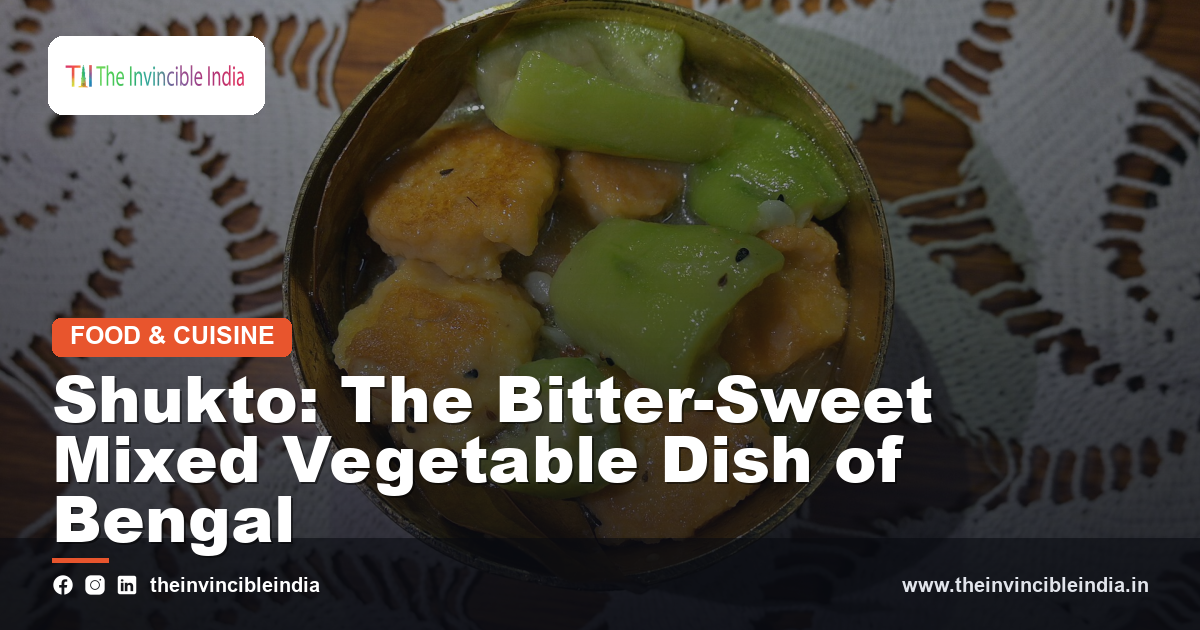
Shukto, also spelled shukto, shukta or sukto, is the gently bitter, lightly sweet and creamy mixed vegetable dish that traditionally opens a Bengali meal. It combines several vegetables such as bitter gourd, raw banana, drumstick, brinjal and sweet potato with a mustard and ginger-flavoured gravy enriched with milk. Where other regional dishes try to hide bitterness, shukto celebrates it as the first taste of the meal. The dish is a defining part of the cooking described in our guide to Bengali cuisine, in which a meal moves from bitter to sour, from savoury to sweet. This article explains what shukto is, what it contains, how it is prepared and why it matters in Bengali food culture.
Quick answer: Shukto is a Bengali mixed vegetable dish with a mildly bitter, sweet and savoury taste, made from vegetables such as bitter gourd, raw banana, drumstick and brinjal in a light gravy of milk, mustard and ginger. It is traditionally the first course of a Bengali meal, eaten with rice, and is also spelled shukta or sukto. The bitterness is deliberate and is balanced by sweetness and creaminess.
Key Takeaways
- Shukto is a traditional Bengali mixed vegetable dish that is bitter, mildly sweet and creamy at once.
- It is also spelled shukta or sukto, and belongs to the family of Bengali bitter preparations.
- The vegetables commonly include bitter gourd, raw banana, drumstick, brinjal, sweet potato and green beans.
- Spices such as radhuni, ginger and mustard flavour the gravy, which is often finished with milk and a spoon of ghee.
- Shukto is traditionally served first in a Bengali meal, before the dal, fried vegetables, fish and sweets.
- Lentil dumplings called bori are often fried and added to the dish for texture.
Read on for the ingredients, method, serving customs, and cultural role in detail.
Quick Facts
| Detail | Information |
|---|---|
| Dish | Shukto (shukta, sukto) |
| Type | Mixed vegetable preparation, starter course |
| Region | West Bengal and Bengali-speaking regions |
| Taste | Bitter, mildly sweet, creamy and savoury |
| Key vegetables | Bitter gourd, raw banana, drumstick, brinjal |
| Key flavourings | Radhuni, ginger, mustard, milk, ghee |
What is shukto?
Shukto is a Bengali preparation of mixed vegetables cooked in a light, milky gravy with a deliberately bitter edge. It is a stew-like dish rather than a dry stir-fry, and it is thinner than most curries. A typical plate shows chunks of several vegetables of different textures, floating in a pale, fragrant sauce with a faint sweetness. Bitter gourd, known as ucche or karela, provides the characteristic bitterness, which is softened by milk, a little sugar and the natural sweetness of the vegetables. Shukto is usually served in a small quantity at the start of the meal along with plain rice. The dish is therefore best understood as an opening note in a carefully arranged sequence of tastes, and not as a main course to be eaten in large amounts.
What are the other names and spellings of shukto?
Shukto is also written as shukta, sukto or shuktoni in English, and the Bengali word is derived from an older word for bitter or dried preparations. Spelling varies because Bengali words are transliterated into the Roman script in several ways, so menus may print any of these forms. Some households use the word shukto for a preparation with milk and the word shukta for one without it, though this distinction is not universal. The dish should not be confused with the Odia santula or with other mixed vegetable dishes of eastern India, which share a few ingredients but differ in spicing and method. Recognising the alternative spellings helps readers find the same dish in cookbooks, restaurants and articles across the Bengali-speaking world.
Where does shukto come from?
Shukto comes from Bengal, the eastern region now divided between the Indian state of West Bengal and the country of Bangladesh. It belongs to the old tradition of Bengali home cooking, where bitter preparations are served at the start of a meal. The exact origin of the dish and the identity of its earliest cooks are not firmly documented, so it is best described as a product of long household practice. Many families believe the dish was refined in the kitchens of the region over generations, using vegetables from the delta such as raw banana and brinjal. Shukto is made in homes, at weddings and in restaurants that focus on Bengali food. The dish is thus rooted in the soil, seasons and tastes of the Bengal delta.
What vegetables go into shukto?
The vegetables in shukto typically include bitter gourd, raw banana, drumstick, brinjal, sweet potato, green beans, pumpkin and sometimes green papaya. The mix varies with the season and the cook, but a balance of bitter, starchy and soft vegetables is considered essential. Bitter gourd supplies the main bitterness, while raw banana and sweet potato provide body and gentle sweetness. Drumstick adds a distinct, slightly woody flavour and a fibrous texture, and brinjal contributes softness. Cooks cut the vegetables into long, even batons so they cook at similar speeds and look neat on the plate. The variety is part of the pleasure of the dish, since each spoonful can contain a different combination of tastes and textures. Shukto therefore shows how Bengali cooking values diversity in a single preparation.
What spices and seasonings flavour shukto?
Shukto is flavoured with radhuni, ginger paste, mustard paste, sometimes poppy seed, and a light tempering of whole spices. Radhuni is an aromatic seed with a celery-like fragrance that is closely tied to Bengali cooking, and it gives shukto much of its distinctive aroma. Ginger adds warmth and freshness, while a small amount of mustard paste provides a gentle pungency. Some recipes use a pinch of panch phoron, the five-spice Bengali blend, or add a little sugar to balance the bitterness. Salt is used sparingly so the vegetable flavours remain clear. Together these seasonings keep the dish delicate rather than hot. The restraint in spicing is characteristic of the Bengali approach to vegetables, as the guide to Indian spices also notes in a wider context.
How is shukto made?
Shukto is made by frying the vegetables lightly, cooking them in a spiced base and finishing the dish with milk. The bitter gourd is often fried first in oil so that it softens and loses some of its sharpness, and lentil dumplings called bori are fried until crisp. A tempering of radhuni or panch phoron is heated in oil, and the harder vegetables are added first, followed by the softer ones. Ginger and mustard pastes are stirred in with a little water, and the vegetables simmer until tender. Milk is added toward the end, with a pinch of sugar and sometimes a spoon of ghee, and the dish is simmered gently without boiling hard. The method requires patience, because the order of addition decides whether each vegetable keeps its shape and flavour.
Why is shukto bitter, and why is bitterness valued?
Shukto is bitter because bitter gourd and certain spices are used on purpose, and Bengali cooking values bitterness as a first taste in a meal. In Bengali eating, a bitter preparation is believed to prepare the palate and the stomach for the heavier courses that follow, a view that echoes traditional ideas about digestion and the six tastes in Ayurvedic thought. The bitterness is never meant to be harsh. It is balanced by milk, sugar and the natural sweetness of the other vegetables, so that the final taste is subtle and layered. Many people who dislike bitter foods find shukto surprisingly pleasant for this reason. Valuing bitterness shows how Bengali cuisine treats flavour as a composition and not just a matter of heat or sweetness.
What are bori and why are they added to shukto?
Bori are small, sun-dried dumplings made of ground lentil batter, and they are added to shukto for crunch and a savoury depth. The batter, usually based on urad or other dal, is whipped, dropped in small lumps on a cloth or tray and dried in the sun. In shukto the bori are fried until golden and either stirred in or placed on top just before serving. Their crisp texture contrasts with the soft vegetables and the creamy gravy, and their nutty taste adds a satisfying richness. Bori are also used in other Bengali dishes, including vegetable curries, which makes them a familiar pantry item in many homes. Including them in shukto reflects the Bengali habit of using preserved ingredients to add flavour and variety to seasonal vegetables.
Where does shukto appear in a Bengali meal?
Shukto appears at the very beginning of a traditional Bengali meal, as the first of several courses eaten with rice. A classic Bengali menu follows a sequence that begins with bitter dishes, moves to dal and fried vegetables, continues with fish or meat preparations, and ends with chutney and sweets. Shukto occupies the opening position because it is mild and bitter, preparing the palate for stronger flavours. It is eaten in small portions, usually with a mound of plain rice, before the dal arrives. This ordered progression of courses is one of the most distinctive features of the cuisine and is often compared to the courses of a formal meal in other cultures. Shukto thus acts as the gateway to the whole Bengali dining experience.
When is shukto cooked?
Shukto is cooked on special days, at festive lunches and in many homes as a regular part of a complete Bengali meal. It is often prepared for weddings, for religious occasions and for Sunday lunches when the family gathers for a multi-course spread. Because the dish takes time to cut and cook, it is treated as an occasion dish in many households, though restaurants serve it throughout the year. Its seasonality depends on the vegetables, and cooks use whatever good produce is available. Some families prepare it for the first day of the Bengali new year, Poila Boishakh, when elaborate meals are common. Shukto is therefore tied to moments of hospitality and celebration, as well as to everyday care for the structure of a meal.
How does shukto differ from other Bengali vegetable dishes?
Shukto differs from other Bengali vegetable dishes by its bitterness, its thin milky gravy and its mixture of many vegetables in a single pot. Dishes such as chorchori and ghonto use mixed vegetables too, but they are drier, spicier and often cooked with mustard oil and panch phoron. Labra is another mixed vegetable preparation, usually a Durga Puja dish, and is generally less bitter. Shukto is lighter and more delicate, with milk and radhuni giving it a special fragrance. It also appears first in the meal, while the others usually follow later. Knowing these differences helps a diner appreciate the distinct identity of each preparation. Together they show the range that Bengali cooks achieve with the same basic group of seasonal vegetables.
Is shukto a healthy dish?
Shukto is a light, vegetable-rich dish that is often regarded as wholesome because it contains several kinds of vegetables and uses relatively little oil. Bitter gourd has long been valued in traditional cooking, and the mixture of drumstick, raw banana and sweet potato offers dietary fibre and a variety of nutrients. The addition of milk and ghee makes it richer, so the dish is mild but not fat-free. As with any traditional recipe, exact nutritional values depend on the proportions and the cook’s method. It would be inaccurate to claim specific medical benefits for the dish, but it is reasonable to describe it as a balanced, plant-based preparation that fits a varied diet. Eaten in small portions as a starter, shukto contributes variety to the plate without being heavy.
How can shukto be served and paired?
Shukto is served warm in a small bowl or on the side of a plate, with plain steamed rice, usually the fragrant short-grain Bengali variety. It is traditionally followed by dal, fried vegetables such as begun bhaja, and then fish or meat dishes. A spoon of ghee on the rice sometimes accompanies it. Because shukto is gentle, it pairs well with the bolder dishes that come after it and does not overwhelm them. For non-Bengali diners, a small serving with rice makes a good introduction to the cuisine. Pairing it with dalma or other lentil dishes from neighbouring regions shows how eastern India shares a taste for mildly spiced, vegetable-focused meals. Careful serving keeps the dish in its proper place within the whole menu.
What are common mistakes when cooking shukto?
Common mistakes when cooking shukto include overcooking the vegetables, using too much bitter gourd, adding the milk too early and boiling it too hard. Overcooked vegetables lose their shape and turn into a mash, which spoils the characteristic look of the dish. Too much bitter gourd makes the dish harsh rather than pleasantly bitter, so many cooks fry it separately and add it in measured amounts. Milk added at the wrong stage or boiled vigorously can curdle and split. Overpowering the dish with too many spices also hides the delicate fragrance of radhuni and ginger. A patient approach, with vegetables added in the correct order and the milk added near the end, usually gives the best result. Careful technique is what separates a good shukto from an ordinary vegetable stew.
Shukto Today
Shukto today remains an essential part of Bengali home cooking and is a highlight of Bengali restaurant menus in Kolkata and in other cities. Many food writers use it to illustrate the structure and philosophy of a Bengali meal, and it appears frequently at weddings and festive buffets. Younger cooks sometimes simplify the dish with fewer vegetables or shortcuts, while traditional households continue to prepare the full version with radhuni and fried bori. Food festivals and heritage menus often include shukto as an example of the cuisine’s refinement. Despite changing lifestyles, the dish keeps its place at the start of the meal, reminding diners that bitterness has a respected role in Bengali taste. Shukto continues to represent a cuisine that values balance, seasonality and the careful ordering of flavours.
Sources & Further Reading
- Ministry of Culture, Government of India (indiaculture.gov.in).
- Ministry of Tourism, Government of India (tourism.gov.in).
Frequently Asked Questions
What is shukto?
Shukto is a Bengali mixed vegetable dish that is mildly bitter, sweet and creamy, made with vegetables such as bitter gourd, raw banana and drumstick in a light gravy of milk, ginger and mustard. It is traditionally the first course of a Bengali meal.
Why is shukto eaten first in a Bengali meal?
Shukto is eaten first because Bengali meals traditionally begin with bitter flavours and progress toward richer and sweeter ones. The bitterness is believed to prepare the palate and stomach for the heavier dishes that follow.
Which vegetables are used in shukto?
Shukto commonly uses bitter gourd, raw banana, drumstick, brinjal, sweet potato and green beans. The exact mix varies with the season and the household.
What gives shukto its special flavour?
Shukto gets its special flavour from radhuni, ginger, mustard paste and a finish of milk and ghee. Radhuni in particular contributes a distinctive celery-like aroma associated with Bengali cooking.
What are bori in shukto?
Bori are sun-dried lentil dumplings that are fried and added to shukto for crunch and savoury depth. They are a common ingredient in several Bengali vegetable dishes.
Is shukto always bitter?
Shukto is intentionally mildly bitter, but the bitterness is balanced by milk, sugar and the sweet vegetables. A well-made shukto tastes layered and gentle rather than sharp.


