

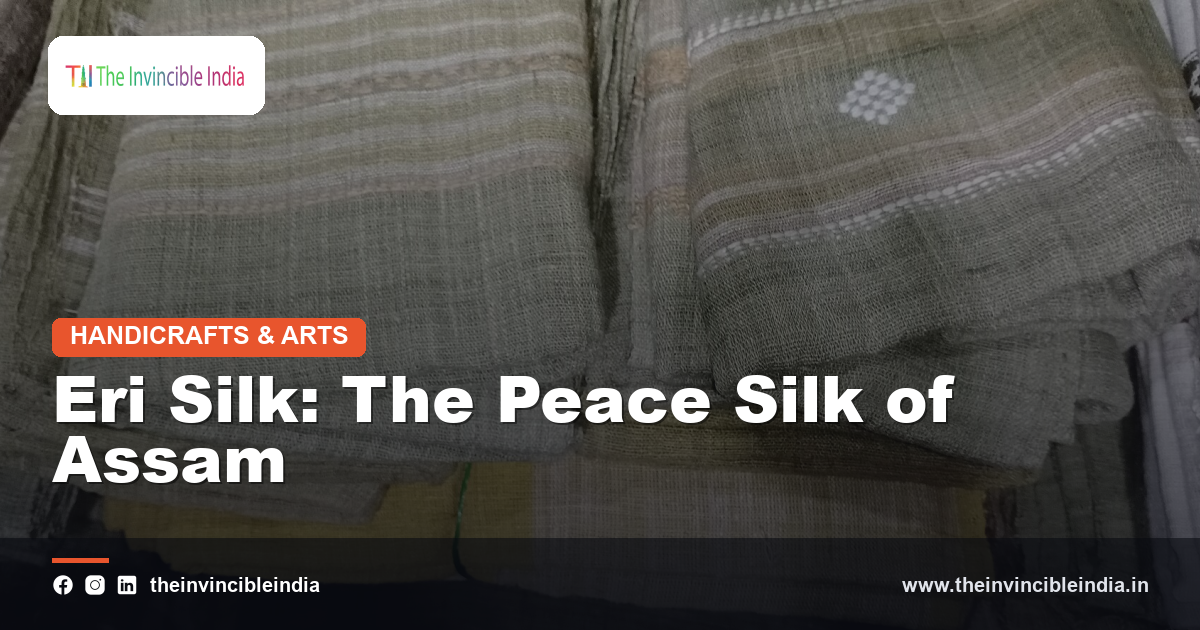
Eri silk, also spelled eri and sometimes called endi or errandi silk, is the soft, warm, matte silk of Assam and the wider Northeast, best known as a peace silk, or ahimsa silk. It is produced from the Samia ricini silkworm, and its most distinctive feature is the gentle method of its making: the moth is allowed to emerge and leave the cocoon naturally before the silk is processed, so the silk is often described as non-violent. Because the open cocoons cannot be reeled as one continuous thread, eri silk is spun, giving it a soft, slightly textured, wool-like feel and a matte finish rather than a high gloss. Warm and comfortable, it is woven into shawls, wraps and fabric across Assam and the Northeast. Readers exploring India’s fine textile crafts may also enjoy the pashmina guide. This guide describes eri silk, its silkworm, its home, its history, its making, its texture, its uses and its communities.
Quick answer: Eri silk (also spelled eri, and called endi or errandi silk) is the soft, warm, matte peace silk, or ahimsa silk, of Assam and the wider Northeast of India. It is produced from the Samia ricini silkworm, where the moth is allowed to leave the cocoon naturally before the silk is processed. Because the cocoon is open, the silk is spun rather than reeled, giving a soft, wool-like, matte fabric used for shawls and wraps.
Key Takeaways
- Eri silk, also called endi or errandi silk, is the warm, matte peace silk of Assam and the Northeast of India.
- It is produced from the Samia ricini silkworm.
- It is called a peace silk, or ahimsa silk, because the moth leaves the cocoon before the silk is processed.
- Because the cocoon is open, the silk is spun rather than reeled, giving a soft, wool-like texture.
- It has a warm, matte finish and is prized for its comfort and warmth.
- It is used for shawls and wraps and is associated with communities across Assam and the Northeast.
The sections below explain what eri silk is, why it is called peace silk, which silkworm produces it, where it is made, how it is spun and woven, its texture, its uses and the communities who make it.
Quick Facts
| Detail | Information |
|---|---|
| Craft type | Silk (sericulture, spinning and handloom weaving) |
| Region of origin | Assam and the wider Northeast of India |
| Also known as | Endi silk, errandi silk, peace silk, ahimsa silk |
| Materials | Silk from the Samia ricini silkworm |
| Technique | Open cocoons spun into yarn, then handloom woven |
| Known for | Soft, warm, matte peace silk used for shawls and wraps |
| GI status | A recognised traditional silk of the region; confirm GI details with the Registry |
| Community | Traditional eri rearers, spinners and weavers of the Northeast |
What Is Eri Silk?
Eri silk is a soft, warm, matte silk of Assam and the wider Northeast, spun from the cocoons of the Samia ricini silkworm. Also called endi or errandi silk, it is best known as a peace silk, or ahimsa silk, because of the gentle way it is made. Unlike glossy reeled silks, eri is spun from open cocoons and has a soft, slightly textured, wool-like feel and a matte rather than shiny finish. It is warm and comfortable, qualities that make it especially suited to shawls and wraps for the cooler months. The silk is woven on handlooms across the Northeast and is deeply rooted in the daily life and tradition of many communities there. Eri silk is valued for its comfort, warmth and gentle making. Its soft, matte texture defines its character. It is a distinctive silk of eastern and northeastern India.
Why Is Eri Silk Called Peace Silk?
Eri silk is called peace silk, or ahimsa silk, because the moth is allowed to emerge and leave the cocoon naturally before the silk is processed, so the making of the silk does not require killing the silkworm within. In many silks, the cocoon is processed while the pupa is still inside, but in eri the completed moth leaves the cocoon first, and only the empty, open cocoon is then used. This non-violent method gives eri its reputation as a peace or ahimsa silk, a quality much valued by those who prefer a gentler way of making textiles. Because the emerged moth breaks the cocoon, the silk cannot be reeled in one long thread and must instead be spun. The peaceful method is the defining feature of eri. It gives the silk both its name and part of its appeal. Peace silk is at the heart of eri’s identity.
What Silkworm Produces Eri Silk?
Eri silk is produced by the Samia ricini silkworm, a silk moth reared in Assam and the wider Northeast. This silkworm feeds on the leaves of host plants, notably the castor plant, from which some of the silk’s alternative names derive. The Samia ricini is reared by many households across the region, and its cocoons are the raw material of eri silk. Because the moth is allowed to leave the cocoon naturally, the resulting open cocoons are spun rather than reeled, which gives eri its characteristic soft, wool-like texture. The silkworm, its host plants and the climate and traditions of the Northeast together make eri possible. The rearing of this silkworm is woven into the everyday life of many communities. The Samia ricini silkworm is the true source of eri silk. Its cocoons yield the warm, matte fibre. The species defines the craft.
Where Is Eri Silk Made?
Eri silk is made in Assam and across the wider Northeast of India, where its rearing, spinning and weaving are rooted in the daily life of many communities. The craft is especially associated with Assam, but eri rearing and weaving are practised by communities across the northeastern states, each with its own traditions. The rearing of the Samia ricini silkworm, often on the castor plant, and the spinning and weaving of the silk are frequently household activities, so that eri is woven into the fabric of rural and community life in the region. The warm, comfortable fabric suits the climate and needs of the Northeast, particularly for shawls and wraps. The combination of silkworm rearing, spinning and handloom weaving by local communities makes the Northeast the home of eri. The silk is identified with Assam and the region. Eri belongs to the communities of northeastern India.
What Is the History of Eri Silk?
Eri silk has a long history in Assam and the Northeast, where its rearing and weaving have been part of community life for a very long time, though the precise early origins rest on tradition rather than exact record. For generations, households across the region have reared the Samia ricini silkworm and spun and woven its silk into warm cloth for everyday and special use. The craft became woven into the daily life, dress and tradition of many communities, valued for its warmth, comfort and gentle making. Over time, eri gained wider recognition as a peace silk and as a sustainable, handmade textile. Because much of the early story rests on tradition, it is best described in general terms as part of the Northeast’s textile heritage. What is clear is that eri has long been a household and community craft. Its history lies in the everyday life of the region.
How Is the Eri Silkworm Reared?
The eri silkworm is reared by households on host plants, notably the castor plant, where the Samia ricini feeds and spins its cocoons. Rearers tend the silkworms through their life stages, providing the leaves on which they feed and caring for them until they spin their cocoons. Because eri is a peace silk, the moths are allowed to emerge and leave the cocoons naturally before the silk is processed. The rearing is often a household activity, integrated into the daily life of rural and community households across the Northeast, and does not require the elaborate arrangements of some other silks. The healthy growth of the silkworms depends on the host plants, the climate and the care of the rearers. Because practices vary, the details differ between households and communities. The rearing of the silkworm is the first stage of the craft. It yields the open cocoons for spinning.
How Is Eri Silk Spun and Woven?
Eri silk is made by spinning the fibre from the open cocoons into yarn and then weaving it on a handloom. Because the moth has left the cocoon, the silk is not one long continuous thread and cannot be reeled, so instead the cocoons are processed and the fibre is spun into yarn, much as wool or cotton is spun. This spinning gives eri its characteristic soft, slightly textured, wool-like feel and matte finish. The spun yarn is then woven on handlooms, often in the same households, into shawls, wraps and fabric, sometimes in natural tones and sometimes dyed. The whole process, from rearing to spinning to weaving, is largely done by hand and relies on inherited skill. Because practices vary, the exact methods differ between communities. The spinning and weaving turn open cocoons into warm, matte cloth. The handwork gives eri its soft character.
Why Is Eri Silk Warm and Matte?
Eri silk is warm and matte because it is spun, rather than reeled, from open cocoons, giving it a soft, wool-like structure rather than a smooth, glossy filament. When the fibre is spun into yarn, the many short fibres trap air and create a fabric that is soft, slightly textured and insulating, which makes eri warm and comfortable to wear. This also gives the silk its characteristic matte finish, without the high sheen of reeled silks. These qualities make eri especially suited to shawls, wraps and warm clothing, valued in the cooler months and climates of the Northeast. The warmth and matte texture are direct results of the peaceful, spun method of making the silk. The spinning gives eri its wool-like comfort. Its warmth and soft matte feel are central to its appeal. They set eri apart from glossy silks.
What Is Eri Silk Used For?
Eri silk is used above all for shawls and wraps, as well as stoles, scarves, garments and fabric, prized for their warmth, softness and comfort. Its warm, matte, wool-like quality makes it ideal for clothing worn in the cooler months and climates, and eri shawls and wraps are cherished both within the Northeast and beyond. The silk is woven into everyday and special textiles, sometimes in natural tones and sometimes dyed, and it blends well with other fibres. Beyond clothing, eri is used for furnishings and other textile items. Because it is a peace silk and a handmade, sustainable fabric, eri is increasingly valued by those seeking gentle and eco-friendly textiles. Whatever the item, the hallmark is the soft, warm, matte silk. Its uses centre on warm, comfortable clothing. The shawl is its most characteristic use. Eri clothes the people of the Northeast in warmth.
What Does Eri Silk Mean to Northeast Communities?
Eri silk holds deep meaning for many communities of Assam and the Northeast, where its rearing, spinning and weaving are part of household tradition, livelihood and identity. For generations, families have reared the silkworm and spun and woven the silk as part of daily life, so that eri is bound up with the customs, dress and economy of the region. The craft is often a household activity shared within families and communities, and eri garments are worn and valued in everyday and special contexts. The making of eri also provides livelihood, particularly for women who spin and weave, adding to its social importance. Eri thus carries cultural, economic and emotional meaning in the Northeast. The silk is woven into the life of its communities. It is more than a fabric; it is part of tradition. Eri belongs to the people who make it. Its meaning is rooted in community life.
Who Rears and Weaves Eri Silk?
Eri silk is reared, spun and woven by households and communities across Assam and the Northeast, with women often playing a central role in the spinning and weaving. Rearing the Samia ricini silkworm, spinning the fibre from the open cocoons and weaving the yarn on handlooms are skills passed down within families and communities over generations. For many households, eri is both a tradition and a source of livelihood, with the stages of the craft often carried out at home. The weavers produce the shawls, wraps and fabric prized within the region and increasingly sought elsewhere as a peace silk. Like many handloom crafts, eri depends on keeping skilled rearers, spinners and weavers in the trade and on fair returns for their work. The knowledge and handwork of these communities, and especially of the women among them, are the craft’s living heart. Their skill keeps eri alive.
How Does Eri Silk Differ from Muga and Mulberry Silk?
Eri silk differs from muga and mulberry silk in its silkworm, its method of making and its texture, being a spun, matte peace silk rather than a reeled, glossy one. Mulberry silk, from the domesticated mulberry silkworm, is reeled into a smooth, lustrous filament and is the most common silk. Muga, the golden silk of Assam, is a reeled wild silk prized for its natural golden colour and durability. Eri, by contrast, is spun from the open cocoons of the Samia ricini silkworm, because the moth leaves the cocoon, giving a soft, warm, wool-like and matte fabric rather than a shiny one. Comparing them shows the variety of India’s silks, each with its own character and use. Eri contributes a warm, gentle, peace-silk voice. Each silk has its own nature. Eri, soft and matte, is distinctly its own.
Does Eri Silk Have a GI Tag?
Eri silk is recognised as a traditional silk of Assam and the wider Northeast and is valued as a peace silk deeply rooted in the region’s communities. It is promoted and supported as a distinctive, sustainable and handmade textile. Whether eri silk as a whole, or particular regional eri traditions, holds a specific Geographical Indication is best confirmed with the official Geographical Indications Registry and the relevant state authorities, since the status of individual crafts can vary and change over time, and details should be checked rather than assumed. Whatever the formal position, eri is clearly identified with Assam and the Northeast and with the communities who make it. Recognition and support help protect the craft and sustain its makers. They also encourage the making and buying of genuine eri. The bond between the silk and its region remains central to its identity. Eri is a cherished craft of the Northeast.
What Makes Eri Silk Distinctive?
Eri silk is distinctive for being a peace silk, for its soft, warm, matte texture and for its deep roots in the households of Assam and the Northeast. Its gentle, non-violent making, in which the moth leaves the cocoon before the silk is used, sets it apart and gives it its name as ahimsa silk. Because it is spun rather than reeled, it has a soft, wool-like, matte feel and a warmth unlike glossy silks, making it ideal for shawls and wraps. Its rearing, spinning and weaving as a household and community craft, often by women, tie it closely to the life of the region. Its qualities as a sustainable, handmade textile add to its growing appeal. These qualities together make eri recognisable and valued. Its blend of peaceful making, warmth and community tradition is central to its appeal. Eri is a gentle and distinctive silk of India.
How Can You Buy Authentic Eri Silk?
Authentic eri silk can be bought from recognised Northeast handloom emporiums, cooperatives, trusted weavers and reputable stores that identify the fabric as genuine eri, or peace silk. Genuine eri has a soft, warm, slightly textured, wool-like feel and a matte finish, quite unlike the high gloss of reeled silks, and is often sold with information about its peaceful making. Imitations or blends may be passed off as eri, so care is needed. Buyers can feel the texture and warmth of the fabric, ask about the source, the community and the method of making, and look for handloom or cooperative labelling. Buying from recognised emporiums, cooperatives or known weavers helps ensure authenticity and supports the makers, many of them women. Careful buying rewards genuine craftsmanship. It also supports a sustainable, handmade textile tradition. It secures a true piece of the Northeast’s peace silk.
Eri Silk Today
Eri silk today remains a cherished craft of Assam and the Northeast and is increasingly valued beyond the region as a peace silk and a warm, sustainable textile. Households and communities continue to rear the Samia ricini silkworm and to spin and weave its soft, matte silk into shawls, wraps and fabric, often with women at the heart of the work. Growing interest in ethical, handmade and eco-friendly textiles has brought new attention to eri as an ahimsa silk, widening its appeal. At the same time, the craft faces real challenges, including fair returns for spinners and weavers, competition from machine-made and imitation fabrics and the need to pass skills to new makers. Readers can support the tradition by choosing genuine eri, buying from cooperatives and valuing the gentle labour behind each piece. Eri endures as a warm, peaceful expression of the Northeast’s heritage. Its soft matte silk keeps the tradition alive.
Sources & Further Reading
- Central Silk Board, Ministry of Textiles, Government of India (csb.gov.in).
- Geographical Indications Registry, Government of India (ipindia.gov.in).
- Directorate of Sericulture, Government of Assam.
Frequently Asked Questions
What is eri silk?
Eri silk, also called endi or errandi silk, is the soft, warm, matte peace silk of Assam and the Northeast, produced from the Samia ricini silkworm. It is spun rather than reeled, giving it a wool-like texture. It is used mainly for shawls and wraps.
Why is eri silk called peace silk?
Eri silk is called peace silk, or ahimsa silk, because the moth is allowed to leave the cocoon naturally before the silk is processed, so making the silk does not require killing the silkworm within. Because the emerged moth breaks the cocoon, the silk is spun rather than reeled. This non-violent method gives eri its name and part of its appeal.
Which silkworm produces eri silk?
Eri silk is produced by the Samia ricini silkworm, reared across Assam and the Northeast, often on the castor plant. The moth leaves the cocoon naturally, so the open cocoons are spun into yarn. This gives eri its characteristic soft, wool-like, matte texture.
What is eri silk used for?
Eri silk is used above all for shawls and wraps, as well as stoles, scarves, garments and fabric, prized for their warmth and softness. Its warm, matte, wool-like quality suits cooler months and climates. It is increasingly valued as a gentle, sustainable, handmade textile.
How does eri silk differ from muga silk?
Eri silk is a spun, soft, warm, matte peace silk from the Samia ricini silkworm, whereas muga is a reeled wild silk from the Antheraea assamensis silkworm, prized for its natural golden colour and glossy durability. Eri is wool-like and matte; muga is lustrous and golden. Both are signature silks of Assam.
Does eri silk have a GI tag?
Eri silk is recognised as a traditional silk of Assam and the wider Northeast. Whether eri as a whole, or particular regional traditions, holds a specific Geographical Indication is best confirmed with the official Geographical Indications Registry and the relevant state authorities, as the status of individual crafts can vary and should be checked rather than assumed.


