

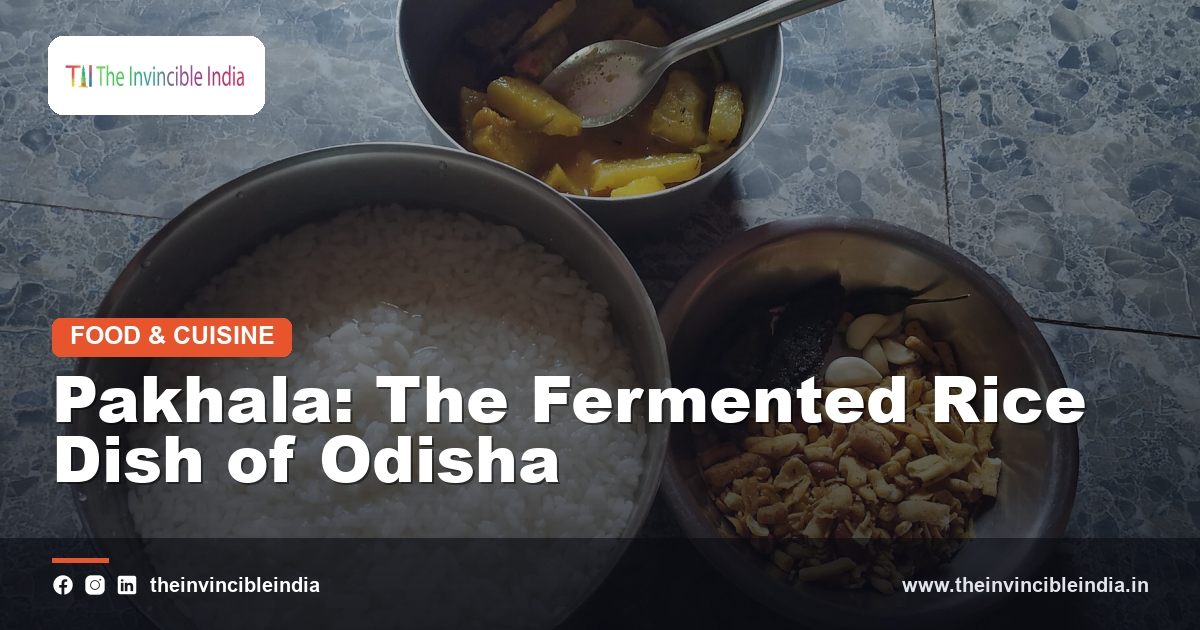
Pakhala is one of the most beloved and characteristic foods of Odisha, a humble yet deeply satisfying dish in which cooked rice is soaked in water and allowed to ferment lightly, producing a cool, tangy and refreshing meal. Eaten especially through the long hot months, it is served with fried vegetables, crisp fritters, greens and simple relishes, and it is cherished by rich and poor households alike. Far more than a way of using leftover rice, it expresses the practical wisdom of eastern India and sits at the heart of the wider Odia cuisine. This guide explores pakhala, its preparation, its varieties, its accompaniments and its enduring cultural significance.
Quick Facts
| Detail | Information |
|---|---|
| Type | Water-soaked fermented rice dish |
| Region | Odisha, eastern India |
| Main ingredients | Cooked rice, water, curd, salt |
| Flavour | Cool, mildly sour and refreshing |
| Served with | Fried vegetables, badi chura, greens and fish |
| Cultural link | Summer meals and a celebrated Odia identity dish |
What Is Pakhala
Pakhala is a traditional Odia preparation in which cooked rice is mixed with water and left to rest, so that the grains soften and take on a gentle sourness. The dish is often called pakhala bhata, and it is eaten cold or at room temperature rather than hot. Its taste is clean and refreshing, with a faint tang that comes from light fermentation, and its texture is soft and slippery. Served with a few salty, crisp or spicy companions, it becomes a complete and satisfying meal. Because it is cooling, easy to digest and simple to prepare, pakhala has long been regarded as a dish ideally suited to the hot climate of eastern India, and it remains one of Odisha’s most recognisable culinary signatures.
Rice as the Heart of the Odia Plate
Rice is the staple grain of Odisha, grown widely across the coastal plains and river deltas, and it shapes almost every aspect of Odia eating. Meals are built around a generous mound of rice, with lentils, vegetables and sides arranged around it. Pakhala represents one of the most creative ways of using this staple, transforming ordinary cooked rice into something cooling and distinctive. The dish shows how deeply rice is woven into daily life, appearing not only in festive feasts but also in the simplest everyday lunch. By turning a basic grain into a refreshing signature dish, pakhala illustrates why rice is far more than a food in Odisha and instead forms the foundation of its culinary identity.
How Pakhala Is Prepared
The preparation of pakhala is simple but requires a little foresight. Rice is first cooked in the usual way and allowed to cool, then placed in a clay or other vessel and covered with water. Salt is commonly added, and many households stir in a spoonful of curd to encourage a mild souring. The vessel is left to rest, traditionally overnight, so that the rice absorbs the water and develops its characteristic flavour. In the morning or at midday the rice is served along with a little of its soaking water, which is considered refreshing in its own right. The unhurried method needs almost no fuel or effort, and its quiet simplicity is exactly what has kept pakhala a trusted dish through generations of Odia households.
The Role of Fermentation
Light fermentation is what gives pakhala its distinctive taste and character. As the rice rests in water, natural processes begin to work on it, creating a subtle sourness that sharpens the flavour and makes the dish especially refreshing on a warm day. Fermented foods are valued in many cultures, and in India they are often associated with good digestion and cooling effects, which helps explain the long popularity of pakhala. The degree of fermentation varies, with some families preferring a mild, almost fresh taste and others enjoying a more pronounced tang. This flexibility allows each household to adjust the dish to its liking. Gentle fermentation is therefore the quiet secret behind pakhala and the reason it tastes like no ordinary bowl of rice.
Types of Pakhala
Pakhala is prepared in several recognised forms, each with its own character. In one common form the rice is soaked only briefly so that it stays fresh and mildly flavoured, while in another it rests overnight and acquires a tangier taste, often called basi pakhala. A version made with curd, known as dahi pakhala, is especially creamy and cooling. Another popular variation is jeera pakhala, in which roasted cumin gives the dish a pleasing aroma. Some households add ginger, green chillies, lemon or curry leaves to lift the flavour. These different styles show how a single idea can be adapted to personal taste and available ingredients, and they reveal the variety hidden within what might appear at first to be a very simple dish.
Curd, Cumin and Other Flavourings
Although pakhala is humble, the flavourings added to it can make it quite elaborate. Curd lends creaminess and a gentle tang, roasted cumin adds warmth and fragrance, and finely chopped ginger brings a clean freshness. Green chillies provide heat for those who like it, while a squeeze of lemon sharpens the sourness. Fresh curry leaves, coriander and a little crushed fried ingredient may be scattered over the top as a garnish. Each of these additions is optional, and the best combination depends on family habit and the time of year. The skilful use of such simple flavourings shows how Odia cooks enhance a plain base without disguising it, and how a small gesture can make an everyday bowl of rice feel special.
The Classic Accompaniments
No bowl of pakhala is complete without its companions, which supply the contrast of salt, crunch and spice that the soft rice requires. Typical accompaniments include badi chura, a crushed fried lentil dumpling seasoned with onion and chilli, and fried vegetables such as brinjal, potato or pumpkin flower. Stir-fried greens known as saga bhaja are a frequent partner, as is a mashed potato or brinjal preparation seasoned with mustard oil. In households that eat fish, a crisp fried fish is a treasured addition. Together these sides form a satisfying plate in which every mouthful offers a different texture. The partnership between cool, tangy rice and warm, crisp sides is the real charm of pakhala, and it is what makes the meal so memorable.
Badi Chura and Fried Sides
Among the many accompaniments, badi chura holds a special place for those who love the dish. Badi are small sun-dried lentil dumplings that are fried until crisp, then crushed and mixed with raw onion, green chilli, salt and a few drops of mustard oil. Their sharp, pungent flavour offsets the mild tang of the rice beautifully. Alongside badi chura, fried slices of vegetables or fritters add crunch and savour. The contrast between the cold, soft grains and the hot, crisp sides is deliberate and highly prized. Together they transform a modest meal into a layered experience of taste and texture, and they demonstrate how Odia cooks use a few simple ingredients to create balance and delight on the plate.
Greens, Mashes and Relishes
Beyond fried items, pakhala is frequently accompanied by softer preparations that add depth and nourishment. Saga, the leafy greens of Odisha, are stir-fried lightly with garlic or mustard seeds and offer a slightly bitter freshness. Mashed preparations, often made with roasted potato, brinjal or tomato, are seasoned with raw onion, chilli and mustard oil, giving a smoky and pungent edge. A tangy chutney or a simple pickle may also appear on the plate. These humble sides require little effort but bring great flavour, and they make the meal wholesome and balanced. By combining the cool rice with greens, mashes and relishes, Odia cooks achieve a harmony that satisfies the palate and reflects the region’s reliance on fresh, local produce.
A Cooling Summer Meal
Pakhala is above all a summer dish, treasured during the hot and humid months when heavy, spicy food feels unappealing. Its cool temperature and light sourness refresh the body, and the soaking water is widely believed to protect against the heat. Farmers, labourers and families heading out for a day of work have traditionally relied on it as a sustaining meal that keeps well and requires no cooking in the heat of the day. Many Odia people associate its taste with childhood summers and the comfort of home. The dish thus answers a genuine climatic need while also carrying emotional warmth, which explains why it remains so closely tied to the Odia experience of the hot season.
Pakhala in Odia Culture and Identity
Over time, pakhala has grown from a practical household dish into a cultural emblem of Odisha. It features in conversation, literature and popular memory as a symbol of simple living and regional pride. In recent years a special day dedicated to pakhala has been marked in the state, with communities, restaurants and families sharing the dish and celebrating its place in Odia life. Such observances show how a humble food can become a shared identity marker, uniting people across districts and backgrounds. The affection with which Odia people speak of pakhala reveals that it represents more than nutrition, serving as a reminder of roots, simplicity and belonging within the larger story of Indian regional food.
Similar Dishes Across India
Water-soaked and fermented rice is not unique to Odisha, and similar traditions appear across eastern and southern India. In Bengal, a comparable dish is known as panta bhat and is often eaten with green chilli, onion and fried fish. In Tamil Nadu, leftover rice soaked overnight in water or buttermilk is enjoyed as a cooling morning meal. Assam and other parts of the northeast also have their own versions of fermented or soaked rice. While the names, flavourings and accompaniments differ, the underlying wisdom is shared, recognising rice as a versatile grain that can be cooled and soured to suit a warm climate. Pakhala belongs to this broad family while keeping its own unmistakable Odia identity.
Nutritional and Digestive Reputation
Pakhala enjoys a long-standing reputation as a light, cooling and digestible meal. Cooked rice provides carbohydrate energy, the curd, when used, adds a gentle source of protein, and the fermentation is traditionally believed to support digestion and refresh the body. Because the dish is eaten with vegetables and greens, it also delivers fibre and essential nutrients. Many people regard it as particularly suitable for hot weather, when the body benefits from lighter food and plentiful fluid. While it is best enjoyed in moderation as part of a varied diet, its traditional standing reflects generations of practical experience. The enduring belief in its wholesome qualities is one of the reasons pakhala continues to be recommended and enjoyed in Odia homes.
Pakhala and the Seasons of Odisha
The popularity of pakhala follows the rhythm of the Odia calendar. It appears most often from the beginning of the hot season, when temperatures rise and appetite for heavy food declines, and remains a regular feature until the arrival of the rains. In cooler months it is taken less frequently, replaced by warm lentil dishes and steaming rice. This seasonal pattern reflects the sensible alignment of food with climate that characterises traditional Indian cooking. Families adjust the flavourings and accompaniments to what the season offers, using fresh greens, early vegetables and sun-dried items stored from earlier months. Pakhala therefore serves as a delicious marker of the changing year, and its return each summer is welcomed with anticipation.
Serving and Eating Pakhala
Pakhala is traditionally served in a bowl or on a brass or steel plate, often with the rice and a measure of its water, so that diners can enjoy both. Accompaniments are arranged around the rice, and each diner mixes a little of the side dishes into the grains as they eat. Many people use their hands, finding that the soft rice and pungent sides blend best this way. Some prefer to sip the soaking water at the end of the meal. Eaten slowly, in the shade, it is considered the perfect midday indulgence. The simple, communal manner of serving pakhala underlines its character as an unpretentious and generous food, shared easily among family and friends.
Tips for Preparing Pakhala at Home
Anyone wishing to prepare pakhala at home can follow a few simple principles. Using freshly cooked and fully cooled rice gives the best texture, and a clean clay or non-reactive vessel is ideal for soaking. Adding a little salt and a spoonful of curd helps the souring develop evenly. The rice should be left in a fairly cool place and tasted regularly so that it does not become too sour for personal preference. Fresh garnishes such as cumin, ginger, green chilli and curry leaves bring brightness, and well-chosen sides complete the dish. By keeping to this straightforward approach and respecting the traditional rhythm of resting and serving, even a first-time cook can recreate the refreshing character of authentic pakhala.
Pakhala Today
Today, pakhala continues to hold its place in Odia homes and has found a growing audience in restaurants that celebrate the food of eastern India. It travels with Odia families to cities across the country and abroad, remaining a nostalgic taste of home. Food writers and chefs increasingly recognise it as a thoughtful example of traditional cooking that is sustainable, economical and well suited to climate. While modern refrigeration and lifestyles have changed some habits, the affection for the dish has not faded. As a cooling summer meal and a proud cultural emblem, pakhala stands as one of Odisha’s most cherished contributions to the rich and varied food heritage of India.
Sources & Further Reading
- Ministry of Culture, Government of India (indiaculture.gov.in).
- Department of Tourism, Government of Odisha (odishatourism.gov.in).
Frequently Asked Questions
What is pakhala?
Pakhala is a traditional Odia dish of cooked rice soaked in water and lightly fermented, giving it a cool and mildly sour taste. It is eaten with fried vegetables, greens, crisp fritters and simple relishes.
Is pakhala eaten hot or cold?
Pakhala is eaten cold or at room temperature, which makes it especially refreshing in the hot season. The rice is served with a little of its soaking water.
What is basi pakhala?
Basi pakhala is the version in which the rice is left to rest overnight, developing a tangier flavour. It is a popular form of the dish and is often eaten at midday.
What is pakhala served with?
It is commonly served with badi chura, fried vegetables, stir-fried greens, mashed potato or brinjal preparations and, in some households, fried fish. These sides provide contrasting crunch, salt and spice.
Are there similar dishes elsewhere in India?
Yes, soaked rice dishes exist in several regions, including panta bhat in Bengal and soaked rice preparations in Tamil Nadu. Each has its own flavourings, but all share the idea of a cool and refreshing rice meal.


