

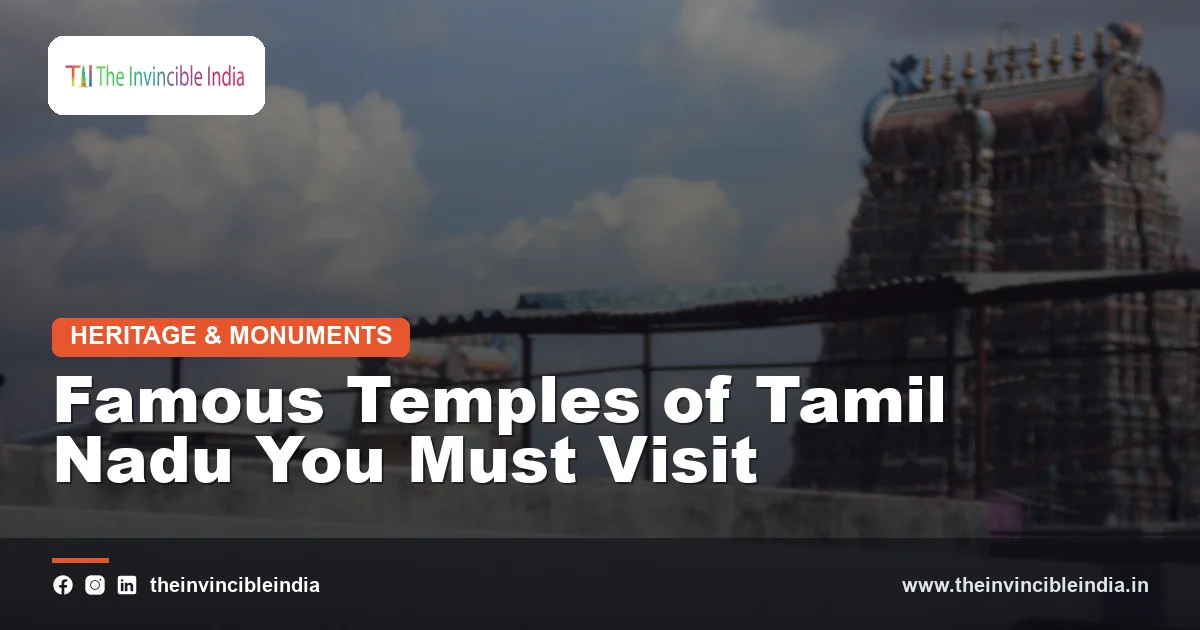
Tamil Nadu is often called the “Land of Temples,” home to some of the most magnificent examples of Dravidian architecture in the world. With towering, sculpture-covered gopurams (gateway towers), vast pillared halls (mandapams), sacred tanks and centuries of unbroken worship, its temples are living centres of faith, art, music and community life. This detailed guide explores the famous temples of Tamil Nadu, the architecture that defines them and how to visit respectfully.
Understanding Dravidian Temple Architecture
The temples of Tamil Nadu are the finest expression of the Dravidian style, developed over centuries by dynasties such as the Pallavas, Cholas, Pandyas and the Vijayanagara and Nayak rulers. Key features include the pyramidal vimana over the sanctum, the towering and colourfully sculpted gopurams at the entrances, spacious pillared halls, and sacred temple tanks. Many temples are vast complexes that function as self-contained towns, buzzing with rituals, festivals and daily life.
Quick Facts
| Architectural style | Dravidian |
| Key dynasties | Pallava, Chola, Pandya, Vijayanagara, Nayak |
| UNESCO temples | Great Living Chola Temples, Mahabalipuram |
| Best time to visit | November to February |
Meenakshi Amman Temple, Madurai
This sprawling temple complex, dedicated to Goddess Meenakshi and Lord Sundareswarar (Shiva), is famous for its 14 towering, brightly coloured gopurams covered in thousands of vivid, intricately painted sculptures. Its Hall of a Thousand Pillars and the golden lotus tank are highlights. Among the most visited temples in India, it is a masterpiece of Dravidian art and a candidate wonder of the world.
Brihadeeswarar Temple, Thanjavur
A UNESCO World Heritage Site and the crown jewel of the “Great Living Chola Temples,” this temple was completed around 1010 CE by the Chola emperor Rajaraja I. Built entirely of granite, its vimana rises about 66 metres, and the massive capstone atop it is an engineering wonder. The temple is a symbol of Chola power and artistic genius.
Ramanathaswamy Temple, Rameswaram
Located on the sacred island of Rameswaram, this temple is renowned for having one of the longest pillared corridors in the world, with beautifully carved granite pillars. One of the twelve Jyotirlingas of Lord Shiva and part of the Char Dham pilgrimage, it is a deeply revered site where pilgrims bathe in sacred wells.
Shore Temple, Mahabalipuram
A UNESCO-listed seaside temple built in the early 8th century by the Pallava dynasty, the Shore Temple is one of the oldest structural stone temples in South India. Standing against the Bay of Bengal, it is famous for its elegant silhouette and intricate carvings weathered by centuries of sea winds.
Ranganathaswamy Temple, Srirangam
Near Tiruchirappalli, this is one of the largest functioning Hindu temple complexes in the world, spread across a huge area and dedicated to Lord Ranganatha (Vishnu). It has 21 gopurams, including the Rajagopuram, one of the tallest temple towers in Asia at around 73 metres.
Nataraja Temple, Chidambaram
Dedicated to Lord Shiva in his cosmic dancer form as Nataraja, this ancient temple is unique for representing the element of space (akasha) and for the famous Chidambaram Rahasya (secret). It is closely associated with the classical dance tradition of Bharatanatyam.
Kapaleeshwarar Temple, Chennai
A classic example of Dravidian architecture in the Mylapore neighbourhood of Chennai, this temple dedicated to Lord Shiva is famous for its colourful gopuram, sacred tank and the vibrant Arupathimoovar festival.
Airavatesvara Temple, Darasuram
Another of the Great Living Chola Temples and a UNESCO site, this exquisitely carved 12th-century temple near Kumbakonam is famous for its stone chariot-shaped mandapam and musical steps.
Temple Festivals
Tamil Nadu’s temples come alive during grand festivals, when deities are taken in procession on ornately decorated chariots (ther). The Meenakshi Thirukalyanam in Madurai, the Chithirai festival, the float festivals and the Natyanjali dance festival at Chidambaram draw enormous crowds and offer a spectacular cultural experience.
Temple Etiquette and Tips
When visiting Tamil Nadu’s temples, dress modestly (covering shoulders and knees; men often remove shirts in some sanctums), remove footwear before entering, and be respectful of rituals and photography restrictions inside the sanctum. Many temples close in the afternoon (roughly noon to 4 pm) and reopen in the evening, so plan visits for the morning or evening. The cooler months from November to February are the most comfortable for temple tours.
Temples as Centres of Life
In Tamil Nadu, temples are far more than places of worship — they are the beating heart of community, culture and even the economy. Historically, the great temples were major landowners and employers, patrons of music, dance and sculpture, and centres of learning and social gathering. Even today, temple festivals set the rhythm of the year, temple tanks and gardens shape the townscape, and the daily rituals draw a constant stream of devotees. The Carnatic music tradition and the classical dance of Bharatanatyam both grew within and around these temples, making them living cradles of South Indian art.
The Pancha Bhoota Sthalams
Among the most spiritually significant temple circuits in Tamil Nadu and its surroundings are the Pancha Bhoota Sthalams — five temples dedicated to Lord Shiva, each representing one of the five elements of nature. Chidambaram represents space (akasha), Thiruvanaikaval near Tiruchirappalli represents water, Kanchipuram’s Ekambareswarar temple represents earth, and Thiruvannamalai’s great Annamalaiyar temple represents fire (the fifth, representing air, is at Kalahasti in neighbouring Andhra Pradesh). Pilgrims travel this circuit to honour the cosmic elements, and each temple is an architectural and spiritual marvel in its own right.
More Must-Visit Temples
Tamil Nadu’s temple wealth is almost inexhaustible. The hilltop Murugan temples of Palani and the seaside Thiruchendur temple are among the six sacred abodes (Arupadai Veedu) of Lord Murugan, drawing millions of devotees. The Rockfort Ucchi Pillayar temple in Tiruchirappalli is dramatically perched atop an ancient outcrop. Kanchipuram, the “city of a thousand temples,” is famed both for its Kailasanathar and Ekambareswarar temples and for its exquisite silk sarees. The Navagraha temples around Kumbakonam, dedicated to the nine celestial bodies, form another popular pilgrimage circuit.
Temple Cuisine and Prasadam
A visit to Tamil Nadu’s temples is also a culinary experience. Many temples are famous for their prasadam — sacred food offerings distributed to devotees — ranging from sweet pongal and puliyodarai (tamarind rice) to the celebrated laddus. The tradition of annadanam, offering free meals to pilgrims, is central to temple life, and the simple, satvik vegetarian food served on banana leaves is considered both nourishing and blessed. Sampling this temple cuisine is a memorable part of any pilgrimage.
Planning a Temple Trail
With so many temples, planning a focused trail helps. A classic route runs through the temple towns of the Kaveri delta — Thanjavur, Kumbakonam, Darasuram and Srirangam — rich in Chola-era masterpieces. Another combines Madurai, Rameswaram and the southern temples. Base yourself in a central town, hire a car with a driver for flexibility, and allow time for the leisurely pace of temple visits, factoring in the afternoon closures. The cooler months from November to February are ideal, and coinciding with a major festival adds unforgettable colour and devotion to the journey.
The Art of Temple Building
The temples of Tamil Nadu are living galleries of Indian art. The Chola bronzes, cast using the lost-wax technique, are considered among the finest metal sculptures ever created, with the dancing Nataraja as their masterpiece. Stone sculptors, following ancient texts on architecture and iconography (the Shilpa Shastras and Agamas), covered temple walls and towers with deities, celestial dancers and scenes from mythology. The soaring gopurams, added and expanded by successive dynasties, are covered in thousands of brightly painted figures, repainted periodically in a tradition that keeps this ancient craft alive.
The Bhakti Movement and Temple Hymns
Tamil Nadu’s temples are inseparable from the Bhakti movement, a wave of intense personal devotion that swept South India from around the 6th century. Saint-poets such as the Nayanars (devotees of Shiva) and the Alvars (devotees of Vishnu) composed thousands of soul-stirring hymns in Tamil, many of which are still sung in temples today. These hymns, collected in works like the Thevaram and the Divya Prabandham, shaped temple worship and gave ordinary people a direct, emotional connection to the divine, independent of caste or scholarship.
Major Temple Festivals
Festivals are when Tamil Nadu’s temples are at their most spectacular. The Meenakshi Thirukalyanam in Madurai re-enacts the divine wedding of the goddess before enormous crowds. The Chithirai festival, the float (Teppam) festivals when deities are taken across temple tanks on illuminated rafts, and the grand chariot (Ther) festivals, in which towering wooden temple cars are pulled through the streets, all draw huge gatherings. The Natyanjali dance festival at Chidambaram, held around Maha Shivaratri, offers classical dance as an offering to Lord Nataraja.
Prasadam and Temple Traditions
Every temple has its own cherished traditions. Devotees receive prasadam — blessed food such as sweet pongal, tamarind rice or laddus — and many temples uphold the ancient practice of annadanam, serving free meals to all. Rituals mark each part of the day, from the pre-dawn awakening of the deity to the night-time rest, and the sound of temple bells, nadaswaram music and Vedic chanting fills the air. Observing these rhythms offers a profound sense of continuity with a tradition thousands of years old.
Planning Your Temple Journey
Because Tamil Nadu has so many magnificent temples, it helps to plan around clusters. The Kaveri delta around Thanjafur and Kumbakonam is rich in Chola masterpieces; Madurai and the far south combine great temples with pilgrimage sites; and Kanchipuram, near Chennai, offers a concentration of ancient shrines. Hiring a knowledgeable local guide deepens the experience immensely, revealing the meaning behind the sculptures and rituals. Allow a relaxed pace, respect the afternoon closing hours, and you will find a temple tour of Tamil Nadu among the most enriching journeys in India.
A Living Tradition
What sets the temples of Tamil Nadu apart from ancient monuments elsewhere is that they remain fully alive. Many have been in continuous daily worship for over a thousand years, with rituals performed exactly as prescribed in ancient texts. Generations of priests, musicians, garland-makers, cooks and craftspeople sustain each temple’s traditions, and families return across lifetimes for weddings, naming ceremonies and festivals. To step into a great Tamil temple is not to visit a relic but to enter a tradition that has flowed unbroken through the centuries and still shapes daily life.
Temple Towns Worth an Overnight Stay
Several temple towns reward more than a quick visit. Madurai, built around the Meenakshi temple, buzzes with markets, music and the nightly ritual of putting the deity to rest. Thanjavur, the Chola capital, combines the Brihadeeswarar temple with a royal palace and art gallery. Kumbakonam is surrounded by dozens of ancient temples and sacred tanks, while the island temple town of Srirangam is a world unto itself. Staying overnight lets you experience the atmospheric dawn and dusk rituals when these temples are at their most magical.
Frequently Asked Questions
Why is Tamil Nadu called the Land of Temples?
Tamil Nadu has thousands of ancient temples with grand Dravidian architecture, earning it the name “Land of Temples.”
Which is the most famous temple in Tamil Nadu?
The Meenakshi Amman Temple in Madurai is among the most famous, known for its colourful gopurams.
Which Tamil Nadu temples are UNESCO World Heritage Sites?
The Great Living Chola Temples (including Brihadeeswarar) and the Shore Temple at Mahabalipuram.
What is a gopuram?
A gopuram is the towering, ornately sculpted gateway tower characteristic of South Indian Dravidian temples.
What should I wear when visiting temples in Tamil Nadu?
Dress modestly, covering shoulders and knees, and remove footwear before entering.


