

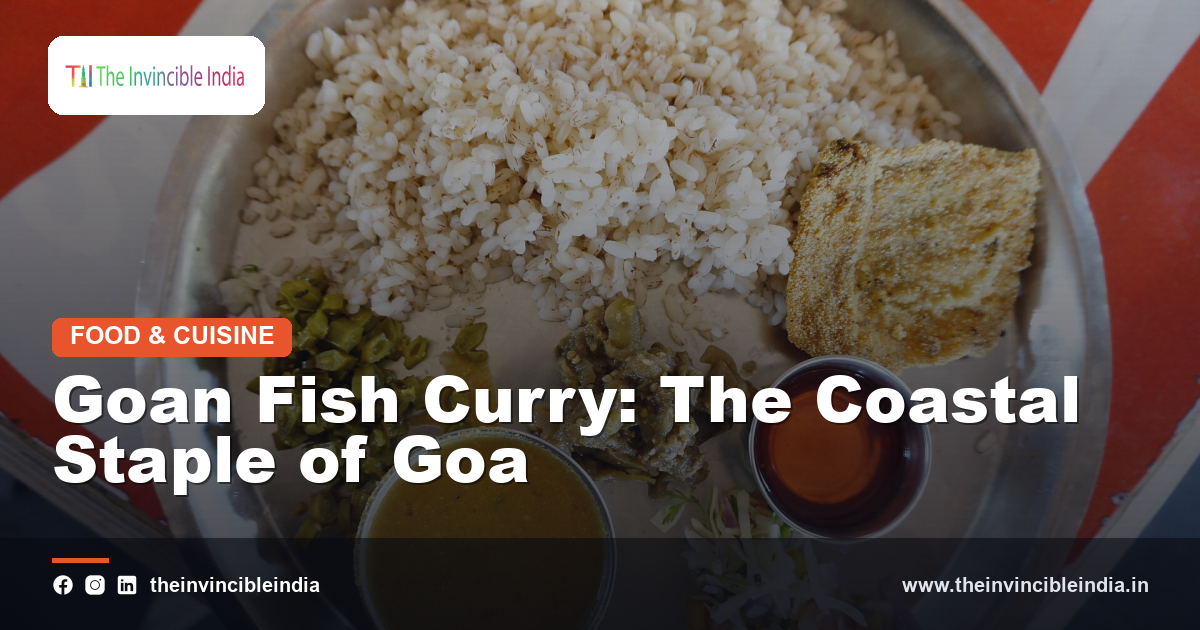
In Goa, the combination of fish curry and rice is so deeply woven into daily life that it is often described as the true staple of the state. Goan fish curry is a vivid orange-red preparation of fresh fish simmered in a tangy gravy of ground coconut, red chillies and a sour fruit such as kokum or tamarind, and it appears at tables in village homes, roadside eateries and seafront restaurants alike. It reflects the abundance of the Arabian Sea and the coconut palms that line the coast. Served as part of an everyday meal, much like the balanced plates described in the Indian thali guide, it is simple yet profoundly satisfying. This guide explores its ingredients, method, variations and cultural significance.
Quick Facts
| Detail | Information |
|---|---|
| Dish Type | Tangy coconut fish curry |
| Region | Goa, western coast |
| Key Ingredients | Fish, coconut, red chillies, kokum or tamarind |
| Typical Accompaniment | Steamed rice, also called fish curry rice |
| Flavour Profile | Tangy, spicy, creamy |
| Common Fish | Kingfish, pomfret, mackerel, sardines |
What Is Goan Fish Curry
Goan fish curry is a coastal curry in which fresh fish is gently cooked in a gravy made from ground coconut, dried red chillies, spices and a souring agent. Its signature qualities are a bright orange-red colour, a pleasingly tangy taste and a smooth, creamy body from the coconut. Unlike the heavy, long-simmered curries of inland India, it is quickly cooked so that the fish stays tender and moist. In Goa it is eaten so regularly, usually with rice, that locals often refer to the pairing simply as fish curry rice. The dish is prepared in countless household versions, but its essential character remains the same. This blend of coconut, chilli and sourness, paired with fresh fish and rice, defines Goan fish curry and explains why it is regarded as the everyday soul of Goan food.
Fish Curry Rice as the Goan Staple
The phrase fish curry rice captures the central role of this meal in Goan life. For many families, a plate of steamed rice, a bowl of fish curry and a piece of fried fish forms the usual lunch, eaten almost daily. The meal is valued for being nourishing, affordable and quick to prepare, and it draws on ingredients that are available fresh from the sea and the coconut grove. Even Goans living far from the coast often describe fish curry and rice as the taste of home. The dish is at once ordinary and beloved, a food of comfort rather than of occasion. The status of fish curry rice as a daily staple demonstrates how closely Goan food culture is tied to its coastal environment, and it remains the most recognisable everyday meal of the state.
The Coastal Setting
Goa lies along the Arabian Sea, and its geography shapes its food. Rivers, estuaries and the open sea supply a wide variety of fish and shellfish, while the humid, tropical climate supports coconut palms, rice paddies and an array of spices and sour fruits. Fishing communities have long been central to coastal life, and the daily catch determines what appears on the kitchen table. The traditional diet has therefore been built around rice, fish and coconut, with vegetables and other ingredients playing a supporting role. Fish curry is the most direct expression of this relationship between land, sea and kitchen. The coastal setting of Goa is the foundation of the dish, and the abundance of fish, coconut and rice in the region explains why the curry became the defining everyday food of the state.
Goan Culinary Heritage
Goan cuisine blends local coastal traditions with influences from centuries of trade and cultural contact, including the long Portuguese presence in the region. The state’s Hindu and Catholic communities each have their own culinary customs, though fish curry is shared and beloved by both. Ingredients such as chillies, which arrived in India through global trade, now occupy a central place in the cooking, alongside long-established local ingredients such as coconut and kokum. The result is a cuisine of distinct personality, famed for its tangy, spicy and aromatic dishes. Fish curry sits at the centre of this tradition as its most accessible and widely eaten dish. The dish thus reflects Goa’s culinary heritage, in which local produce, community customs and historical exchange combine in a simple yet distinctive preparation.
Choosing the Fish
The choice of fish greatly influences the character of the curry. Firm-fleshed fish such as kingfish, known locally as surmai, and pomfret are popular for their ability to hold their shape during cooking, while mackerel and sardines, which are rich and flavourful, are commonly used in everyday versions. Many Goan households select whatever is freshest from the market that morning, and the curry is adapted to the fish at hand. Freshness is regarded as essential, since a delicate curry cannot disguise poor ingredients. The fish is usually cut into thick pieces or steaks, cleaned and sometimes lightly salted before being added. The thoughtful selection of fresh, suitable fish is the first step toward a good curry, and the emphasis on freshness reflects the closeness of Goan kitchens to the sea.
Coconut and Red Chillies
The gravy of Goan fish curry is built on a paste of fresh grated coconut and dried red chillies. The coconut gives the curry its creamy body and natural sweetness, while the chillies provide heat and the characteristic orange-red hue. Kashmiri and other deeply coloured varieties are often chosen for their vibrant colour without excessive fire. Coriander seeds, turmeric, garlic and sometimes cumin or pepper are ground along with them to deepen the flavour. The paste is usually ground fresh, traditionally on a stone, to preserve its fragrance and texture. The harmony of coconut and chillies provides the essential backbone of the curry, and this partnership of cooling sweetness and lively heat is what lends Goan fish curry its recognisable character.
Kokum, Tamarind and the Sour Note
Sourness is as important as heat in Goan fish curry. Kokum, a dried, dark purple fruit native to the western coast, is widely used and imparts a gentle tang and a faint pink hue to the curry. Tamarind is a common alternative, and some households use a little of both or add green mangoes in season. This souring agent lifts the richness of the coconut and complements the flavour of the fish, preventing the dish from feeling heavy. The balance between tang, heat and sweetness is carefully adjusted to taste, and different families favour different levels of sourness. The thoughtful use of kokum or tamarind is what gives Goan fish curry its refreshing sharpness, and this bright sour note remains one of the defining features of the coastal palate.
The Cooking Method
The method of preparing fish curry is relatively simple and quick, reflecting its role as an everyday dish. The ground paste is mixed with water and brought to a gentle simmer in an earthen pot or a heavy pan, often with sliced onions or tomatoes and the souring agent. When the raw flavours of the masala have mellowed, the fish pieces are added and cooked just until done, usually only a few minutes. Overcooking is avoided because it toughens the fish and breaks it apart. The curry is seasoned with salt, and some cooks finish it with a drizzle of coconut oil or a few fresh curry leaves. This brief, gentle cooking preserves the tenderness of the fish, and the simplicity of the method demonstrates that the quality of ingredients matters more than complexity in Goan fish curry.
The Earthen Pot and Flavour Development
Many Goan cooks believe that fish curry tastes best when prepared in a traditional earthen pot, which distributes heat gently and is said to lend a subtle earthiness to the dish. It is also commonly said that the curry improves if it is left to rest, so that the flavours settle and deepen; as a result, curry made in the morning is often considered even better at the evening meal. The sauce thickens slightly as it stands, and the spices and sourness blend more fully. This pattern of cooking ahead is practical for busy households and also enhances the dish. The use of earthen vessels and the habit of allowing the curry to rest show a deep understanding of flavour, and these traditional practices remain part of the quiet craft behind a good Goan fish curry.
Variations Across Communities and Fish
Although the basic recipe is shared, Goan fish curry varies from household to household and from community to community. Some versions are thin and sharply tangy, while others are thick and rich with coconut; some include roasted spices, and others rely on a raw masala. Coastal Hindu households may prepare it differently from Catholic ones, and the style in the north of the state may differ from the south. The type of fish also changes the dish, with prawn curry, shark curry and curries made from smaller fish each having their own followers. Such variation is celebrated rather than standardised. These many variations show that Goan fish curry is not a single recipe but a family of related preparations, and the diversity of styles reflects the richness of the state’s culinary traditions.
Prawn, Shellfish and Other Curries
The same basic curry framework is used for other seafood. Prawn curry, made with the same coconut and chilli base, is among the most beloved variations, valued for its sweetness and speed of cooking. Crab, clams and mussels are prepared in comparable ways, often with local adjustments in spice and souring. Some of these preparations are particularly associated with festive meals or with the monsoon, when certain shellfish are in season. The adaptability of the coconut and chilli gravy shows how effectively a single culinary idea can serve many ingredients. The extension of the fish curry model to prawns and other shellfish enriches the range of Goan seafood dishes, and it confirms the curry as a flexible foundation for the coastal table.
Fried Fish and Side Dishes
A plate of fish curry rice is often accompanied by fried fish, usually coated in a spiced rava or semolina crust and shallow fried until crisp. Small fish such as sardines and mackerel are especially popular prepared this way. Other common side dishes include vegetable stir-fries, known as foogath, a simple salad of onion and lemon, and pickles or relishes with a sharp, tangy edge. These accompaniments add variety of texture and flavour to the meal, balancing the softness of the curry and rice. Together they form a satisfying and complete everyday plate. The pairing of fish curry with crisp fried fish and fresh sides shows the care that goes into Goan meals, and the combination of textures makes the meal more than the sum of its parts.
Rice and the Goan Meal
Rice is the foundation of the Goan meal and the natural partner of fish curry. Locally grown varieties, often a thick, reddish parboiled type, are boiled until soft and served in generous mounds. The mild, starchy grains absorb the tangy, spicy gravy and moderate its intensity, making each mouthful balanced. Diners typically pour curry over the rice and mix it with their fingers, eating slowly and picking out the bones from the fish. The meal is eaten at midday as a main event, often followed by a short rest. The close relationship between rice and curry is central to Goan eating habits, and this simple pairing, repeated daily in countless homes, remains the defining rhythm of the region’s table.
Festivals, Fasting and Fish
Fish curry also plays a role in the religious and seasonal life of Goa. For Catholic households, fish is a customary food during periods of abstinence from meat, such as the season of Lent, and it features prominently in meals at that time. Fish is also eaten on many ordinary and festive occasions by large parts of the Hindu community, adapted to local custom. During the monsoon, when fishing is restricted or becomes difficult, dried and salted fish and preserved ingredients supply the curry. These patterns reflect how closely the dish is tied to the calendar and to belief. The role of fish curry in religious observance and seasonal rhythm shows that it is more than daily fare, and that it is woven into the spiritual and social life of the coast.
Goan Fish Curry Today
Today Goan fish curry remains the defining everyday dish of the state, enjoyed by locals and sought out by visitors who come to experience the cuisine at its source. It appears on the menus of simple eateries and elegant restaurants alike, and recipes have spread across India and overseas through the Goan diaspora. Chefs and home cooks continue to refine and reinterpret the dish, while many families preserve traditional methods of grinding the masala and cooking in earthen pots. Concerns about sustainable fishing and the protection of coastal livelihoods have also drawn attention to the sources of the fish itself. In its enduring popularity and its deep connection to land, sea and community, Goan fish curry today stands as a simple, flavourful and living symbol of the coastal heritage of Goa.
Sources & Further Reading
- Ministry of Tourism, Government of India, on the cuisines of India (tourism.gov.in).
- Goa Tourism, Government of Goa (goatourism.gov.in).
Frequently Asked Questions
What is Goan fish curry?
Goan fish curry is a tangy, spicy curry made from fresh fish cooked in a gravy of ground coconut, dried red chillies, spices and a souring agent such as kokum or tamarind. It is traditionally served with steamed rice and is the everyday staple of Goa.
Which fish is best for Goan fish curry?
Firm-fleshed fish such as kingfish and pomfret are popular because they hold their shape, while mackerel and sardines are commonly used for everyday versions. The most important factor is freshness, and cooks choose whichever fish is best at the market.
What gives Goan fish curry its sour taste?
The sour note comes from kokum, a dried fruit native to the western coast, or from tamarind. Some households also add green mango in season to give the curry a bright tang.
Why is fish curry rice called a Goan staple?
Fish curry and rice is eaten almost daily in many Goan homes because the ingredients are fresh, local and affordable. The pairing is closely tied to the state’s coastal geography and has become its most recognisable everyday meal.
Does Goan fish curry taste better the next day?
Many Goan cooks say the curry improves after resting, because the spices and sourness settle and blend more fully. For this reason, curry cooked in the morning is often considered even better at the evening meal.


