

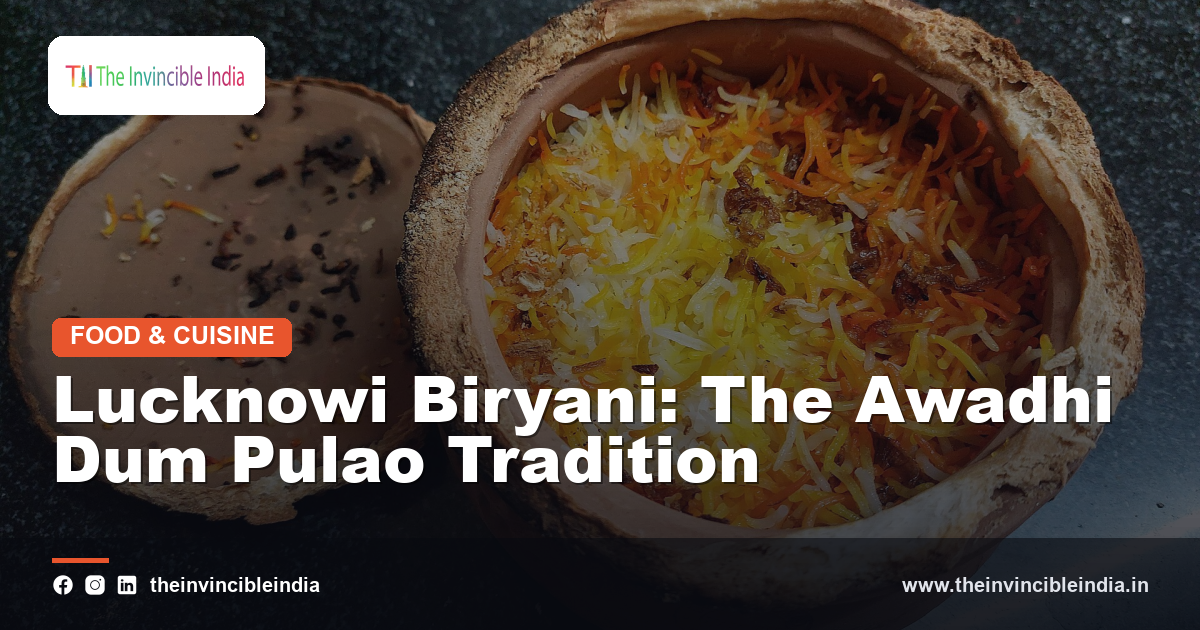
Among the many biryanis of India, the one from Lucknow stands apart for its restraint, perfume and elegance. Known as Lucknowi biryani, Awadhi biryani or Lakhnavi biryani, it is a dum preparation in which tender meat and long-grain rice are layered and slowly steamed together in a sealed pot until every grain carries the aroma of saffron, kewra and gentle whole spices. It belongs to the refined tradition of Awadhi cooking, nurtured in the courts of the Nawabs of Awadh, and it forms an important chapter in the story of regional cuisines of India. Unlike spicier biryanis, it values subtlety and balance. This guide explores its origins, method, flavours, variations and cultural meaning.
Quick answer: Lucknowi biryani is a delicate, aromatic rice and meat dish from Lucknow, the capital of Awadh in Uttar Pradesh, cooked by the slow dum method in a sealed pot. It is known as pukki biryani because the meat and rice are partly cooked separately before being layered and steamed together, and it is flavoured with saffron, kewra, rose water and mild whole spices. It is milder and more fragrant than the spicier Hyderabadi style, and it is a signature of Awadhi Nawabi cooking.
Key Takeaways
- Lucknowi biryani, also called Awadhi biryani, is the dum biryani of Lucknow in Uttar Pradesh.
- It follows the pukki method, in which meat and rice are partly cooked separately and then layered and steamed together.
- Its flavour is subtle and fragrant, built on saffron, kewra, rose water, mace, cardamom and ghee rather than heavy chilli.
- The dum technique seals the pot so that steam carries the aroma into every grain of rice.
- It differs from Hyderabadi biryani, which is milder in perfume but hotter in spice and often uses the kachchi method.
- The dish reflects the refined Nawabi culture of Awadh and is closely related to the yakhni pulao.
Quick Facts
| Detail | Information |
|---|---|
| Dish Type | Dum biryani of meat and rice |
| Region | Lucknow, Awadh, Uttar Pradesh |
| Cuisine | Awadhi (Nawabi) |
| Method | Pukki: meat and rice part-cooked, then layered and steamed on dum |
| Key Flavourings | Saffron, kewra, rose water, mace, cardamom, ghee |
| Rice | Long-grain basmati |
What Is Lucknowi Biryani?
Lucknowi biryani is a fragrant dish of long-grain rice and tender meat, cooked by the dum method in the Awadhi style of Lucknow. The meat, most often mutton or chicken, is marinated and partly cooked, the rice is parboiled with whole spices, and the two are layered in a heavy pot that is sealed and heated gently until finished by steam. The resulting dish is light in colour, soft in spice and rich in perfume, with separate, fluffy grains rather than a heavily masala-coated rice. It is often described as the gentlemanly cousin among biryanis because it favours elegance over intensity. This focus on aroma, balance and tenderness defines the Lucknowi style and explains its special reputation among lovers of Indian food.
Where Does Lucknowi Biryani Come From?
Lucknowi biryani comes from Lucknow, the cultural capital of the historic region of Awadh in present-day Uttar Pradesh. Awadh was ruled by the Nawabs, whose court became a famous centre of music, poetry, etiquette and cuisine, and whose kitchens developed an elaborate tradition of slow-cooked, subtly flavoured dishes. The biryani of Lucknow grew within this culture, drawing on Persian and Mughal techniques that arrived in North India and adapting them to local tastes and ingredients. Exact details of its first appearance are not documented, so it is best understood as a tradition refined gradually over generations of royal and household cooks. Its roots in Awadhi court dining remain the key to understanding both its style and its reputation for refinement.
What Is the Dum Technique?
The dum technique is a method of slow cooking in a sealed vessel so that food finishes in its own steam. In Lucknowi biryani, the heavy-bottomed pot, called a handi, is covered with a tight lid and traditionally sealed with a strip of dough, which traps aroma and moisture inside. The pot is heated gently, often with embers placed on the lid and a low flame beneath, so that heat surrounds the contents evenly. Because nothing escapes, the fragrance of saffron, kewra and spices infuses the rice and meat completely, and the meat stays juicy. The technique is also central to the wider Awadhi tradition known as dum pukht. Its patient, gentle approach is the foundation of the biryani’s tenderness and perfume.
Why Is It Called Pukki Biryani?
Lucknowi biryani is often called pukki biryani because both the meat and the rice are cooked partly or mostly before being layered together. The word pukki means cooked or ripe, in contrast to the kachchi method, in which raw marinated meat is layered with par-cooked rice and cooked together from the start. In the Lucknowi version, the meat is first simmered in a flavourful yakhni or masala until nearly tender, and the rice is boiled with whole spices until about three-quarters done. The two are then layered with ghee, fried onions and aromatics and finished on dum. This approach gives cooks precise control over the texture of each element, which suits the Awadhi preference for even, delicate results and avoids the risk of undercooked meat.
Which Ingredients and Spices Define the Flavour?
The flavour of Lucknowi biryani rests on long-grain basmati rice, tender meat, ghee, yoghurt, fried onions and a restrained blend of aromatic spices. Cardamom, cloves, cinnamon, mace, nutmeg and bay leaf are used for perfume rather than heat, and black pepper and a modest amount of chilli provide gentle warmth. Saffron soaked in warm milk gives the rice its pale golden streaks, while kewra water, derived from screwpine flowers, and rose water add a floral fragrance that is a hallmark of Awadhi cooking. Yoghurt tenderises the meat and contributes mild tang. The aim is harmony, with no single spice dominating, a philosophy that stands in contrast to bolder regional styles and is an important lesson in the wider approach described in the history of Indian spice use.
How Is Lucknowi Biryani Prepared Step by Step?
Lucknowi biryani is prepared by marinating the meat, cooking it with whole spices, parboiling the rice, layering both in a handi and finishing the dish on dum. The meat is first marinated with yoghurt, ginger, garlic and spices, then simmered until nearly tender. Separately, basmati rice is soaked and boiled with whole spices and salt until partly cooked. In the heavy pot, layers of meat and rice alternate, each topped with ghee, fried onions, saffron milk, kewra and rose water. The lid is sealed with dough and the pot is heated gently for a period, allowing steam to finish both elements. The dish is rested briefly before the seal is broken at the table, releasing a rush of perfume that is part of its charm.
How Does Lucknowi Biryani Differ From Hyderabadi Biryani?
Lucknowi biryani differs from Hyderabadi biryani mainly in method, spice level and aroma. The Lucknowi style is typically pukki, with meat and rice cooked partly beforehand, while the classic Hyderabadi style is often kachchi, layering raw marinated meat with par-cooked rice. Lucknowi biryani is delicate and perfumed with kewra, rose water and saffron, whereas Hyderabadi biryani tends to be more robust and spicier, with generous chilli, mint and fried onions. The colour of the Lucknowi version is usually paler, and its grains are more separate. Both are dum preparations and both are celebrated, but they express different regional philosophies. Comparing the two helps explain why biryani is not a single recipe but a family of dishes, each shaped by its own history and local tastes.
What Is the Link Between Biryani and Pulao?
Biryani and pulao are close relatives in the rice-and-meat family, and Lucknow’s tradition blurs the line between them. A pulao is generally cooked with the rice and meat or stock together so that the grains absorb the flavours directly, while a biryani is layered from separately prepared components. The Awadhi yakhni pulao, made with a clear, aromatic meat stock, is a gentle companion to the Lucknowi biryani and shares many of its spices and fragrant touches. In popular speech the two terms are sometimes used loosely, which is why the Lucknowi biryani is often described as a dum pulao in spirit. Understanding the relationship shows that both dishes belong to a single shared culinary lineage of fragrant, slow-cooked rice in North India.
What Is the Role of the Nawabs of Awadh?
The Nawabs of Awadh played a major role in shaping the cuisine of Lucknow by patronising skilled cooks and encouraging culinary experimentation. Their court valued refinement in every art, from poetry and music to dining, and the royal kitchens, staffed by specialist chefs, developed dishes noted for fine texture, delicate seasoning and elaborate preparation. Biryani, pulao, kebabs, breads and sweets all flourished under this culture of patronage. A popular tale links the dum pukht style to large-scale communal cooking during a period of hardship, but such stories are traditions rather than firmly documented history and should be treated with care. What can be said with confidence is that the courtly environment of Awadh nurtured the slow, gentle techniques that define Lucknowi biryani today.
Why Does Saffron, Kewra and Rose Water Matter?
Saffron, kewra and rose water matter because they supply the signature fragrance that separates Lucknowi biryani from many other versions. Saffron gives a subtle golden colour and a honeyed, slightly earthy aroma, and it is usually steeped in warm milk before being drizzled between the layers. Kewra is a distilled essence from the flowers of the screwpine, and rose water is distilled from rose petals, so both add a floral note that is delicate and evocative. They are used sparingly, since an excess would overpower the dish. Together with mace and cardamom, these aromatics create a perfume that rises as soon as the pot is opened. This emphasis on scent reflects the Awadhi belief that a dish should delight the nose before it reaches the palate.
Which Meats and Variations Are Common?
Common Lucknowi biryani variations include mutton, chicken and vegetable versions, each adjusted for tenderness and aroma. Mutton or goat is considered the classic choice and is simmered until it is soft enough to yield easily to the spoon. Chicken biryani is lighter and quicker to prepare and has become widely popular in restaurants and homes. Vegetarian versions use potatoes, paneer, mushrooms or mixed vegetables, with the same fragrant layering and dum finish. Some cooks add a few boiled eggs, and others prepare a simpler one-pot style close to a pulao. Despite these differences, the Lucknowi identity is recognisable through its mild spicing, fine aroma and fluffy grains. The variety shows how a classic technique can adapt to different ingredients and dietary preferences while preserving its character.
What Is Served With Lucknowi Biryani?
Lucknowi biryani is usually served with cooling raita, a light salad and a mild gravy or salan, which complement its delicate flavour without overwhelming it. Plain or lightly spiced yoghurt raita with cucumber or onion offers a fresh contrast, while a thin korma-style curry or a fragrant stew adds moisture. Kebabs such as shami and galouti often appear earlier in an Awadhi meal and pair naturally with biryani at a feast, and a sweet course such as sheer khurma or phirni may follow. The accompaniments are chosen to keep the meal balanced, avoiding strong, competing spices. This approach reflects the Awadhi principle that each dish should have its own place and purpose within an overall, harmonious table.
What Tips Help Achieve a Fragrant Biryani?
A fragrant Lucknowi biryani depends on good rice, careful timing and a well-sealed pot. Cooks recommend aged basmati rice, soaked beforehand and cooked only until about three-quarters done so that it finishes perfectly on dum. The meat should be tender but not falling apart before layering, and the fried onions should be golden rather than dark to avoid bitterness. Saffron, kewra and rose water are best added in moderation, and ghee should be generous but not excessive. A heavy-bottomed pot and a tight seal prevent steam from escaping, and a brief rest after cooking allows flavours to settle. Following these principles, handed down through generations, helps the home cook approach the elegance of a Lucknow kitchen.
Where Can Visitors Experience Lucknow's Biryani Tradition?
Visitors can experience Lucknow’s biryani tradition in the old city’s restaurants, family kitchens and food streets, where Awadhi cooking remains part of everyday life. Many establishments serve biryani alongside kebabs, breads such as sheermal and rumali roti, and sweets, giving a complete picture of the local table. Food walks and heritage tours in Lucknow often include these dishes and explain their history and techniques. Seasonal and festive occasions, especially around Eid and weddings, are times when biryani and pulao take centre stage. Tasting the dish in its home city offers a chance to appreciate how closely food, courtesy and hospitality are linked in Awadhi culture, a connection that is as important as the recipe itself.
Why Does Lucknowi Biryani Remain Important to Awadhi Heritage?
Lucknowi biryani remains important to Awadhi heritage because it embodies the courtesy, patience and refinement associated with the culture of Lucknow. The dish shows how a technique, an aroma and a way of serving can carry the values of a community across generations. UNESCO has included Lucknow in its Creative Cities Network for gastronomy, a recognition that reflects the city’s wider food tradition, of which biryani is one part. For many families, preparing it for guests is an act of hospitality rather than simply a meal. Its survival through changing times demonstrates the strength of tradition and the pride of local cooks, and it continues to stand as one of the most graceful ambassadors of Awadhi culture.
Lucknowi Biryani Today
Lucknowi biryani today is served in restaurants across India and around the world, and it continues to be a prized dish at weddings, festivals and family gatherings in its home city. Chefs honour the pukki method and the gentle perfume of kewra and saffron while also experimenting with new proteins and plating styles. Home cooks and food writers help keep the technique alive by sharing recipes and stories, and heritage food festivals bring attention to Awadhi dining as a whole. The dish endures because it offers a distinctive pleasure, one of subtlety rather than force. As a living expression of Nawabi culinary art, Lucknowi biryani continues to link the elegant kitchens of the past with the shared tables of the present.
Sources & Further Reading
- Ministry of Culture, Government of India (indiaculture.gov.in).
- UNESCO Creative Cities Network (unesco.org).
Frequently Asked Questions
What is Lucknowi biryani?
Lucknowi biryani is a mild, fragrant dum biryani from Lucknow in Uttar Pradesh, made by layering partly cooked meat and rice and steaming them in a sealed pot. It is flavoured with saffron, kewra, rose water and gentle whole spices.
What is the difference between Lucknowi and Hyderabadi biryani?
Lucknowi biryani is usually pukki and delicately perfumed, while Hyderabadi biryani is often kachchi and spicier. In the Lucknowi style, meat and rice are partly cooked before layering, whereas the classic Hyderabadi style layers raw marinated meat with par-cooked rice.
Why is Lucknowi biryani called pukki biryani?
Lucknowi biryani is called pukki biryani because the meat and rice are cooked partly or mostly before being layered together. The word pukki means cooked, in contrast to the kachchi method that uses raw marinated meat.
What does dum mean in biryani?
Dum means slow cooking in a sealed pot so that food finishes in its own steam. The lid is traditionally sealed with dough, which traps the aroma and keeps the meat and rice moist.
Is Lucknowi biryani spicy?
No, Lucknowi biryani is generally mild and aromatic rather than hot. Its flavour comes from saffron, kewra, rose water, mace and cardamom, with only a modest amount of chilli and black pepper.
What is served with Lucknowi biryani?
Lucknowi biryani is usually served with raita, a light salad and a mild gravy or salan. Kebabs such as shami and galouti are often eaten earlier in an Awadhi meal.


