

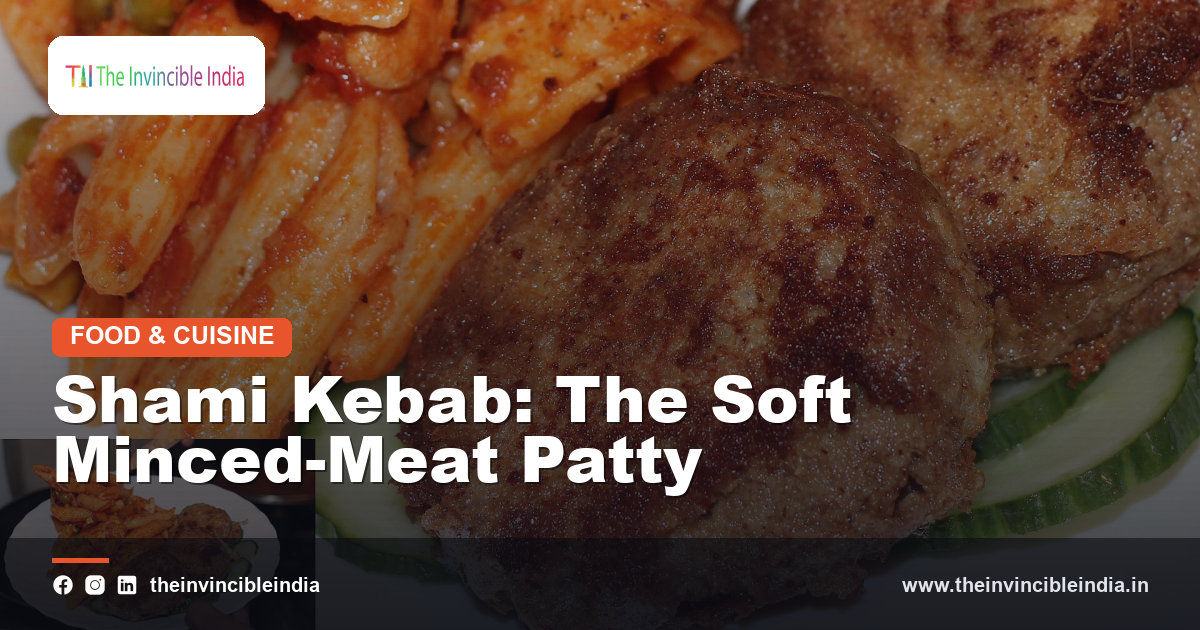
Few dishes in the repertoire of North Indian cooking are as quietly satisfying as the shami kebab, a small round patty that is crisp at the edges and almost creamy within. Also spelled shami kabab or shaami kebab, it belongs to the family of Mughlai and Awadhi kebabs that grew up in royal kitchens and now appear at everything from family feasts to roadside stalls. Unlike skewered kebabs cooked over flame, the shami is simmered, ground, shaped and shallow-fried, a method that gives it its famously soft bite. Like many preparations in the wider story of regional cuisines of India, it blends Persian and Central Asian technique with local ingredients. This guide explores the dish, its ingredients, technique, variations and cultural meaning.
Quick answer: Shami kebab is a soft, shallow-fried patty made from minced meat and split chickpeas (chana dal) that are simmered with whole spices, ground into a smooth mixture and shaped into rounds. It belongs to Mughlai and Awadhi cooking, is eaten across North India, Pakistan and beyond, and is valued for its tender, melt-in-the-mouth texture. It is usually served with mint chutney, sliced onions and lemon, or tucked into bread as a snack.
Key Takeaways
- Shami kebab is a patty of minced meat and chana dal, not a skewered kebab.
- The meat and lentils are first simmered with whole spices and then ground to a fine paste before shaping.
- Chana dal acts as the main binder, which is why the patty stays soft and holds its round shape.
- The dish belongs to Mughlai and Awadhi cuisine and is popular across North India and South Asia.
- Shami kebabs are shallow-fried and usually served with mint chutney, onion rings and lemon.
- Vegetarian versions replace the meat with lentils, vegetables or soy while keeping the same shaping technique.
Quick Facts
| Detail | Information |
|---|---|
| Dish Type | Shallow-fried minced-meat patty |
| Cuisine | Mughlai and Awadhi |
| Main Ingredients | Minced meat, chana dal, whole spices |
| Cooking Method | Simmered, ground, shaped and shallow-fried |
| Texture | Crisp edge with a soft, tender centre |
| Usually Served With | Mint chutney, onion rings, lemon, bread |
What Is Shami Kebab?
Shami kebab is a round, flattened patty of minced meat and cooked split chickpeas, seasoned with aromatic spices and fried gently until golden. It is distinct from the seekh kebab, which is moulded onto a skewer and grilled, because the shami is a pre-cooked mixture that is pounded or ground until it becomes a uniform paste. Beef, mutton, goat and chicken are all used in different households, and the meat is always cooked until it is tender enough to blend with the lentils. The result is a patty with a fine, almost pate-like crumb that holds together without being dense. This combination of soft interior and lightly crisp surface is the defining character of the dish, and it explains why the shami kebab is considered one of the gentlest and most approachable members of the kebab family.
Where Does the Name Shami Come From?
The name shami is most commonly explained as pointing to Shaam, the historical Arabic name for the region around Syria and the wider Levant, though the exact origin of the word is debated. According to this popular explanation, the style of ground, pre-cooked meat patties travelled eastward with Persian and Central Asian culinary influence before settling in the courts of the Indian subcontinent. Other writers suggest that the term simply became a convenient label for a type of kebab that was cooked in a particular way. Because reliable written evidence for a single origin is scarce, it is safest to describe the name as a likely reminder of the dish’s western connections rather than a settled fact. What is clear is that the shami kebab shows the lasting influence of cross-regional cooking traditions on North Indian food.
How Did Shami Kebab Become Part of Indian Cuisine?
Shami kebab became part of Indian cuisine through the Mughal and Nawabi kitchens, where skilled cooks refined many forms of minced and spiced meat. The courts of North India encouraged elaborate dishes that combined Persian technique with Indian spices, and the patty form suited both private dining and large feasts. Over time the preparation moved beyond palace kitchens into the homes of Muslim families and then into the wider food culture of cities such as Lucknow, Delhi and Hyderabad. Each region adapted the recipe slightly, adjusting the spices, the choice of meat and the herbs mixed into the patty. This gradual spread from court to household shows how the shami kebab turned from a refined delicacy into a familiar everyday favourite across the country.
What Ingredients Go Into a Shami Kebab?
A classic shami kebab combines minced or bone-in meat, chana dal, onion, ginger, garlic and a mix of whole spices such as cardamom, cloves, cinnamon, bay leaf, black pepper and dried red chilli. The chana dal is essential because it supplies body, absorbs flavour and binds the mixture, while the meat provides richness and depth. After grinding, cooks often fold in finely chopped onion, green chilli, fresh mint and coriander, and sometimes a little egg or besan to help the patties hold together. A pinch of garam masala or cumin may be added for warmth. The balance between meat and lentil is carefully judged, since too much lentil makes the patty dry and too little makes it fall apart. Together, these ingredients create the tender yet stable structure that defines the dish.
How Is Shami Kebab Cooked?
Shami kebab is cooked in three distinct stages: simmering, grinding and shallow frying. First, the meat, chana dal and whole spices are cooked together with a little water until everything is soft and the liquid has almost evaporated. The mixture is then cooled and ground to a smooth paste, traditionally on a stone and today more often in a grinder. Fresh herbs and chopped onions are folded in, and the paste is shaped into small flat rounds. Finally, the patties are shallow-fried in oil or ghee over a moderate flame until both sides are browned. This careful sequence matters because moisture control is the key to success, and patience at each stage produces the refined texture that sets the shami apart from simpler fried meat cakes.
Why Is Shami Kebab So Soft?
Shami kebab is soft because the meat and lentils are cooked until completely tender and then ground into an extremely fine paste before shaping. Unlike a raw minced-meat kebab, which keeps a coarser, chewier grain, the shami mixture has already been softened by long simmering. The chana dal contributes a gentle starchy smoothness, and the minimal binding means the patty is not compacted tightly. Cooks also avoid overhandling the mixture and fry it gently so that the surface sets without drying the centre. A small amount of ghee in the pan adds further tenderness and aroma. The softness of the shami is therefore not an accident but the intended outcome of its method, and it is the quality that connoisseurs value most in a well-made kebab.
What Is the Role of Chana Dal in the Patty?
Chana dal is the structural heart of the shami kebab, serving as binder, flavour carrier and texture builder at once. When split chickpeas are cooked with meat, they break down into a thick, sticky mass that holds the ground mixture together without the need for large amounts of flour or breadcrumbs. The mild, nutty taste of the dal balances the richness of the meat and takes on the aroma of the whole spices used in the simmering stage. Cooks must drain excess liquid well, because a wet mixture will not hold a shape in the pan. Chana dal also gives the kebab a pleasing density that is neither heavy nor crumbly. Its presence explains why the shami is sometimes described as a dish of two equal partners rather than a simple meat patty.
Which Spices and Herbs Define the Flavour?
The flavour of shami kebab rests on warm whole spices and fresh herbs rather than on heat alone. Green and black cardamom, cloves, cinnamon, black peppercorns and bay leaf are typically simmered with the meat, giving the patty a fragrant, rounded depth. Ginger and garlic add sharpness, while dried red chillies contribute a gentle background warmth. After grinding, finely chopped mint, coriander and green chilli bring brightness and a clean, fresh note that lifts the richness. Some cooks stuff the centre with a small pinch of chopped onion, mint and chilli for an extra burst of freshness in each bite. The aim is balance, with the spices supporting the meat instead of overwhelming it, a principle visible across the broader traditions of Indian spice use.
What Are the Regional and Family Variations?
Regional and family variations of shami kebab are numerous, reflecting local tastes and the meat that is easiest to obtain. In Lucknow the kebab is often prized for its delicate, smooth texture and subtle seasoning, while Hyderabadi cooks may add a little more chilli and fresh herbs. Some households fry the patties in ghee for aroma, others prefer oil for a crisper surface. Chicken shami is lighter, mutton shami is richer, and beef versions are popular in communities where beef is part of the diet. Stuffed varieties hide a small filling of onion, mint and spices in the centre. In Pakistan and Bangladesh similar patties appear under related names. These differences show how one basic method adapts to many kitchens while keeping its recognisable identity.
How Is Shami Kebab Different From Other Kebabs?
Shami kebab differs from other kebabs mainly in its pre-cooked base and its patty shape. Seekh kebab uses raw minced meat pressed on a skewer and grilled, giving a firmer, juicier bite with visible char. Galouti kebab, associated with Lucknow, is an even finer and softer mince that is said to dissolve in the mouth, and it is popularly linked to a story about a nawab who had difficulty chewing, though that tale is a legend rather than a documented fact. Kakori kebab is another Awadhi relative, known for silky texture. The shami sits between these in softness, but it is unique in using chana dal as a core ingredient. Understanding these differences helps diners appreciate the diversity within the broader kebab tradition.
How Is Shami Kebab Traditionally Served?
Shami kebab is traditionally served hot, straight from the pan, with accompaniments that provide freshness and contrast. Green mint-and-coriander chutney is the most common partner, along with thin rings of raw onion, wedges of lemon and sometimes a tangy tamarind sauce. At a festive meal the kebabs may begin the menu as an appetiser, followed by biryani and rich curries. They are also tucked into soft rotis, rumali rotis or sheermal as a hand-held snack, and in some cities they are served inside a small bread roll with chutney. During Ramzan they often appear on the iftar table alongside fruit and other snacks. The consistent theme is simplicity, since the kebab itself is richly flavoured and needs only a few fresh, sharp accompaniments to complete it.
Can Shami Kebab Be Made Vegetarian?
Shami kebab can be made vegetarian by replacing the meat with lentils, vegetables, paneer or soy while keeping the same shaping and frying method. Common alternatives include a mixture of chana dal with boiled potato, raw banana, cooked vegetables or soaked soy granules, all seasoned with the same whole spices and herbs. The vegetarian patty is lighter and slightly less rich, but it can be just as satisfying when well spiced and fried with care. Because the chana dal already provides binding and flavour, the technique translates easily from meat to plant-based ingredients. These versions have grown popular in homes, restaurants and festival menus where vegetarian food is preferred. They show that the shami is better understood as a method and a texture than as a recipe confined to a single type of ingredient.
How Is Shami Kebab Eaten During Festivals and Gatherings?
Shami kebab is a favourite at festivals, weddings and family gatherings because it can be prepared in advance and fried in batches. In many Muslim households it appears during Eid celebrations and on the iftar table during Ramzan, while in other communities it is served at parties, picnics and festive buffets. Its small size makes it easy to serve as a starter, and its mild, balanced flavour appeals to guests of all ages. Hosts often prepare the mixture a day earlier, shape the patties and fry them just before serving to keep them hot and fresh. The dish therefore fits naturally into occasions that centre on sharing food and hospitality, and it remains a dependable choice for anyone who wants an elegant yet comforting snack.
What Tips Help Make a Perfect Shami Kebab?
A perfect shami kebab depends on controlling moisture and handling the mixture gently. Cooks recommend simmering the meat and dal until almost dry, since excess liquid causes patties to break apart in the pan. Cooling the mixture fully before grinding and chilling the shaped patties for a short time helps them hold their form during frying. A little egg or besan can improve binding, but too much will make the kebab firm. Frying over a moderate flame allows the centre to warm through while the outside browns evenly, and turning each patty only once prevents cracking. Fresh herbs should be added after grinding so that they stay bright. These simple habits, passed down within families, explain why a well-made shami is regarded as a mark of careful and patient cooking.
Is Shami Kebab a Healthy Food?
Shami kebab can fit into a balanced diet when prepared with moderate oil and served with fresh accompaniments. The combination of meat and chana dal provides protein, and the lentils add fibre, while the spices and herbs contribute flavour without much additional fat. Because the patties are shallow-fried rather than deep-fried, the amount of oil absorbed depends largely on the cook, and using a non-stick pan or a light brush of oil can reduce it. Serving the kebabs with salad, mint chutney and lemon adds freshness and vitamins. As with any fried dish, portion size and frequency matter. Those seeking a lighter option can bake or air-fry the patties, or choose chicken or vegetarian versions, which makes the shami adaptable to different dietary preferences.
Shami Kebab Today
Shami kebab today remains one of the most beloved snacks of North Indian and wider South Asian cooking, found in home kitchens, restaurants, street stalls and festive menus alike. Modern cooks experiment with chicken, fish, vegetables and baked or air-fried versions, while traditional makers continue to prepare the classic meat-and-dal patty with the same care as in earlier generations. Frozen and packaged shami kebabs have made the dish widely available, yet the freshly fried version still carries a special place in celebrations. Its endurance reflects the appeal of a dish that is simple in form, rich in technique and generous in flavour. As a living example of Mughlai and Awadhi culinary heritage, the shami kebab continues to connect past and present at the Indian table.
Sources & Further Reading
- Ministry of Culture, Government of India (indiaculture.gov.in).
- Indian Council of Agricultural Research and general culinary reference on Indian pulses and spices (icar.gov.in).
Frequently Asked Questions
What is shami kebab made of?
Shami kebab is made of minced meat and split chickpeas (chana dal) cooked with whole spices, then ground and shallow-fried. Onion, green chilli, mint and coriander are usually folded in before shaping, and a little egg may help bind the patties.
Is shami kebab Indian or Pakistani?
Shami kebab is eaten across both India and Pakistan and belongs to the shared Mughlai and Awadhi culinary tradition of the subcontinent. Many Indian cities, including Lucknow, Delhi and Hyderabad, have their own well-loved versions.
What is the difference between shami kebab and seekh kebab?
Shami kebab is a pre-cooked, ground patty that is shallow-fried, while seekh kebab is raw spiced mince moulded on a skewer and grilled. The shami is softer and smoother because the meat and dal are fully cooked before shaping.
Why does my shami kebab break while frying?
Shami kebab usually breaks because the mixture contains too much moisture or too little binder. Simmer the meat and dal until almost dry, cool the mixture, add a little egg or besan if needed, and fry over moderate heat.
Can shami kebab be made without meat?
Yes, shami kebab can be made without meat by using chana dal with potato, vegetables, paneer or soy. The same simmering, grinding, shaping and shallow-frying steps apply, giving a lighter but still flavourful patty.
What do you eat with shami kebab?
Shami kebab is usually eaten with mint chutney, sliced onions and lemon wedges. It is also served with rumali roti, paratha or sheermal, and often appears alongside biryani at festive meals.


