

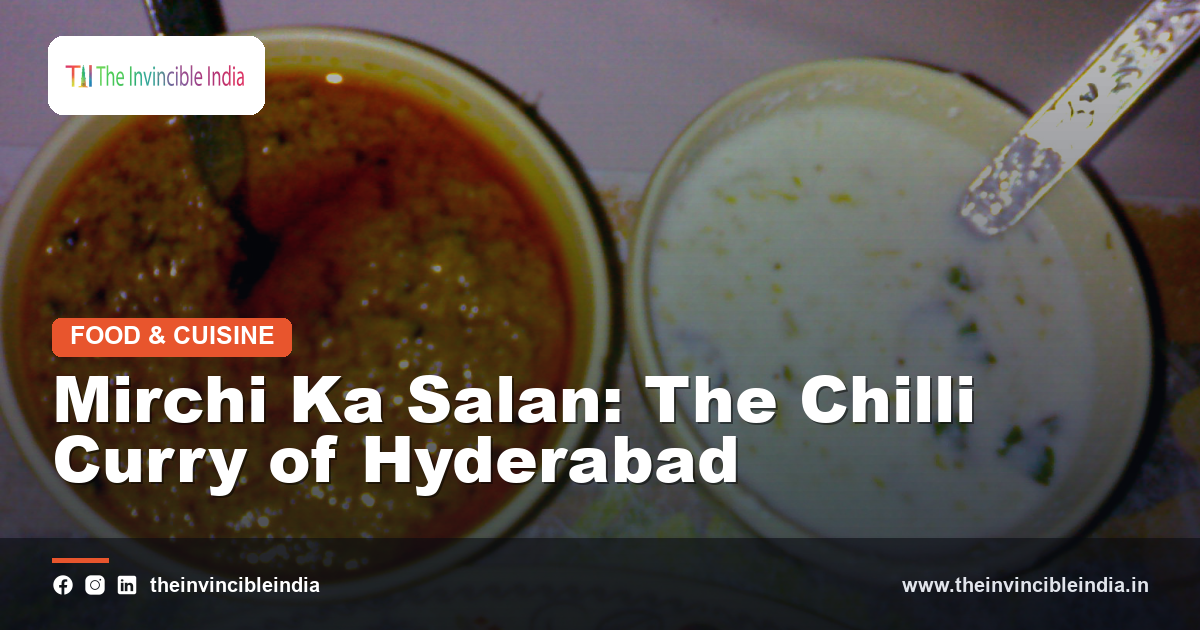
Anyone who has eaten Hyderabadi biryani knows the small bowl that arrives beside it, filled with long green chillies bathed in a glossy, tangy and nutty gravy. That dish is mirchi ka salan, also called mirch ka salan, mirchi salan or simply Hyderabadi salan, and it has become one of the most recognisable accompaniments in Deccan cooking. Despite its name, the curry is not fiery; the chillies used are large and mild, and the sauce is built from roasted peanuts, sesame, coconut and tamarind. Like other treasures within the larger world of regional cuisines of India, it reflects the layered heritage of Nizami court cooking and Telugu home kitchens. This guide explores the dish, its ingredients, method, pairings and cultural meaning.
Quick answer: Mirchi ka salan is a tangy, mildly spiced curry of large green chillies simmered in a gravy of ground peanuts, sesame seeds, coconut and tamarind. It comes from Hyderabad in Telangana and is traditionally served with Hyderabadi dum biryani, where its sourness and nutty richness balance the spiced rice. The word salan means a gravy or curry, and the dish is a signature of Nizami-era Deccan cooking.
Key Takeaways
- Mirchi ka salan is a Hyderabadi curry in which large, mild green chillies are cooked in a nutty, tangy gravy.
- The gravy is built on roasted peanuts, sesame seeds, desiccated coconut and tamarind, with onions and spices.
- It is the classic accompaniment to Hyderabadi dum biryani and is often served with bagara baingan.
- The word salan means a gravy or curry in Hyderabadi and Urdu food vocabulary.
- The dish is vegetarian, with a sour-sweet-savoury flavour rather than intense heat.
- It reflects the blend of Mughlai and Telugu cooking found in Hyderabad cuisine.
Quick Facts
| Detail | Information |
|---|---|
| Dish Type | Vegetarian chilli curry (salan) |
| Region | Hyderabad, Telangana |
| Cuisine | Hyderabadi, Nizami-era Deccan cooking |
| Key Ingredients | Mild green chillies, peanuts, sesame, coconut, tamarind |
| Flavour | Tangy, nutty, savoury, mildly spicy |
| Usually Served With | Hyderabadi biryani, bagara baingan, rice |
What Is Mirchi Ka Salan?
Mirchi ka salan is a Hyderabadi curry made by cooking large green chillies in a thick gravy of ground peanuts, sesame seeds, coconut and tamarind. The word mirchi means chilli and salan means a gravy or curry, so the name simply describes a chilli curry. In practice it is a sour, nutty and gently spiced dish rather than a hot one, because the chillies chosen are long, thick-fleshed and mild. It is eaten as a side dish, most often with biryani, where it provides moisture, acidity and contrast to the fragrant rice. The gravy has a glossy sheen and a deep, rounded flavour that comes from toasted nuts and seeds. This blend of tang, richness and mild heat defines what mirchi ka salan is and why it is so closely tied to Hyderabad.
Where Does Mirchi Ka Salan Come From?
Mirchi ka salan comes from Hyderabad, the historic capital of the Nizams in the Deccan region of present-day Telangana. The city’s cuisine developed from a meeting of Mughlai court traditions, brought by rulers and nobles, and the local Telugu and Deccan food of the region, which favours tamarind, sesame, peanuts and chillies. Mirchi ka salan is a clear product of that meeting, since its sour, nutty gravy draws on regional ingredients while its refined presentation suits the table of a royal feast. Exact details of who first created the dish are not documented, and it is best understood as an evolved tradition shaped by many cooks over time. Its origin in Hyderabad’s kitchens is widely accepted, and the dish remains one of the city’s best-known culinary symbols.
Which Chillies Are Used in Mirchi Ka Salan?
Mirchi ka salan is traditionally made with long, large green chillies that are mild in heat and thick in flesh, commonly known as bhajji or bajji chillies in many parts of India. These chillies are chosen because they hold their shape during cooking, absorb the gravy and contribute a gentle, fresh pepper flavour without overwhelming heat. Cooks usually slit each chilli lengthwise or leave it whole with the stem attached, and some lightly fry them before adding them to the sauce. The heat can vary from batch to batch, so experienced cooks taste a chilli first and adjust the dish accordingly. Using the right chilli is essential, since hotter varieties would change the character of the curry entirely and turn a balanced side dish into a fiery one.
What Goes Into the Gravy?
The gravy of mirchi ka salan is built from a paste of roasted peanuts, toasted sesame seeds and desiccated coconut, combined with onions, ginger, garlic and tamarind. Spices such as coriander powder, cumin, turmeric and red chilli powder add warmth and colour, while a little jaggery is sometimes added to soften the sourness. The paste thickens the sauce and gives it a creamy, almost velvety texture without any dairy. Tamarind provides the signature tang, which is the dish’s most recognisable flavour. A final tempering of mustard seeds, cumin, curry leaves and sometimes fenugreek or nigella seeds in hot oil adds aroma. Each component has a clear role, and together they produce a gravy that is rich, sour, nutty and balanced all at once.
How Is Mirchi Ka Salan Prepared?
Mirchi ka salan is prepared in four broad steps: preparing the chillies, roasting and grinding the paste, building the gravy, and simmering everything together. The chillies are washed, slit and often shallow-fried briefly to soften them. Peanuts, sesame and coconut are dry-roasted until fragrant and then ground with a little water into a smooth paste. Onions are sauteed with ginger-garlic and spices, the paste and tamarind extract are added, and the mixture is simmered until the oil begins to separate at the edges. The chillies are then added and cooked gently until tender but still intact. A final tempering is poured over the dish before serving. Slow, unhurried simmering is the secret to the glossy finish, because it allows the nuts, seeds and tamarind to blend into a single harmonious sauce.
Why Is Mirchi Ka Salan Served With Biryani?
Mirchi ka salan is served with biryani because its tangy, nutty gravy balances the fragrant, richly spiced rice. Hyderabadi dum biryani is layered with meat, saffron, fried onions and whole spices, and it is generous with ghee and aroma, so a sour, moist accompaniment refreshes the palate between mouthfuls. Raita offers a cooling counterpoint, while the salan supplies acidity and a gentle kick of chilli. The two dishes together form a classic pairing at Hyderabadi feasts and restaurants, and ordering biryani without a bowl of salan would feel incomplete to many diners. The partnership shows how South Asian meals are designed around balance, where each element corrects and complements the others to make the whole meal more satisfying.
What Does Mirchi Ka Salan Taste Like?
Mirchi ka salan tastes tangy, nutty, savoury and mildly spicy, with a smooth, rounded depth from the roasted peanuts and sesame. The first impression is usually sourness from the tamarind, followed by the creamy richness of the nut-and-coconut paste and a gentle, fresh heat from the green chillies. Tempered spices such as cumin, mustard and curry leaf add a fragrant finish. The gravy is thick enough to coat a spoon yet fluid enough to mix into rice, and the cooked chillies are soft and flavourful rather than harsh. Because heat is background rather than centre-stage, the dish is accessible to many palates. This layered but harmonious taste profile is what makes it distinctive among Indian curries and keeps people returning to it.
How Does It Reflect Nizami and Telugu Influences?
Mirchi ka salan reflects both Nizami and Telugu influences, which together shaped the cuisine of Hyderabad. From the Mughlai and Persian-influenced court tradition comes the idea of a refined salan served alongside rice dishes and kebabs. From local Deccan and Telugu cooking come the use of tamarind, sesame, peanuts, coconut and curry leaf, which give the dish its distinctive sourness and nuttiness. The blend of these two culinary worlds created a cuisine that is different from both North Indian Mughlai food and the cooking of neighbouring South Indian regions. The salan stands as an example of this synthesis on a single plate. Seeing the dish in this light helps explain why Hyderabadi food is often described as a bridge between northern and southern flavours.
What Is Bagara Baingan and How Does It Relate?
Bagara baingan is a closely related Hyderabadi dish of small aubergines cooked in a similar gravy of peanuts, sesame, coconut and tamarind, and it often appears alongside mirchi ka salan at biryani meals. The two dishes share a base paste and a tangy character, which is why some cooks prepare them from related masalas. The word bagara refers to a method of tempering or tossing in spices, a technique found in many Hyderabadi preparations. While mirchi ka salan uses chillies and bagara baingan uses aubergines, both serve the same purpose of providing a sour, nutty companion to rice. Knowing about this sibling dish deepens appreciation of how Hyderabadi cooks use a small number of core ingredients to create varied and complementary side dishes.
How Is Mirchi Ka Salan Different From Other Indian Chilli Curries?
Mirchi ka salan differs from other Indian chilli preparations in its nutty, tangy gravy and its mild chillies. Rajasthani mirchi ka achar is a pickle, Andhra mirchi bajji is a fried fritter, and Gujarati and Maharashtrian dishes may use chillies in dry stir-fries or thecha, a coarse chilli-and-garlic relish. Mirchi ka salan, by contrast, is a wet curry in which chillies are the main vegetable and the gravy is built on ground peanuts, sesame and coconut. The use of tamarind for acidity also sets it apart from tomato-based or yoghurt-based gravies. These contrasts highlight how widely chillies are used across Indian cooking and how each region transforms them according to local ingredients and taste preferences.
Can Mirchi Ka Salan Be Made Less Spicy or Vegan?
Mirchi ka salan is naturally vegetarian and vegan in its traditional form, since the gravy relies on nuts, seeds, coconut and tamarind rather than dairy or meat. Cooks who want a milder dish can choose the mildest chillies available, remove the seeds and veins, or reduce the amount of red chilli powder in the base. Those who prefer more heat can include a few spicier green chillies or increase the spice blend. Peanut-free versions are sometimes made with extra sesame and coconut for people with allergies, though the flavour changes slightly. Because the dish is easy to adjust, it suits many dietary needs and tastes. This flexibility is part of the reason that the salan has spread beyond Hyderabad to homes and restaurants across India and abroad.
How Is Mirchi Ka Salan Served and Stored?
Mirchi ka salan is served warm in a small bowl alongside biryani, with a spoon so that diners can pour a little over their rice. It also works with plain rice, jeera rice, roti or paratha, and some people enjoy it as a simple meal with a side of raita. Many cooks say the dish tastes better the next day, because the flavours of tamarind, spices and nuts settle and deepen overnight. It keeps well in the refrigerator for a few days in a covered container and can be gently reheated on the stove, with a splash of water if it has thickened. Care should be taken not to overheat it, since the oil may separate. Such practical qualities make it a reliable dish for gatherings and make-ahead meals.
What Mistakes Should Cooks Avoid?
The most common mistakes in making mirchi ka salan involve the chillies, the roasting and the balance of sourness. Using hot chillies instead of mild ones makes the dish too fiery, while overcooking the chillies turns them mushy and loses their shape. Burning the peanuts or sesame during roasting gives the paste a bitter taste, so a low flame and constant stirring are essential. Too much tamarind makes the gravy harshly sour, while too little leaves it flat, so cooks add the extract gradually and taste as they go. Grinding the paste too coarsely results in a gritty texture. Avoiding these errors leads to a smooth, glossy and balanced curry, and attention to such small details is what distinguishes an ordinary salan from an excellent one.
Why Is Mirchi Ka Salan Important to Hyderabadi Food Culture?
Mirchi ka salan is important to Hyderabadi food culture because it forms an inseparable part of the city’s most famous meal, the biryani feast. Restaurants, wedding banquets and family celebrations all serve it as a matter of course, and its absence would be noticed immediately. It also represents the city’s characteristic blending of traditions, combining the elegance of Nizami dining with the bold, tangy flavours of the Deccan. Food writers and travellers frequently mention it when describing Hyderabad’s culinary identity. The dish is a reminder that a cuisine is defined not only by its celebrated centrepieces but also by the humble accompaniments that complete them, and mirchi ka salan has earned its place as one of the most beloved examples of the latter.
How Do Home Cooks Keep the Tradition Alive?
Home cooks keep the tradition of mirchi ka salan alive by passing recipes down through families and by preparing the dish for special occasions. Many Hyderabadi households have their own proportions of peanuts, sesame and tamarind, learned by watching elders rather than from written instructions. The roasting and grinding of the paste is often done with great care, since it is considered the heart of the dish. During festivals such as Eid and at weddings, the salan appears on the menu as an expected companion to biryani. Younger generations increasingly record and share these recipes in cookbooks and online, helping the dish travel far beyond its home city. This blend of oral tradition and modern sharing ensures that the technique remains faithful to its roots while reaching new audiences.
Mirchi Ka Salan Today
Mirchi ka salan today remains a staple of Hyderabadi restaurants and homes and is increasingly appreciated across India and in cities abroad where Hyderabadi biryani has found a following. Chefs continue to serve it in its classic form while some experiment with variations that use different nuts or smoky roasted chillies. Packaged salan pastes and ready-to-cook mixes have made it easier to prepare, though many people still prefer the freshly roasted and ground version. The dish endures because it solves a culinary problem elegantly, balancing rich rice with a sour, nutty and gently spiced gravy. As a living piece of Deccan food heritage, mirchi ka salan continues to link the royal kitchens of the past with the shared meals of the present.
Sources & Further Reading
- Ministry of Culture, Government of India (indiaculture.gov.in).
- Telangana Tourism, Government of Telangana (telanganatourism.gov.in).
Frequently Asked Questions
What is mirchi ka salan?
Mirchi ka salan is a Hyderabadi curry of large mild green chillies cooked in a gravy of peanuts, sesame, coconut and tamarind. It is served mainly with Hyderabadi biryani.
Is mirchi ka salan very spicy?
No, mirchi ka salan is usually mild to moderately spicy because it uses large, thick-fleshed chillies rather than hot ones. The dominant flavours are tangy tamarind and nutty peanut-sesame, though heat can vary with the chillies chosen.
What is mirchi ka salan served with?
Mirchi ka salan is served with Hyderabadi dum biryani, where it balances the rich rice with acidity. It also pairs well with plain rice, jeera rice, roti and bagara baingan.
Which chillies are used in mirchi ka salan?
Mirchi ka salan uses long, mild, thick green chillies commonly called bhajji or bajji chillies. These hold their shape in the gravy and give a gentle pepper flavour without strong heat.
Is mirchi ka salan vegetarian or vegan?
Mirchi ka salan is vegetarian and is vegan in its traditional form. The gravy uses peanuts, sesame, coconut and tamarind and contains no dairy or meat, though cooks should check any prepared version.
Does mirchi ka salan taste better the next day?
Yes, many cooks find that mirchi ka salan tastes better the next day because the tamarind, spices and nutty paste blend more fully overnight. Reheat it gently and add a little water if it has thickened.


