

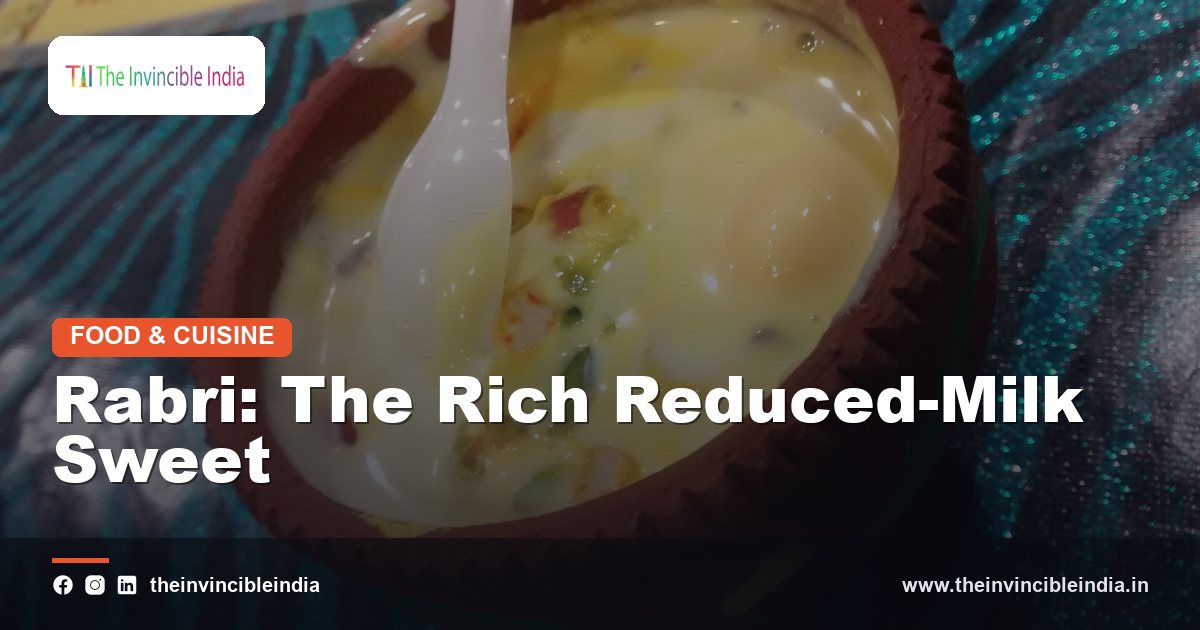
Rabri is one of the most luxurious sweets of the Indian subcontinent, made by simmering full-cream milk over a gentle flame for a long time until it thickens into a rich, creamy preparation laced with delicate layers of cream. Sweetened with sugar and perfumed with cardamom, saffron and nuts, it is served chilled or at room temperature and enjoyed on its own or as a partner to other desserts. Its patient method and indulgent character make it a festive favourite, and it holds a prized place among the famous sweets of India. This guide explores rabri, its preparation, its flavours, its pairings and its enduring cultural importance.
Quick Facts
| Detail | Information |
|---|---|
| Type | Reduced-milk dessert |
| Region | North India, especially Uttar Pradesh, Rajasthan and Punjab |
| Main ingredients | Full-cream milk, sugar, cardamom |
| Flavour | Creamy, sweet and fragrant with saffron and nuts |
| Served with | Jalebi, malpua, ghewar or falooda |
| Cultural link | Festivals, weddings and celebratory meals |
What Is Rabri
Rabri is a traditional Indian dessert made by boiling milk slowly until it reduces to a fraction of its original volume, developing a thick consistency and a golden colour. As the milk simmers, a layer of cream forms on the surface and is repeatedly pushed to the side of the pan, so that the finished sweet contains many soft, creamy layers. It is sweetened with sugar and flavoured with cardamom, and often garnished with saffron, almonds and pistachios. The result is dense, luscious and aromatic, with a flavour of concentrated milk that no shortcut can fully replicate. As a dessert built entirely on the patient transformation of one ingredient, rabri represents the very essence of traditional Indian milk sweets.
The Importance of Milk in Indian Sweets
Milk has long held a central place in Indian food and culture, valued as a pure and nourishing substance and associated with the sacred cow. It forms the basis of an enormous range of sweets, from soft cheese-based confections to thickened milk fudges and creamy puddings. Rabri belongs to the family of sweets made by reducing milk, a technique that concentrates its natural sweetness and richness. Skilled sweet makers, known as halwais, have developed this craft over generations, learning to judge heat, timing and texture by sight and smell. The prominence of milk in such sweets reflects its cultural significance and explains why dairy desserts remain at the heart of Indian celebration and hospitality.
How Rabri Is Made
The making of rabri is a lesson in patience. Full-cream milk is brought to a boil in a wide, heavy-bottomed pan and then simmered on a low flame. As it heats, a layer of cream forms on the surface, and the cook carefully moves it to the side of the pan with a ladle, allowing a fresh layer to develop. This process is repeated many times over, and the milk slowly reduces and thickens. Sugar and cardamom are added toward the end, and the accumulated layers of cream are folded back into the thickened milk. The cooking requires constant attention to prevent scorching. This unhurried technique is what gives rabri its distinctive layered richness and is the reason the dish cannot be hurried.
The Layers of Malai
The defining feature of rabri is its malai, the thick cream that gathers on the surface of heated milk. Rather than being removed, these delicate sheets are collected at the side of the pan and later mixed back into the sweet, giving it a unique texture of soft strands and ribbons suspended in thickened milk. The more layers the cook collects, the richer and more satisfying the final dish becomes. The quality of the milk affects the quantity and tenderness of the malai, which is why traditional makers insist on fresh, full-cream milk. These layers distinguish rabri from simpler milk puddings, and they remain the hallmark by which connoisseurs judge whether a rabri has been prepared with care and skill.
The Right Pan and Flame
The vessel and heat used for rabri make a significant difference to its quality. Traditional makers use a wide, shallow, heavy-bottomed pan, often a large iron or brass kadhai, which offers a broad surface area for evaporation and for the formation of cream. A wider surface helps the milk reduce faster and allows more layers to develop. The flame is kept low and steady so that the milk does not scorch or stick, and the cook stirs the base occasionally to protect the sweet. Many professional sweet makers still prepare rabri over wood or coal fires, which they believe add a gentle smoky character. The careful choice of pan and flame shows how thoroughly craft and technique shape this seemingly simple dessert.
Sugar, Cardamom and Saffron
Flavouring in rabri is delicate, designed to enhance the natural taste of reduced milk rather than overwhelm it. Sugar is added toward the end of cooking, with the quantity adjusted to suit local preference. Powdered green cardamom lends a sweet, floral fragrance that is almost inseparable from Indian milk sweets, while a few strands of saffron soaked in warm milk give a golden hue and an expensive, perfumed note. Some makers add a few drops of rose or kewra essence for additional aroma. The restraint in seasoning allows the rich milk to remain the star. The harmony of sugar, cardamom and saffron is a classic example of the Indian sweet maker’s art of balanced and elegant flavouring.
Nuts and Garnishes
A generous scattering of chopped or slivered nuts is the traditional finishing touch for rabri. Almonds and pistachios are the most common, valued for their colour and gentle crunch, and cashews or charoli seeds are sometimes added. Dried rose petals, silver leaf and strands of saffron may adorn the surface for festive presentation. These garnishes enhance both the appearance and the texture of the dish, introducing a contrast to the smooth creaminess beneath. The practice also reflects the Indian custom of making celebratory food visually rich and abundant. A well-garnished bowl of rabri is a feast for the eyes as well as the palate, and the care taken in decoration is part of the dessert’s festive identity.
Serving Rabri Chilled or Warm
Rabri is most often served chilled, the cold temperature thickening it further and emphasising its creaminess. Some people enjoy it at room temperature, and in colder months it may be served slightly warm. It is traditionally presented in small clay cups known as kulhads, which lend a faint earthy aroma, or in simple bowls and plates. A modest portion is usually sufficient, since the dessert is rich and filling. Serving it chilled makes it particularly refreshing in the hot season, when its cool sweetness is deeply welcome. Whatever the temperature, the correct serving allows the layers of cream to be appreciated, and the presentation in humble earthen cups reflects the dessert’s roots in traditional North Indian street and sweet-shop culture.
Rabri with Jalebi and Malpua
Rabri is frequently paired with other sweets, and its most celebrated partnerships are with jalebi and malpua. Hot, crisp jalebi dipped in cool, thick rabri creates a delicious contrast of temperature and texture that is a famed treat of North Indian sweet shops. Malpua, a fried pancake soaked in syrup, is also served with a spoonful of rabri, turning it into a decadent dessert. In Rajasthan, rabri is poured over the honeycomb-like sweet known as ghewar, which is especially popular during certain festivals. These pairings show how rabri acts as a luxurious accompaniment, enriching other sweets while remaining delightful on its own, and they reveal its versatility in Indian dessert culture.
Rabri Falooda and Modern Desserts
Rabri has also become an important ingredient in modern and fusion desserts. In rabri falooda, a popular cold treat, it is combined with rose syrup, vermicelli, basil seeds and ice cream, creating a layered, colourful and indulgent dessert. It is also used to top kulfi, to fill pastries and to enrich cakes and pudding creations in contemporary kitchens. Such uses show the adaptability of the sweet and its continuing appeal to younger generations. Chefs appreciate its concentrated dairy flavour, which adds depth to many creations. These new uses demonstrate that rabri is not a museum piece but a living ingredient, able to inspire fresh ideas while keeping its traditional character intact.
Rabri and Basundi
Rabri is often compared with basundi, another reduced-milk sweet popular in Maharashtra and Gujarat. Both are made by simmering milk until thick and sweetening it with sugar and cardamom, but they differ in texture. Basundi is smoother and more pourable, with the cream mixed evenly through the milk, while rabri is denser and has the distinctive layered, ribbon-like strands of malai. Each has its own devoted admirers and regional identity. Understanding the difference helps appreciate how closely related sweets can develop subtle individual character in different parts of the country. Both are cherished examples of the Indian talent for transforming simple milk into extraordinary festive desserts.
Rabri in Festivals and Celebrations
Rabri is a celebratory sweet, often prepared or purchased for festivals, weddings and family gatherings. It appears on festive menus during occasions such as Holi, Diwali and Raksha Bandhan, when sweets are exchanged and shared among relatives and friends. Its rich, indulgent character suits moments of joy and abundance, and its preparation by skilled sweet makers adds a sense of occasion. In many North Indian cities, famous sweet shops are known for their rabri and attract customers during festive seasons. Offering rabri to guests is considered a gesture of generosity and affection. In this way the sweet has become inseparable from the spirit of celebration across the Hindi-speaking heartland.
Regional Traditions of Rabri
Rabri is associated especially with the north and west of India, where it is made in cities and towns renowned for their dairy traditions. Uttar Pradesh, with its famous sweet-making centres, Rajasthan, Punjab, Gujarat and Delhi all have their own styles and favourite shops. In some places it is made thick and dense, in others slightly looser. Local variations include the addition of different nuts, flavourings or accompaniments, and some regions pair it with their own distinctive pastries. These differences give rabri a rich regional texture while maintaining the shared core of slow-reduced, creamy milk. The geographical spread of the sweet underlines its importance as a unifying element in the varied dessert culture of India.
Nutritional Character
Rabri is a rich dessert, best enjoyed in small portions on special occasions. Being made from concentrated full-cream milk, it provides protein, calcium and energy, while the sugar adds sweetness and the nuts contribute healthy fats. Its richness and sugar content mean it is traditionally eaten sparingly rather than as an everyday food, and a small cup is generally considered sufficient. Some modern cooks reduce the sugar or use lower-fat milk for a lighter version, though the traditional character is best preserved with full-cream milk. Understanding rabri as a festive treat helps place it in sensible perspective within a balanced diet, where moderate indulgence has always been part of Indian food culture.
Tips for Making Rabri at Home
Home cooks can make a satisfying rabri by following a few simple principles. Start with fresh, full-cream milk and use a wide, heavy-bottomed pan, which prevents scorching and encourages cream to form. Keep the flame low and steady, and push each layer of cream gently to the side rather than stirring it in. Add sugar and cardamom only toward the end, once the milk has reduced and thickened. Allow the finished rabri to cool and chill before serving, since it thickens further as it rests. Patience is the most important ingredient, and the time invested rewards the cook with a dessert of authentic richness and the unmistakable creaminess for which rabri is celebrated.
Rabri Today
Today, rabri remains a treasured sweet in India and among communities abroad, served in traditional sweet shops, restaurants and homes. Famous dairy towns continue to take pride in their versions, and contemporary chefs explore new ways of presenting it while respecting its roots. Packaged versions have made it more widely available, though many insist that nothing replaces freshly made rabri served in a clay cup. As a dessert built on patience, craft and the transformative power of simple milk, it embodies a timeless approach to Indian sweet making. Rabri thus endures as one of the most beloved and indulgent creations in the sweet heritage of India.
Sources & Further Reading
- Ministry of Culture, Government of India (indiaculture.gov.in).
- Ministry of Tourism, Government of India (incredibleindia.gov.in).
Frequently Asked Questions
What is rabri?
Rabri is a rich Indian sweet made by simmering full-cream milk until it thickens and forms layers of cream, then sweetening it with sugar and cardamom. It is garnished with saffron and nuts and served chilled or at room temperature.
What is the difference between rabri and basundi?
Both are reduced-milk sweets, but rabri is thicker and contains distinct layers of malai, while basundi is smoother and more pourable. Rabri is more common in North India and basundi in Maharashtra and Gujarat.
What is rabri served with?
Rabri is often served with hot jalebi, malpua or ghewar, and it is the key ingredient in rabri falooda. It is also enjoyed on its own in a small cup or bowl.
Why does rabri take so long to make?
The milk must be simmered slowly until it reduces to a fraction of its volume while layers of cream are repeatedly gathered. Rushing the process would scorch the milk and spoil the texture.
When is rabri traditionally enjoyed?
It is a festive favourite served during celebrations such as Holi, Diwali and weddings. It is also enjoyed as a chilled summer dessert.


