

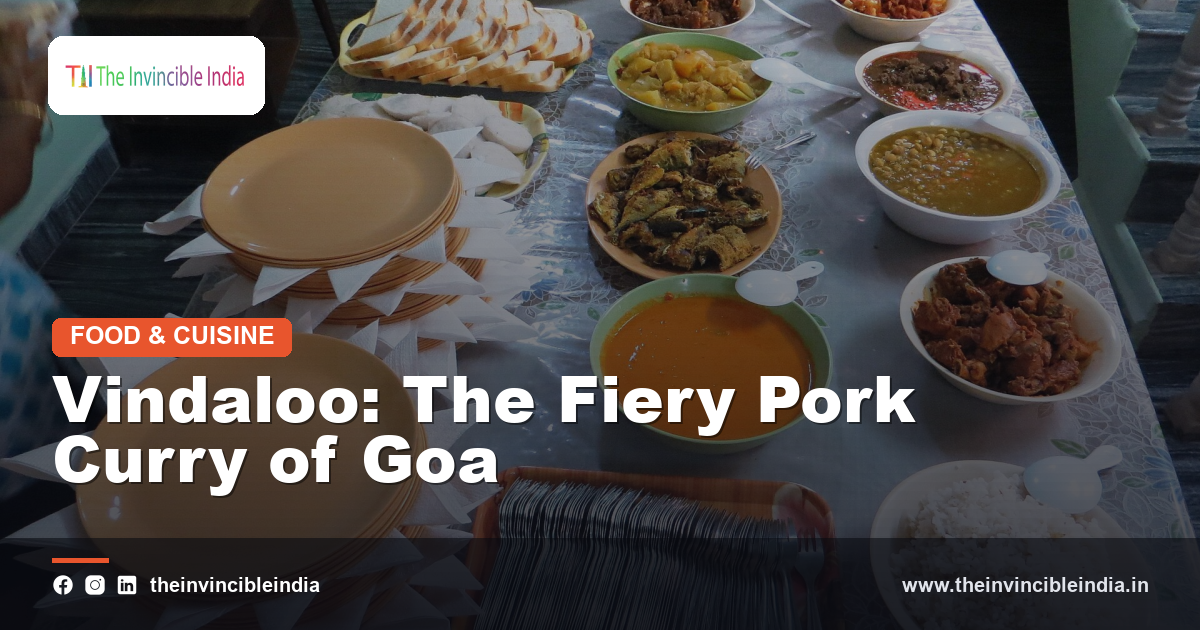
Vindaloo is among the most widely recognised Indian dishes in the world, yet its true character is often misunderstood. In its home in Goa, on India’s western coast, it is not simply a fiery curry but a tangy, garlic-scented preparation of marinated pork whose roots lie in a Portuguese dish of meat steeped in wine and garlic. Over centuries of cultural exchange, Goan cooks transformed that foreign idea into something distinctly local, using palm vinegar and the region’s chillies and spices. Like many of the dishes explored in the guide to the regional cuisines of India, vindaloo is a record of history told through flavour.
Quick Facts
| Detail | Information |
|---|---|
| Origin | Goa, western India |
| Roots | Portuguese meat in wine and garlic |
| Traditional meat | Pork |
| Defining flavour | Vinegar, garlic and red chilli |
| Community link | Goan Catholic festive cooking |
| Served with | Rice, sannas or bread |
Goa and Its Layered Food Culture
Goa, a small coastal state on India’s western shore, has a food culture unlike any other in the country. For centuries it was a Portuguese colony, and the encounter between European and Indian ways of cooking left a lasting mark on its kitchens. Coconut, rice, fish, kokum and fiery chillies, the staples of the Konkan coast, mingled with vinegar, pork, bread and baked goods introduced by the Portuguese. The result is a cuisine in which Hindu, Catholic and Muslim traditions each contribute their own dishes and customs. Vindaloo emerged from this meeting of worlds and remains one of its most famous products. To appreciate the dish properly, it is necessary to see Goa as a place where cultural exchange has been a daily reality, expressed above all at the dining table.
From Vinha d'Alhos to Vindaloo
The name vindaloo is generally traced to the Portuguese phrase vinha d’alhos, meaning wine and garlic, which describes a method of marinating meat in wine or wine vinegar with garlic and seasonings. Portuguese sailors and settlers used such marinades as a way of preserving and flavouring meat. When the idea reached Goa, local cooks adapted it to the ingredients at hand, replacing wine with palm vinegar and adding the chillies and spices of the Indian kitchen. The name gradually shifted in pronunciation and spelling, and the dish evolved into something quite different from its European ancestor. This transformation is a clear example of culinary adaptation, in which a foreign technique takes root in new soil and flourishes. Vindaloo, in this sense, is neither purely Portuguese nor purely Indian but a creation of both.
The Role of Palm Vinegar
Vinegar is the soul of authentic Goan vindaloo, and traditionally the vinegar used is made from the sap of the coconut palm. Palm vinegar has a mellow, slightly sweet acidity that differs from harsher industrial vinegars, and it is a characteristic ingredient of Goan kitchens. In the vindaloo paste, it is used to grind the spices into a thick, tangy mixture that coats the meat. The acid also acts as a preservative and tenderiser, which explains why vindaloo was historically a dish that kept well in the humid coastal climate. The use of this local vinegar is one of the clearest markers of the Goan identity of the dish. Without it, the curry loses its distinctive sourness and becomes simply another hot gravy, which is why cooks insist on the right vinegar.
The Chilli and Spice Paste
The heart of vindaloo is a ground paste of dried red chillies, garlic, ginger and whole spices. Goan cooks favour mildly hot, richly coloured chillies that give the curry its deep red hue, and they blend them with cumin, black pepper, cinnamon, cloves and turmeric. Some recipes include a little tamarind or sugar for balance. The ingredients are soaked and ground with vinegar to form a smooth, aromatic paste, which is rubbed into the meat and allowed to rest. This marinating stage is essential, as it allows the flavours to penetrate deeply and the acid to begin tenderising the meat. The paste is the dish’s signature feature, and the proportions and choice of spices distinguish one family’s vindaloo from another, even within the same village or community.
Why Pork
Pork is the traditional meat of Goan vindaloo, reflecting the culinary customs of the Goan Catholic community. Pork has long held a prominent place in Goan Catholic cooking, appearing in dishes such as sorpotel, sausages and roasts. The richness and fat of the meat suit the sharp acidity and heat of the vindaloo paste, which cuts through the fat and balances the flavour. Cooks usually select pieces with a good ratio of meat to fat, so that the curry has both substance and succulence. Although vindaloo is today made with chicken, beef, lamb, duck, fish and even vegetables, pork remains the classic. Understanding this preference helps explain why the dish is so closely associated with Goa’s Catholic households, where it is cooked with great pride for important family occasions.
A Dish for Festivals and Family
In Goa, vindaloo is a dish of celebration. Goan Catholic families traditionally prepare elaborate feasts for Christmas, weddings and other major occasions, and pork vindaloo is a favourite on these tables. Preparation often begins well in advance, with the paste prepared and the meat marinated for a day or more. The dish is often made in large quantities because it is said to taste better after resting, when the flavours have matured. The preparation is communal, with relatives sharing tasks and recipes handed down through generations. These customs show that vindaloo is as much a social tradition as a recipe. It carries memories of family gatherings and the warmth of home, which is why many Goans feel a deep emotional attachment to the way their own family prepares it.
Cooking Technique
After marinating, the meat is cooked slowly in a heavy pot, usually with a little oil and sometimes with sliced onions, until it is tender. The marinade itself becomes the gravy, thickening as the liquid reduces and the oil separates. Cooks add water sparingly so that the sauce remains concentrated and sharply flavoured. The cooking time depends on the cut of meat, but patience is essential, as rushing produces tough meat and an unbalanced gravy. The finished vindaloo should be glossy, deep red and tangy, with a pronounced garlic and vinegar aroma. Many cooks prepare it a day ahead, since the sauce develops further character on standing. This reliance on time and gentle heat connects vindaloo to the long tradition of preserved and matured dishes in coastal Indian cooking.
Myths About the Name
A popular misconception holds that vindaloo means curry with potatoes because the Hindi word for potato is aloo. This explanation is attractive but incorrect: the name derives from the Portuguese vinha d’alhos, and potatoes are not part of the original Goan recipe. The potato version appeared later in some restaurant adaptations, particularly outside India, and the false etymology grew from it. Another widespread belief is that vindaloo must be extremely hot, but the Goan original is better described as sharp and tangy, with warmth from chillies balanced by vinegar and spices. Clearing up these myths matters because they have obscured the dish’s real history. Correcting them restores recognition of the Goan and Portuguese heritage that the name preserves, and reminds us how easily popular culture can reshape a tradition.
Vindaloo Beyond Goa
As Portuguese, British and Indian communities moved along the sea routes of the Indian Ocean, the dish travelled with them. During the colonial period it became familiar to the British, and Anglo-Indian cooks adapted it to local tastes. In later decades, Indian restaurants overseas, especially in Britain, popularised a very hot version of vindaloo that bears only partial resemblance to its Goan ancestor. This wider fame turned the name into a global shorthand for a spicy curry. At the same time, it raised awareness of Goan cuisine and encouraged interest in its authentic form. The journey of vindaloo from a Goan family pot to restaurant menus around the world shows how food can carry a regional identity across oceans, even when that identity is transformed along the way.
Vindaloo and the Goan Catholic Table
The Goan Catholic table is one of the most distinctive in India, combining the spices of the Konkan with the techniques and customs brought by the Portuguese. Alongside vindaloo, it features dishes such as sorpotel, a rich spiced preparation of pork, cafreal, a green-marinated roast chicken, and sweets such as bebinca. Baked goods and bread play a larger role here than in most Indian cuisines. Meals are structured around rice, curry and fish, but festive occasions bring out the meat preparations. Within this repertoire vindaloo stands out as the best-known ambassador, a dish that most visitors to Goa will encounter. Its place on the table demonstrates how food functions as a living archive of cultural encounter, preserving customs that might otherwise have faded.
Accompaniments
Vindaloo is usually served with plain boiled rice or with Goan bread. The most traditional breads include the soft rolls known as pao and the sannas, steamed rice cakes made from fermented batter, which are especially well suited to soaking up the tangy gravy. The mild sweetness of these accompaniments offsets the sharpness of the curry, while their soft texture complements the tender meat. On festive occasions the dish may be part of a larger spread that includes fried fish, vegetables and salads. A simple raw onion and lime salad also makes a refreshing contrast. The choice of accompaniment reflects the general Goan principle of balance, in which each element on the plate softens or sharpens another, creating a meal greater than any single dish.
The Role of Preservation
In the warm, humid climate of Goa, preserving food was once an essential skill, and the vinegar-and-spice marinade of vindaloo served this purpose well. The acidity of vinegar, combined with chillies and garlic, slowed spoilage and allowed meat to be kept for longer periods. This practical origin explains why the dish improves with time and why cooks often prepare it in large batches. Preservation techniques such as pickling, salting and drying are deeply embedded in coastal Indian cooking, giving the cuisine a flavour profile built around sour, salty and spicy notes. Understanding vindaloo through this lens reveals that its sharpness is not merely a matter of taste but a legacy of necessity, a clever use of available ingredients to make food safe and flavourful.
Regional Cousins and Comparisons
Vindaloo has several culinary relatives along India’s coasts and beyond. Within Goa, sorpotel shares its tangy, spicy and rich character, while cafreal offers a green, herb-driven marinade with a different personality. Elsewhere in India, the Mangalorean and Konkan kitchens produce sour and fiery meat and fish curries that echo some of the same principles. Compared with the creamy, mild curries of the north or the slow-cooked red gravies of Kashmir, as in Rogan Josh, vindaloo is distinctly sharper and more acidic. These comparisons show that Indian regional cuisines are best understood as families of related traditions rather than isolated dishes, each shaped by its climate, history and available ingredients.
Cooking Vindaloo at Home
For home cooks, a faithful vindaloo begins with good quality pork, a well-ground paste of red chillies, garlic and spices, and genuine palm vinegar if available. The meat should be marinated for several hours or overnight, then cooked slowly until tender, with water added sparingly. Tasting and adjusting the balance of heat, acidity and salt towards the end is important. The curry benefits from resting before serving, so it is wise to prepare it ahead. Home cooks should treat the heat level as adjustable, remembering that the goal is tang and aroma rather than burning intensity. By following these principles, a cook can reproduce the character of a Goan kitchen and gain a practical understanding of why this dish has endured for centuries as a symbol of the state.
Vindaloo Today
Today vindaloo is both a proud emblem of Goa and a global culinary icon, appearing on menus around the world under many interpretations. In Goa, families continue to prepare it for festive occasions, honouring recipes passed down through generations, while chefs and writers work to explain its authentic origins and distinguish it from the more generic versions. Its story, from Portuguese marinade to Goan classic to worldwide favourite, illustrates the creative power of cultural exchange. Preserving the traditional method, with palm vinegar, a freshly ground paste and slow cooking, helps keep that story alive. In every serving of authentic vindaloo, there is a reminder that India’s food heritage is not static but a living tradition shaped by encounter, adaptation and enduring local pride.
Sources & Further Reading
- Ministry of Culture, Government of India (indiaculture.gov.in).
- Ministry of Tourism, Government of India (incredibleindia.gov.in).
Frequently Asked Questions
What is vindaloo?
Vindaloo is a tangy, spicy curry from Goa, traditionally made with pork marinated in a paste of vinegar, garlic, chillies and spices. It developed from a Portuguese wine-and-garlic marinade.
What does the word vindaloo mean?
The name comes from the Portuguese phrase vinha d’alhos, meaning wine and garlic. It does not mean curry with potatoes, which is a popular misunderstanding.
Is authentic Goan vindaloo extremely hot?
The Goan original is better described as sharp and tangy than intensely hot. Its flavour comes from vinegar, garlic and chillies in balance, while the extremely hot versions are mostly later restaurant adaptations.
Why is palm vinegar used?
Palm vinegar is a traditional Goan ingredient with a mellow acidity that suits the spice paste. It also helped preserve the dish in the warm coastal climate.
What is vindaloo usually served with?
It is commonly served with rice or with Goan breads such as pao and sannas. These soft accompaniments help balance the sharpness of the gravy.


