

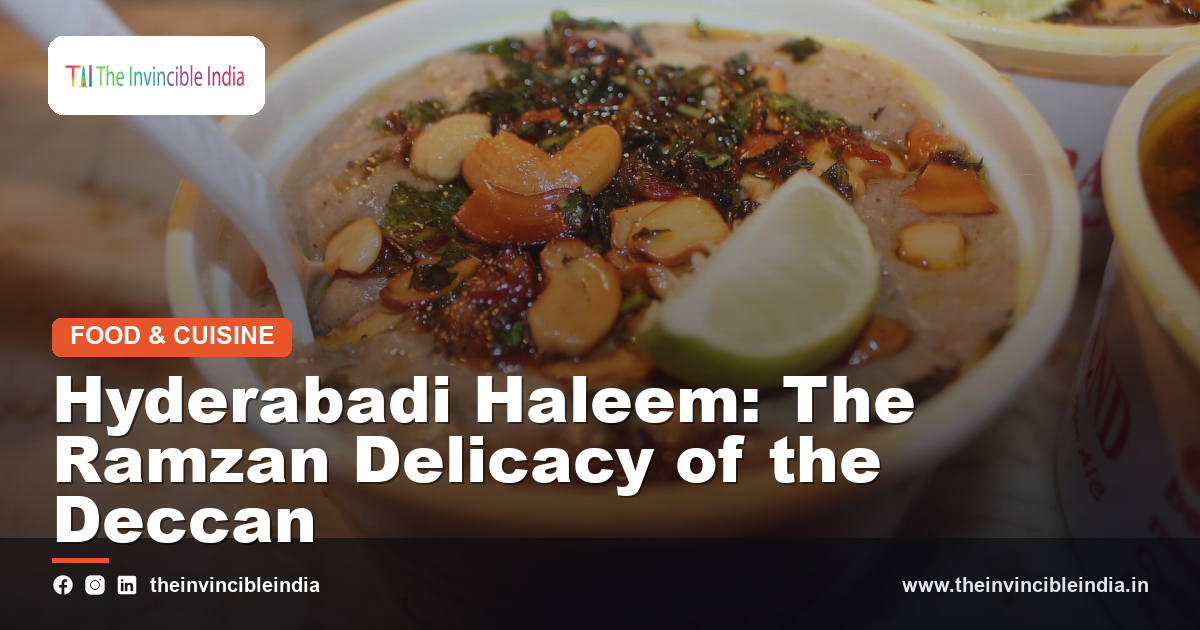
Every year as the month of Ramzan approaches, the lanes of Hyderabad fill with the smoke and aroma of large cauldrons, each holding a thick, slow-cooked preparation of wheat, lentils and meat that has become the signature dish of the season. Hyderabadi haleem is far more than a seasonal meal; it is a shared ritual that links the city’s Arab heritage, its Nizami court cooking and the everyday pleasures of a community breaking its fast together. Like many dishes found in the wider story of regional cuisines of India, it carries the imprint of centuries of migration, trade and refinement. This guide explores the origins, ingredients, technique, variations and cultural meaning of haleem in the Deccan.
Quick Facts
| Detail | Information |
|---|---|
| Dish Type | Slow-cooked meat, wheat and lentil porridge |
| Region | Hyderabad, Telangana |
| Season | Most closely linked with Ramzan |
| Core Ingredients | Wheat, lentils, meat, ghee, spices |
| Cooking Method | Hours of slow cooking and pounding |
| Common Garnish | Fried onions, lemon, mint, coriander |
What Is Hyderabadi Haleem
Hyderabadi haleem is a thick, savoury porridge made by cooking wheat, lentils and meat together for many hours until the grains and fibres merge into a single smooth, luxuriant mass. It is generously flavoured with ghee, whole spices, ginger, garlic and green chillies, and it is served hot with a topping of fried onions, fresh herbs and a squeeze of lemon. Although versions of the dish are known across the Middle East and South Asia, the Hyderabadi style has a character of its own, richer in spice and more finely textured than its cousins elsewhere. The dish is closely identified with the city and its Muslim community, and it is most intensely associated with the evenings of Ramzan. This identity as a slow-cooked, deeply spiced, communal dish defines what Hyderabadi haleem is and why it holds such a prominent place in the Deccan’s food culture.
Origins and the Arab Connection
The roots of haleem are generally traced to Arab culinary tradition, where a related dish of pounded wheat and meat, commonly known as harees, has long been prepared in the region. Over many centuries, movements of people between the Arabian peninsula and the Indian subcontinent carried culinary ideas along with them, and Hyderabad became one of the places where those ideas took lasting root. Arab families who settled in the Deccan, often in connection with the courts and military service of the region, are widely credited with bringing the dish to the city. Once established, it was adapted to local taste, gaining the spices, lentils and cooking styles of the Indian kitchen. This gradual transformation of an Arab porridge into a distinctly Hyderabadi delicacy illustrates how migration and cultural exchange shaped the food of the Deccan and gave the dish its present form.
Haleem in the Nizami Kitchen
Hyderabad’s culinary identity was shaped in large part by the courts and noble households of the Nizami era, whose kitchens blended Persian, Mughal, Arab and Deccani influences into a refined cuisine. In this setting haleem was not a casual street preparation but a dish of considerable prestige, prepared by skilled cooks who understood the patience required to achieve the correct consistency. The courtly emphasis on aroma, richness and careful technique left a lasting mark on the dish, and many of the practices followed today trace back to this tradition of disciplined slow cooking. From the noble households the preparation gradually spread outward to the wider community, eventually becoming a dish enjoyed by people of every background across the city. The place of haleem in the Nizami kitchen therefore helps explain both its refined character and its transformation into a dish that now belongs to all of Hyderabad.
Core Ingredients
The foundation of haleem is a combination of grains, pulses and meat, each contributing a different quality to the finished dish. Broken or whole wheat provides body and a gentle chew, while several kinds of lentils, commonly including chana dal and others, lend creaminess and a subtle sweetness. Mutton is the classic choice of meat, valued for the flavour and gelatinous richness it releases during long cooking, though chicken is also widely used. Ghee is essential, enriching the dish and carrying the aroma of the spices through every spoonful. Onions, ginger, garlic, green chillies and yogurt complete the base, and the quality of each ingredient directly shapes the result. The careful balance of wheat, lentils, meat and ghee is the structural heart of haleem, and cooks regard the selection and proportion of these ingredients as the first step toward a truly satisfying bowl.
The Spice Blend
Haleem relies on a warm, aromatic blend of whole and ground spices rather than on overwhelming heat. Cardamom, cloves, cinnamon, black pepper, bay leaf and cumin commonly feature in the base, building a layered fragrance that deepens as the dish cooks. Turmeric and red chilli add colour and a measured warmth, while garam masala is often added toward the end to lift the aroma. Fresh ingredients such as ginger, garlic, green chillies, mint and coriander contribute brightness that balances the richness of the meat and ghee. Each household and each professional cook has a preferred proportion, and these small differences account for the variety of flavours found across the city. The thoughtful use of this spice blend, restrained yet deeply aromatic, is what distinguishes a well-made Hyderabadi haleem and allows its subtle flavours to emerge slowly over the course of cooking.
Slow Cooking and Pounding
The defining technique of haleem is patience. The meat, grains and lentils are cooked together over a low flame for many hours, stirred regularly so that nothing sticks or scorches. As the ingredients soften, the cook mashes and beats the mixture, traditionally with a heavy wooden mallet or a large paddle, until the meat fibres break down and blend completely into the grains. In commercial kitchens during Ramzan, this work is carried out in enormous vessels, often fired with wood, and teams of cooks take turns at the pounding. The process transforms separate ingredients into a single homogeneous dish with a thick, stretchy, almost silken consistency. This combination of long slow cooking and vigorous pounding is what gives haleem its signature texture, and it remains the clearest mark of skill separating an excellent preparation from an ordinary one.
Texture and Flavour
A well-prepared Hyderabadi haleem has a distinctive mouthfeel that is smooth, thick and slightly elastic, with no visible separation between meat, wheat and lentils. The flavour is savoury and deeply meaty, softened by the sweetness of slow-cooked lentils and enriched by ghee, while the spices remain warm and aromatic rather than sharp. A good bowl balances richness with freshness, since the toppings of lemon, herbs and fried onions cut through the density of the base. The dish is meant to be eaten slowly and attentively, savouring the layers of taste that emerge from hours of cooking. Judging haleem is therefore largely a matter of texture and balance, and the qualities of smoothness, depth and aromatic harmony define what diners across Hyderabad expect from a truly good serving of the dish.
Garnishes and Accompaniments
The finishing touches are an integral part of the haleem experience. A ladle of hot ghee is often poured over the top, followed by crisp golden fried onions, chopped coriander and mint, slivers of fresh ginger and green chilli, and a wedge of lemon to be squeezed over the dish just before eating. Some servings include fried cashews or other dry fruits for added crunch and richness. Haleem is typically eaten with flatbreads such as naan or roti, which are torn and used to scoop up the thick porridge, though many people eat it on its own. These garnishes provide contrast in texture, aroma and acidity, brightening a dish that might otherwise feel heavy. The thoughtful pairing of haleem with fried onions, fresh herbs, lemon and warm bread completes the dish and ensures that every mouthful offers a balance of richness and freshness.
Haleem and Ramzan
The association between haleem and Ramzan is the strongest cultural link in the dish’s story. During the month of fasting, Muslims abstain from food and drink from dawn until sunset, and the evening meal, iftar, is an occasion for gathering, gratitude and nourishment. Haleem suits this moment well, being warming, filling and rich in energy, and families often look forward to it as one of the highlights of the month. Many people buy it from specialist outlets that begin preparation well before sunset, while others share it among neighbours and friends. The dish thus becomes a symbol of hospitality and community during the holy month. This close bond between haleem and Ramzan, rooted in practicality and shared ritual, explains why the dish’s arrival each year is eagerly awaited and widely celebrated across Hyderabad.
The Haleem Season in the City
During Ramzan, Hyderabad takes on a distinctive festive atmosphere in the evenings, particularly in the older parts of the city where food stalls and restaurants set up large cauldrons by the roadside. Crowds gather as the hour of iftar approaches, and the smell of slow-cooked meat and spices drifts through the streets. Temporary haleem counters appear in many neighbourhoods, and visitors from across the region travel to sample the dish in its home city. The season supports a wide network of cooks, suppliers and sellers who prepare for months in advance. This lively seasonal economy and the festive street atmosphere surrounding it make haleem season one of the most characteristic annual experiences in Hyderabad, linking food, faith and the rhythms of urban life.
Variations of Haleem
While mutton haleem is regarded as the classic form, the dish is made in several variations to suit different tastes and dietary customs. Chicken haleem is lighter and quicker to prepare, and it has become widely popular in restaurants and homes alike. In some regions beef is used, reflecting local food practices, and vegetarian versions based on lentils, grains, vegetables and nuts are made for those who do not eat meat. Some cooks add extra dry fruits or adjust the proportion of lentils to wheat to alter the richness and texture. Each variation keeps the essential slow-cooked, smooth character of the original while adapting its ingredients. This flexibility has helped haleem remain relevant to a broad community, and the existence of these many variations shows how readily the dish adapts while preserving its core identity.
Haleem, Harees and Related Dishes
Haleem belongs to a wider family of slow-cooked grain and meat porridges found across West Asia, North Africa and South Asia. Harees, its Arab relative, is typically simpler, built mainly from wheat and meat with minimal spicing and a more rustic texture. In India, related preparations such as khichda and khichra, which also combine grains, pulses and meat, are cooked in various regions, especially for festive occasions. Hyderabadi haleem differs in the greater variety of spices, the inclusion of several lentils and the emphasis on a perfectly smooth consistency. Comparing these dishes reveals shared ancestry as well as local adaptation. Understanding haleem within this wider family of porridges highlights how a single culinary idea has travelled and changed, producing in Hyderabad one of its most refined and flavourful expressions.
Nutrition and Energy
Haleem is a dense, energy-giving dish that combines protein from meat and lentils with complex carbohydrates from wheat and fats from ghee. This composition is part of the reason it is so closely associated with the breaking of the Ramzan fast, since it provides sustained nourishment after a long day without food. The slow cooking also makes the grains and meat easy to digest, and the warm spices are traditionally regarded as aiding digestion. Because it is rich and filling, haleem is generally eaten in modest portions, often as the centrepiece of a lighter meal supported by fruit, dates and beverages. The nourishing, satisfying nature of the dish explains much of its practical appeal, and its balance of protein, grain and fat has made haleem a trusted source of restorative energy during the holy month.
Geographical Indication and Recognition
The distinctive identity of Hyderabadi haleem has received formal recognition in India through a Geographical Indication tag, which acknowledges the dish’s close association with the city and its traditional method of preparation. Such recognition is intended to protect the name and reputation of regional products and to encourage preparation according to established standards. Beyond legal status, haleem has also gained widespread cultural recognition as one of the defining foods of Hyderabad, standing alongside biryani as an emblem of the city’s culinary heritage. Food writers, travellers and tourism bodies regularly feature the dish when presenting the city’s attractions. This formal and informal recognition together affirms the dish as a genuine regional heritage, and the Geographical Indication status underlines how closely Hyderabadi haleem is tied to the place and people that created it.
Haleem Beyond Hyderabad
Although Hyderabad is its acknowledged home in India, haleem is now prepared in many other cities, particularly during Ramzan. Communities in cities across the country, from the north to the south and west, offer their own versions, adjusting spices and textures to local tastes. Restaurants and packaged-food makers have also carried the dish to a wider audience, and it is served in many places outside the country wherever South Asian communities live. Some versions closely follow the Hyderabadi model, while others depart from it considerably. Despite these variations, the Hyderabadi style continues to serve as a reference point for quality and authenticity. The spread of haleem beyond its original home demonstrates its broad appeal, even as people continue to look to Hyderabad as the benchmark for how the dish should taste.
Serving and Etiquette
Haleem is traditionally served hot, straight from the cauldron, in a bowl or on a plate, and eaten promptly while its texture is at its best. At iftar, it is often part of a spread that begins with dates and water or a refreshing drink, followed by light snacks and then the richer dishes. Sharing is an important part of the custom, and families commonly send bowls to neighbours or invite guests to join them. Eating with the hands, using torn bread as a scoop, is common and considered natural for the dish. Hosts take care to present it with its full set of garnishes. These customs of warm service, generosity and shared eating reflect the values of hospitality that surround haleem, making the manner of serving as meaningful as the dish itself.
Hyderabadi Haleem Today
Today Hyderabadi haleem remains one of the most beloved and widely recognised dishes of the Deccan, honoured both as a cherished tradition and as a thriving part of the city’s food economy. Each Ramzan, cooks continue to follow time-honoured methods of slow cooking and pounding, even as modern kitchens, packaging and delivery services bring the dish to new audiences throughout the year. Younger generations are discovering its history and its connections to Arab and Nizami heritage, while visitors seek it out as an essential part of understanding Hyderabad. The dish also invites reflection on how food can carry the memory of migration and community across centuries. In its enduring popularity and the care taken to preserve its character, Hyderabadi haleem today stands as a living symbol of the city’s culinary heritage and its spirit of shared celebration.
Sources & Further Reading
- Ministry of Tourism, Government of India, on the cuisines of India (tourism.gov.in).
- Ministry of Culture, Government of India (indiaculture.gov.in).
Frequently Asked Questions
What is Hyderabadi haleem?
Hyderabadi haleem is a slow-cooked porridge made from wheat, lentils and meat, enriched with ghee and spices until it forms a smooth, thick mass. It is the signature dish of Hyderabad and is especially associated with the month of Ramzan.
Why is haleem eaten during Ramzan?
Haleem is warming, filling and rich in energy, which makes it well suited to breaking the fast at iftar. Over time it has also become a shared social tradition, with families and neighbours enjoying it together during the holy month.
Where does haleem come from?
The dish is traced to the Arab dish harees and is believed to have reached Hyderabad through Arab settlers in the Deccan. In Hyderabad it was adapted with local spices and lentils and refined in the kitchens of the Nizami era.
What meat is used in haleem?
Mutton is the classic choice because of its flavour and richness, but chicken is very popular, and some regions use beef. Vegetarian versions are also prepared using lentils, grains, vegetables and nuts.
How is haleem traditionally served?
Haleem is served hot, topped with ghee, fried onions, fresh mint and coriander, ginger, green chillies and a squeeze of lemon. It is commonly eaten with naan or roti, though many people enjoy it on its own.


