

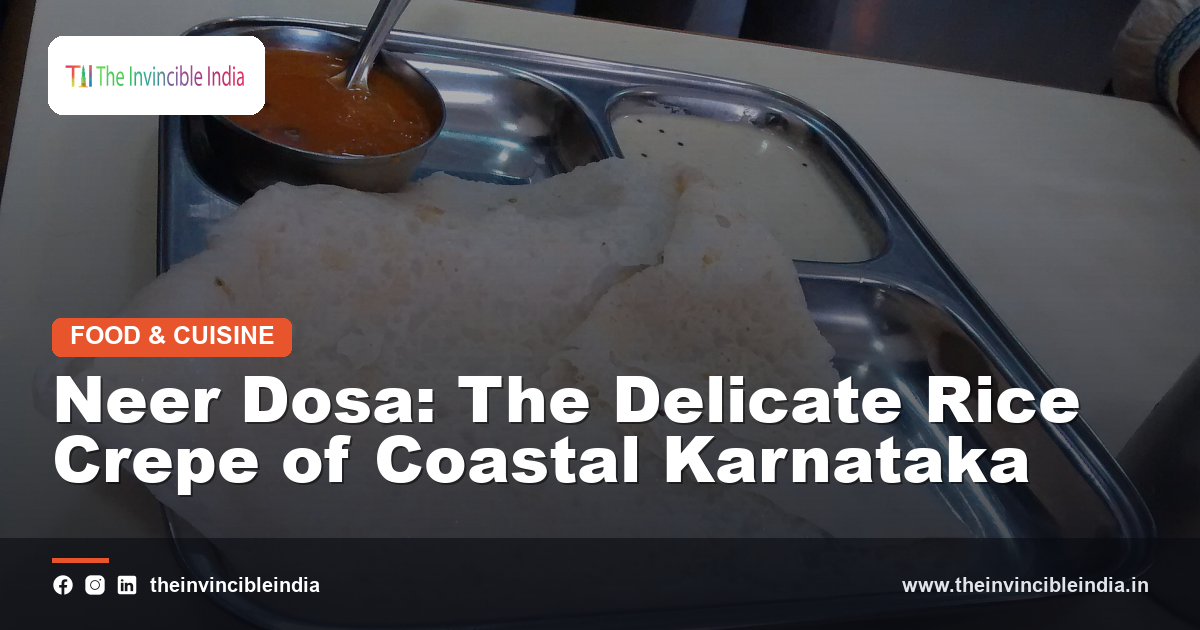
Neer dosa is the soft, lacy rice crepe of coastal Karnataka, so thin and delicate that its name simply means water dosa. Unlike the better-known fermented dosas of the south, it is made from a freshly ground, runny batter of soaked rice and requires no fermentation, which makes it quick to prepare and wonderfully light. Much as the South Indian breakfast tradition celebrates rice in many forms, neer dosa shows the gentle, coastal side of that heritage. This guide explores neer dosa, its batter, technique, accompaniments and place in India’s culinary heritage.
Quick Facts
| Detail | Information |
|---|---|
| Type | A thin, unfermented rice crepe |
| Region | Coastal Karnataka, especially Mangaluru and Tulu Nadu |
| Meaning of name | Neer means water in Kannada and Tulu |
| Key ingredients | Raw rice, coconut, salt and water |
| Cooked on | A hot flat griddle, without fermentation |
| Character | Soft, lacy, mild and quick to make |
The Water-Thin Crepe
Neer dosa is a signature dish of the coastal belt of Karnataka, where it appears on breakfast tables, at family meals and in restaurants specialising in the cuisine of the region. The name refers to the watery consistency of its batter, which spreads across a hot griddle to form a crepe of almost translucent thinness. It is white, soft and slightly lacy, with a pleasing pliability that allows it to be folded without breaking. Its flavour is gentle and neutral. As an emblem of coastal Karnataka’s lighter, rice-centred cooking, neer dosa has earned a distinctive place among India’s many varieties of dosa.
The Coastal Karnataka Setting
The coast of Karnataka, with its heavy monsoon rainfall, lush paddy fields and abundant coconut palms, forms the natural background to neer dosa. Rice and coconut dominate the traditional diet of the region, which includes the Tulu-speaking communities of Mangaluru and Udupi and neighbouring Konkani and Kannada speakers. The humid climate encourages light, easily digested food. Neer dosa fits this environment perfectly, being made from the very ingredients the land provides. The close tie between landscape and cuisine makes neer dosa an authentic reflection of life along the Karnataka coast.
Choosing the Rice
The character of neer dosa depends first on the rice, and traditional cooks typically use raw rice rather than parboiled varieties, soaked for a few hours until soft enough to grind smoothly. Local red or white rice varieties are often favoured for their flavour and for the soft texture they impart. The rice is rinsed carefully so that the batter remains clean and light. This preparation is simple but important. The careful selection and soaking of rice is the foundation of the dish, determining the softness that makes neer dosa so appealing.
Grinding a Thin Batter
After soaking, the rice is ground with a little grated coconut and enough water to form a very thin, pourable batter, about the consistency of thin buttermilk. The grinding is done until the mixture is smooth, with traditional kitchens using a stone grinder and modern ones a blender. Salt is added at the end, and the batter is used immediately. No fermentation is required, which sets the dish apart from most other dosas. The fresh, runny batter produced by this method is the secret of neer dosa’s delicate texture and of its remarkable speed of preparation.
No Fermentation Needed
Most dosas in South India depend on a batter of rice and lentils that is left to ferment overnight, gaining tang and elasticity. Neer dosa dispenses with this stage entirely, since its batter contains no lentils and is cooked soon after grinding. This makes it convenient for mornings when planning ahead has not been possible. The flavour is consequently mild rather than sour. The absence of fermentation is the chief practical and culinary distinction of neer dosa, and it explains why the dish is both quick to make and gentle on the palate.
Cooking on the Tawa
To cook the dosa, the thin batter is stirred well and poured in a swirling motion onto a hot, lightly greased griddle, where it spreads and sets almost at once into a net-like crepe with tiny holes. The cook then covers it briefly so the steam can finish the cooking without any need to flip. Practice is needed to judge the heat and the pouring motion. The finished dosa is ready within moments. This brisk method, requiring skill rather than elaborate equipment, is what produces the thin, soft and lightly lacy texture that defines neer dosa.
Folding and Serving
Neer dosa is customarily folded into quarters or into a soft triangle and served hot, often stacked on a plate so that the crepes stay warm and pliable. Because it is so thin, it cools quickly, so cooks tend to bring it to the table straight from the griddle. A single serving usually consists of several dosas. The simple folding and prompt serving preserve the delicacy of the crepe. The manner of presentation, modest yet attentive, reflects the unfussy hospitality typical of coastal Karnataka homes.
Coconut Chutney and Classic Pairings
The most common accompaniment to neer dosa is a fresh coconut chutney, whose creamy sweetness suits the mild crepe, often made with green chilli, ginger and a touch of tamarind or yogurt. Another traditional pairing is a simple sweet combination of grated coconut and jaggery, which makes the dosa a gentle breakfast treat. These accompaniments are easy to prepare and rely on local ingredients. The versatility of neer dosa lies in its neutral flavour. By taking on the character of whatever it is paired with, it adapts effortlessly to both savoury and sweet traditions.
Neer Dosa with Curries and Sukka
Neer dosa is equally at home alongside the spicy curries and dry preparations of the coastal region, especially chicken and fish dishes such as the dry, coconut-based sukka and the rich, red gravies of Mangalorean cooking. Vegetarian versions use vegetable stews and lentil dishes. The soft crepe is torn and used to scoop up the gravy, much as one would use bread. The combination balances heat and mildness. Pairing neer dosa with robust curries demonstrates how a delicate bread can complement strongly flavoured food in the cuisine of the coast.
Neer Dosa in Mangalorean Cuisine
Mangalorean cuisine is known for its generous use of coconut, tamarind and dried red chillies, as well as its fish and seafood dishes, and neer dosa is one of its most beloved bread-like preparations. Alongside items such as idli, buns and pundi, the rice dumpling, it forms part of a repertoire of rice-based foods. Restaurants across the region often serve it as a staple. Within this culinary tradition, neer dosa performs the role of a mild, comforting foil. Its steady presence marks it as an essential element of Mangalorean food.
A Dish for Every Meal
Although often eaten at breakfast, neer dosa is flexible enough to appear at lunch or dinner, especially when served with curries. It is considered light and easy to digest, making it suitable for all ages and for quick meals in busy households. Guests are frequently offered it as a simple but pleasing welcome. Its adaptability gives it a broad appeal. The ability of neer dosa to serve at any meal of the day, in both modest and festive settings, is a measure of its place in everyday life along the coast.
Differences from Other Dosas
South India has an abundance of dosa varieties, including the crisp, golden masala dosa, the spongy set dosa and the paper-thin ghee roast. Neer dosa differs from these in being unfermented, softer and almost translucent, with no crisp edge. Its texture is closer to a delicate crepe than to a crunchy pancake. Each regional dosa reflects local taste and technique. These contrasts show the diversity of the dosa family, and they illuminate what makes neer dosa a particularly gentle member of it.
Cultural Place in Tulu Households
In Tulu-speaking homes, neer dosa is associated with comfort and routine, often prepared by older family members who learned the knack of the pouring technique early in life. Recipes are passed down by example rather than measurement, and the right consistency of the batter is judged by eye and touch. Making a stack of neer dosas for guests is regarded as a sign of care. The dish is woven into the rhythm of household life. As part of everyday domestic tradition, neer dosa carries cultural value beyond its taste.
Challenges and Tips for Making It
Though simple in principle, neer dosa can be tricky for beginners, since a batter that is too thick will not spread and one that is too thin may tear. The griddle must also be hot enough to set the crepe quickly without browning it. Experienced cooks recommend stirring the batter before every dosa and adjusting the water as needed. Patience and practice are rewarded. Mastering these small details is part of the charm of neer dosa, and the learning process is often a cherished family ritual.
Neer Dosa and the Rice Culture of the Coast
Rice is not merely an ingredient on the Karnataka coast but a thread running through agriculture, festivals and daily meals, and neer dosa is one of its gentlest expressions. Farmers grow paddy in the fertile, rain-fed fields, and households traditionally keep a store of rice for all manner of preparations, from steamed cakes to flattened rice and crepes. Seasonal rituals often mark the sowing and harvest. This deep relationship with the grain gives even a simple dish cultural weight. Neer dosa thus carries the story of coastal rice farming from the paddy field to the breakfast plate. Because the dish asks so little of the ingredient beyond freshness and softness, it allows the character of the grain itself to come through, which is why cooks speak so carefully about the rice they choose. Families that still cultivate their own paddy tend to take particular pleasure in serving a dish made from their own harvest, and neighbours often exchange rice varieties much as they exchange recipes. In this setting, neer dosa becomes a quiet celebration of agricultural life along the coast.
Hospitality and Everyday Comfort
In coastal Karnataka, offering a plate of hot neer dosa to a visitor is a small but meaningful gesture of welcome, and cooks often keep the griddle going so that guests can be served fresh crepes one after another. The dish also provides everyday comfort, being easy to eat and gentle on the stomach, and is often given to the young and the elderly. Its softness suits all ages. The warmth associated with a stack of freshly made dosas is part of its charm. Cooks often serve the dosas in relays, one batch after another, so that nobody at the table waits with an empty plate, and an unspoken pride attaches to keeping the stack replenished until every guest has had enough. Relatives who visit during festivals or school holidays recall these simple breakfasts fondly, and many say that the taste of a freshly made neer dosa is what home means to them. In this way neer dosa embodies the generosity of coastal domestic hospitality.
Neer Dosa Today
Neer dosa remains a favourite across Karnataka and has spread to restaurants throughout India and abroad, where it is often featured on menus of coastal and South Indian cuisine. Home cooks appreciate its speed and lightness, and chefs enjoy its adaptability to modern fillings and accompaniments. Despite its growing popularity, the essential method has changed little. Today neer dosa endures as an elegant symbol of coastal Karnataka, offering in each soft, lacy crepe a taste of the region’s rice, coconut and quietly refined culinary tradition.
Sources & Further Reading
- Ministry of Culture, Government of India (indiaculture.gov.in).
- Ministry of Tourism, Government of India (incredibleindia.org).
Frequently Asked Questions
What is neer dosa?
Neer dosa is a thin, soft, lacy rice crepe from coastal Karnataka made from a runny batter of raw rice and coconut. The word neer means water, referring to the thin consistency of the batter.
Does neer dosa need fermentation?
No, neer dosa does not require fermentation, because its batter contains only soaked rice, coconut, salt and water. It can be cooked soon after grinding.
What is neer dosa served with?
It is commonly served with coconut chutney, a sweet mix of coconut and jaggery, or spicy curries and sukka dishes. Its mild flavour pairs well with both savoury and sweet accompaniments.
How is neer dosa different from regular dosa?
Regular dosa batter contains lentils and is fermented, giving a tangy flavour and often a crisp texture. Neer dosa is unfermented, much thinner and softer, with a lacy, delicate finish.
Which region is neer dosa from?
Neer dosa comes from coastal Karnataka, particularly the Mangaluru and Tulu Nadu region. It is closely linked with the rice and coconut cuisine of that coast.


