

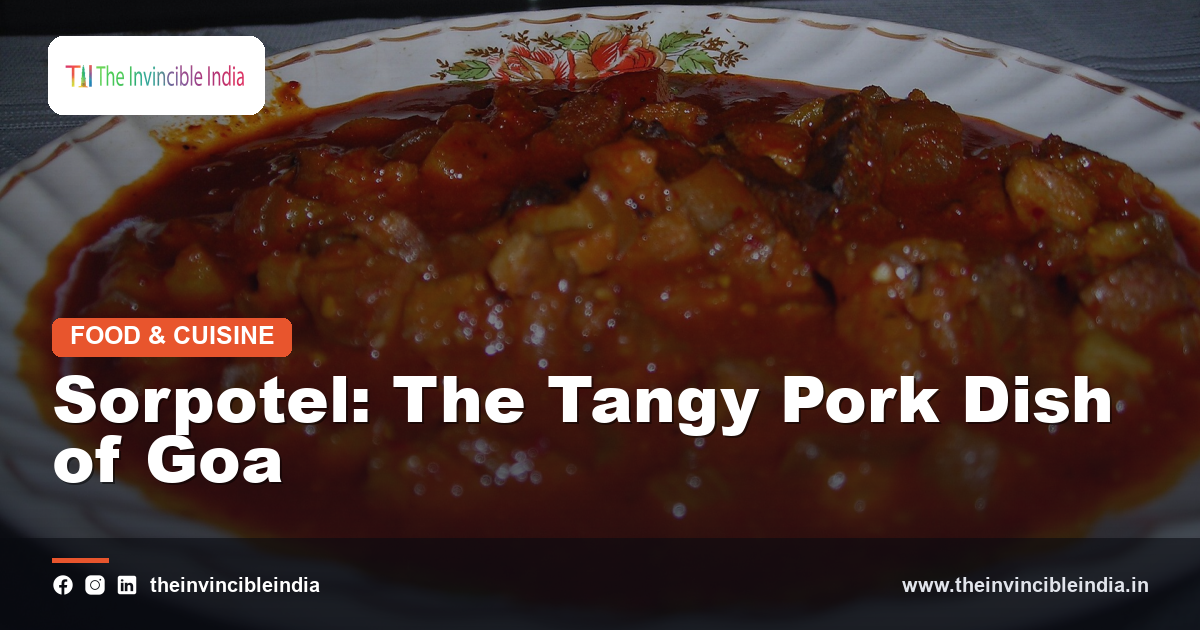
Sorpotel is the tangy, fiery pork dish of Goa, a festive speciality that carries the unmistakable stamp of both Portuguese and Indian kitchens. Made with pork and a sharp, spicy masala brightened by vinegar, it is traditionally cooked in advance and left to mature so that its flavours deepen over several days. Much as the wider regional cuisines of India record the history of trade and encounter, sorpotel records the long Portuguese presence on the Konkan coast. This guide explores sorpotel, its origins, ingredients, festive role and place in India’s culinary heritage.
Quick Facts
| Detail | Information |
|---|---|
| Type | A spicy, tangy pork dish |
| Region | Goa, on the Konkan coast |
| Community | Closely associated with Goan Catholic cooking |
| Key ingredients | Pork, vinegar, red chillies, spices and tamarind |
| Served with | Sannas, pao or rice |
| Character | Tangy, hot, rich and better after resting |
A Dish of Goa
Sorpotel is one of the most recognisable dishes of Goan cuisine, a rich and piquant pork preparation cooked with a pungent masala and a generous measure of vinegar. It is especially associated with the Goan Catholic community, in whose homes it is made for weddings, Christmas and other celebrations. The dish is known for its deep reddish-brown colour, its sharp tang and its bold heat. Unlike many curries, it is meant to be prepared well ahead of time. As a festive signature of the Konkan coast, sorpotel occupies a treasured place in the culinary identity of Goa and its people.
Portuguese Roots and Goan Adaptation
The dish is generally understood to descend from Portuguese cooking, which arrived in Goa during the long period of Portuguese rule that began in the early sixteenth century. A Portuguese dish of pork and offal cooked with spices and vinegar is often cited as its ancestor, and the Goan name appears to derive from it. Local cooks adapted the idea by adding the chillies, tamarind and aromatic spices of the Indian coast. The result was a preparation that belonged fully to neither tradition. Sorpotel therefore stands as a vivid example of how cultural meeting can produce a wholly new dish that is proudly Goan.
The Role of Vinegar
Vinegar is central to sorpotel, supplying the sharp tang that distinguishes it from other pork dishes. In Goa, traditional cooks have long used local palm vinegar, made from fermented toddy, which has a distinctive flavour and mellow acidity. The vinegar is used both to grind the spice paste and to cook the meat, and it also helped preserve the dish in the era before refrigeration. Cooks adjust the quantity to taste. The prominent role of vinegar, with its combination of flavour and preservation, is one of the clearest links between sorpotel and the Portuguese methods from which it descends.
Pork and the Choice of Cuts
Traditional sorpotel is made with pork, often combining lean meat with fat and sometimes offal such as liver, which lend richness and depth. The meat is boiled briefly and cut into small, even pieces before being cooked in the masala. Cooks prize a balance between tender flesh and the unctuous quality contributed by fat. The mixture of cuts gives the dish its characteristic complexity of flavour and texture. Careful selection and preparation of the meat, with an eye to this balance, form the foundation on which the whole character of sorpotel is built.
The Spice Masala
The masala of sorpotel is a coarse, fiery paste made from dried red chillies, cumin, peppercorns, cloves, cinnamon, turmeric, garlic and ginger, ground with vinegar. Goan cooks often favour the deep red chillies of the region for their colour and heat. The paste is fried in fat until fragrant before the meat is added, a step that transforms the raw spices into a cohesive base. Recipes vary between families, each with its preferred balance. The bold, layered spice masala gives sorpotel its signature heat and aroma, and it is the element most cooks guard as a household secret.
Tamarind, Jaggery and Balance
Beyond vinegar and chilli, many sorpotel recipes include tamarind or a little jaggery to round out the flavour. The sour and sweet notes soften the harshness of the vinegar and temper the heat, producing a more harmonious result. Cooks taste constantly and adjust until the dish achieves the desired equilibrium of tang, heat, salt and richness. Such balance is considered a mark of skill. The careful reconciliation of sharp, sweet and spicy flavours is a defining feature of sorpotel and a reminder of the subtle judgement that lies behind a seemingly robust dish.
The Art of Maturing the Dish
Sorpotel is famously better on the second or third day, and traditional cooks prepare it well in advance so that the flavours can mature. After cooking, the dish is cooled and left to rest, and it is reheated gently before serving, which allows the meat to absorb the masala and vinegar thoroughly. The sauce thickens and the sharpness mellows into something more rounded. Households often make a large quantity for this reason. The tradition of maturing sorpotel, which rewards patience, is one of its best-known characteristics and explains why it suits festive planning so well.
Cooking in Traditional Style
Traditionally, sorpotel is cooked slowly in a heavy vessel, often over a modest flame, with the pork simmering until tender and the gravy has reduced to a rich, clinging consistency. Cooks stir periodically and may add small amounts of liquid if needed, but the dish is never meant to be watery. The aroma of vinegar and spices fills the kitchen during preparation, announcing a celebration to the household. The slow, attentive method suits the nature of the ingredients. This patient style of cooking is intrinsic to sorpotel and gives the dish its depth and satisfying thickness.
Sorpotel at Weddings and Christmas
Sorpotel is a fixture of Goan Catholic celebrations, appearing at weddings, baptisms, feast days and especially at Christmas, when families prepare it alongside sweets and other festive dishes. Its status as a celebratory food means that making it is often a communal activity, with relatives helping to chop, grind and stir. Sharing the dish with neighbours and visitors is a gesture of goodwill. The aroma becomes associated with holiday memories for many Goans. As a dish of celebration and togetherness, sorpotel carries emotional significance well beyond its flavour.
Sannas, Pao and Rice
Sorpotel is traditionally eaten with bread or rice, which absorb the strongly flavoured gravy and soften its heat. Sannas, the soft, steamed and lightly fermented rice cakes of Goa, are a classic partner, as is pao, the local bread, and plain steamed rice. Some households add a simple salad or pickle on the side. The mild starchiness of these accompaniments is a welcome counterpoint to the dish’s intensity. The pairing of sorpotel with sannas or pao is a deeply rooted custom, and each mouthful reflects a harmony of contrasts.
Sorpotel and Vindaloo
Sorpotel is often mentioned alongside Goa’s other famous pork dish, vindaloo, since both owe a debt to Portuguese cooking and both rely on vinegar and chillies. Vindaloo is generally a more straightforward curry of marinated meat, while sorpotel is distinguished by its use of mixed cuts, its thicker, drier finish and its practice of maturing. The two dishes have a shared ancestry but distinct personalities. Comparing them highlights the variety within Goan cuisine. Understanding these differences clarifies why sorpotel holds its own special place beside its more internationally famous cousin.
Goan Catholic Food Culture
Goan Catholic cuisine is distinguished by its use of pork, vinegar, coconut and local spices, and it differs noticeably from the Hindu cooking of the same region. Many dishes show Portuguese influence in technique and name, even as they rely on ingredients native to the Konkan coast. Food in these households is closely linked to the church calendar and to family occasions. Recipes are handed down through generations, often by women. Sorpotel is among the most representative dishes of this food culture, embodying its blend of heritage, celebration and strongly marked flavour.
Regional Variations
Although the broad outline of sorpotel is consistent, recipes differ from village to village and kitchen to kitchen. Some cooks emphasise heat, others tang, and some include offal while others prefer only meat and fat. A few adapt the dish with different vinegars or additional spices according to family taste. Such variation is considered natural and even desirable. It shows that sorpotel is a living tradition rather than a fixed formula. These regional and family differences enrich the dish and demonstrate how each household makes it a personal expression of Goan culinary identity.
Food Preservation and Practicality
In an age before refrigeration, vinegar, salt and spices served as natural preservatives, and dishes like sorpotel were designed to keep for several days in the warm, humid coastal climate. Cooking in a large batch and reheating small portions as needed suited busy households preparing for celebrations. This practical origin explains the dish’s pronounced sharpness and its improvement with time. Today refrigeration has reduced the need, but the tradition remains. The practicality behind sorpotel shows how necessity shaped flavour, and how a method of preservation became a cherished culinary virtue.
Sorpotel in Goan Hospitality
Goa is known for warm hospitality, and sorpotel is frequently offered to guests as a sign of welcome and generosity. During festive seasons, households may send small portions to neighbours and friends, strengthening community ties. Visitors to Goa often seek it out in homes and restaurants as an authentic taste of local tradition. The dish serves as an introduction to Goan culture. Its role in hospitality reinforces how food in Goa operates as a language of friendship, and sorpotel speaks it with particular eloquence.
Balancing Heat for Modern Palates
As sorpotel has travelled beyond Goa into restaurants elsewhere in India, cooks have sometimes moderated its heat and tang to suit guests unfamiliar with the dish, using fewer chillies or a gentler vinegar. Traditionalists argue that the sharp, assertive character is the very point of sorpotel and should not be diluted. Many Goan households therefore keep their own family measure of heat. The discussion shows how food adapts when it meets new audiences. The question of balance between authenticity and accessibility continues to shape how sorpotel is presented to the wider world. Chefs who serve the dish to visitors often explain its history at the table, noting that the pronounced tang is an inheritance from Portuguese vinegar-based cooking and not an accident. Guests who approach it with curiosity usually come away with a keen appreciation of how a dish can balance fire, sourness and richness so confidently, and many return to Goa specifically in search of it.
Sorpotel Today
Sorpotel continues to be a beloved centrepiece of Goan celebrations and a popular order in the restaurants and eateries of the state. Home cooks keep the tradition alive by preparing it for family gatherings, while chefs include it in menus celebrating regional Indian cuisine. Food writers often point to it as a prime example of Indo-Portuguese culinary fusion. Its distinctive tang and heat remain unmistakable. Today sorpotel endures as a flavourful emblem of Goa, preserving in each spoonful the history, hospitality and festive spirit of its community.
Sources & Further Reading
- Ministry of Culture, Government of India (indiaculture.gov.in).
- Ministry of Tourism, Government of India (incredibleindia.org).
Frequently Asked Questions
What is sorpotel?
Sorpotel is a spicy, tangy Goan pork dish cooked with vinegar and a hot masala. It is a festive speciality of the Goan Catholic community with roots in Portuguese cooking.
Why is sorpotel better after a few days?
Resting allows the meat to absorb the vinegar and spice masala fully, mellowing the sharpness and deepening the flavour. Traditional cooks therefore make it well in advance and reheat it gently.
What is sorpotel eaten with?
It is traditionally eaten with sannas, the steamed Goan rice cakes, or with pao or plain rice. These accompaniments soften the dish’s strong heat and tang.
How is sorpotel different from vindaloo?
Both Goan dishes use vinegar and chillies and have Portuguese roots, but sorpotel uses mixed cuts, is thicker and is typically matured over several days. Vindaloo is usually a simpler marinated curry.
When is sorpotel traditionally served?
It is served at celebrations such as weddings, feast days and Christmas in Goan Catholic households. Preparing it is often a communal family activity.


